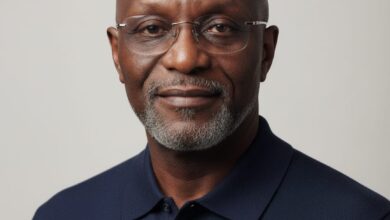
By Tony Edemenaha
Nigeria is hurting, and citizens are justified in demanding more than political slogans and ceremonial promises.
Across the country, insecurity, economic hardship and institutional failure have combined to create a national mood defined by fear, frustration and uncertainty.
In Benue and Plateau, communities are still counting their dead after repeated attacks. In Southern Kaduna, grief has become a permanent resident. In Edo and Delta, kidnapping has transformed highways into danger zones and daily travel into a gamble.
Farmers abandon their lands, traders calculate losses instead of profits, and families postpone journeys because returning home safely is no longer guaranteed.
Beyond the violence lies another crisis quietly consuming millions of Nigerians: hopelessness. Graduates send out endless job applications without response. Parents struggle to afford food and transport. Salaries disappear before the middle of the month. For many households, survival has replaced planning.
Citizens have every right to be angry. Any government that asks Nigerians to ignore their pain is asking them to deny reality itself. In every functioning democracy, public frustration is not a threat; it is feedback. Town halls, radio programmes, social media debates and market conversations are legitimate spaces where citizens process national trauma and demand accountability.
But anger alone cannot rebuild a nation. If frustration produces only noise without direction, the system remains unchanged. Nigeria’s challenges require not just emotion, but disciplined demands for measurable results.
The danger facing the country is too serious for politics as usual. Across the Sahel, neighbouring countries have shown what happens when insecurity overwhelms state institutions. Burkina Faso, Mali and Niger are reminders that when governments lose control, extremist groups do not bring stability. They deepen chaos and turn entire populations into victims.
Nigeria cannot afford such a collapse. Its population, diversity and strategic importance make stability essential not only for Nigerians, but for the wider West African region. That is why insecurity must be treated as a national emergency rather than another talking point for press conferences and political speeches.
The country needs visible and sustained enforcement of law and order. Criminals must not only be arrested; they must be prosecuted and convicted. Nigerians are tired of televised assurances that produce no practical improvement. Communities want to see safer roads, protected farms and functioning intelligence systems.
Impunity has become one of the greatest enablers of insecurity. When criminals believe there are no consequences for violence, kidnapping and terrorism expand rapidly. A state that fails to punish criminality encourages more of it. Restoring deterrence requires political will, coordination among security agencies and leaders willing to prioritise public safety above politics.
Nigeria must also confront an uncomfortable reality: a country of over 200 million people cannot effectively be policed from Abuja alone. Security is local. It depends on knowledge of terrain, language, relationships and community behaviour. Officers unfamiliar with local communities cannot respond effectively to threats within them.
This is why the debate around state policing can no longer remain theoretical. Different regions face different security challenges. The North-West battles banditry. The North-East confronts insurgency. The Middle Belt grapples with communal violence. The South-East faces separatist unrest and economic disruptions, while kidnapping and armed robbery continue to threaten parts of the South-South and South-West.
A centralised approach cannot effectively address all these realities simultaneously. Properly regulated state police structures, operating within constitutional limits and coordinated with federal agencies, would strengthen local intelligence gathering and improve response times. Security must become more flexible, more localised and more accountable.
At the same time, Nigeria must invest seriously in strengthening its armed forces and security institutions. Better training, improved welfare, modern equipment and stronger intelligence capabilities are no longer optional. Soldiers and security personnel confronting armed groups should not be expected to perform effectively without adequate support.
National security requires sustained funding and long-term planning. Citizens deserve transparency about how security budgets are spent and whether resources allocated for defence are producing measurable outcomes. Public trust grows when government actions match government promises.
Accountability must extend to those entrusted with managing the country’s security architecture. Offices such as the National Security Adviser, the Minister of Defence and the service chiefs should be evaluated primarily by performance. In any serious democracy, leadership positions are tied to responsibility and results.
Demanding accountability from public officials is not an attack on the state; it is a defence of democracy. Nigerians have the right to insist that those occupying sensitive offices justify the confidence and resources entrusted to them.
Nigeria must also strengthen cooperation with regional and international partners. Terrorism and organised crime do not respect national borders. Arms, fighters and criminal networks move across West Africa with alarming ease. Intelligence sharing, coordinated border management and joint operations are essential for containing these threats before they spread further.
Beyond security, governance itself must begin to reflect the realities citizens face daily. Nigerians are not asking for miracles. They are asking for competent leadership and functioning institutions. Hope cannot survive on campaign slogans alone. It must be visible in everyday life.
Hope is a hospital with available medicine. It is a road that people can travel without fear of abduction. It is electricity that supports businesses and salaries that can sustain families. It is a government that responds quickly during emergencies rather than issuing statements after damage has already been done.
As the 2027 elections approach, Nigerians must resist the temptation to reduce politics to ethnicity, religion or emotional slogans. Elections are not festivals; they are assessments of leadership. Voters must begin to treat their ballots as contracts tied to performance and accountability.
Political campaigns will again produce grand promises, carefully crafted slogans and familiar faces claiming to represent change. But citizens must ask harder questions. Have roads improved? Are communities safer? Has governance become more transparent? Has the economy created opportunities for ordinary people?
Experience without results is not leadership. It is simply longevity in public office.
Nigeria’s diversity should be a source of strength rather than division. Yet too often, insecurity and economic hardship are manipulated to deepen ethnic and regional tensions. Citizens are encouraged to defend political loyalty rather than demand competence.
That approach has repeatedly failed the country. Nigeria cannot continue rewarding leaders based on identity alone while ignoring performance. The nation needs a stronger culture of citizenship built around equal protection under the law, merit and institutional accountability.
A government that cannot protect lives and property cannot expect unquestioning loyalty from its citizens. Likewise, citizens who have endured years of hardship cannot continue lowering standards for leadership.
The time for reform is now, not during campaign rallies. State policing requires urgent legislative action and implementation. Security institutions must become more efficient and accountable. Regional cooperation must move beyond diplomatic meetings into practical coordination. Most importantly, citizens must become more demanding of governance standards.
Resilience should not become the permanent identity of Nigerians. Resilience is what people display when systems repeatedly fail them. Effective leadership exists so citizens do not have to survive in crisis mode every day.
Nigeria still possesses enormous potential. But potential alone cannot solve insecurity, unemployment or economic hardship. Problems are solved through honest leadership, institutional reform and measurable action.
The country does not need more rhetoric disguised as progress. It needs leadership willing to confront failure honestly and address it decisively. Accurately naming problems is the first step toward solving them.
As 2027 approaches, Nigerians face an important choice. They can continue rewarding emotional speeches and recycled promises, or they can insist on competence, accountability and measurable delivery.
The future of the country will depend on that decision.
*Tony Edemenaha, poet and social commentator, writes from Asaba