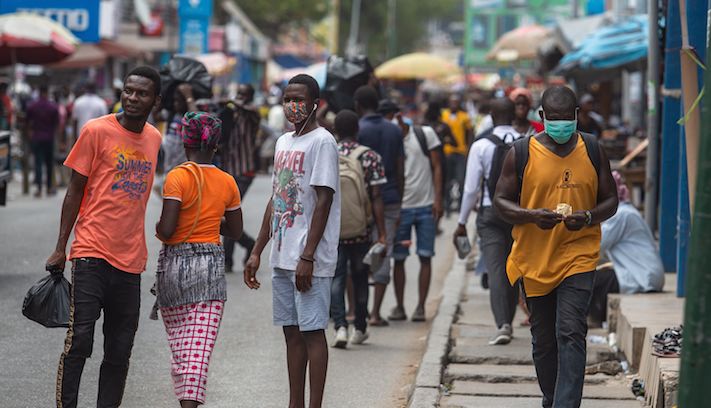
By Anthony Otaru, Abuja
Nigeria’s worsening economic crisis is pushing millions of households into painful survival choices, with growing numbers of citizens now selling household appliances, personal belongings, and land to cope with rising inflation, soaring living costs, and shrinking incomes.
Investigations across the Federal Capital Territory (FCT), neighbouring communities, and several major cities revealed that struggling families are disposing of refrigerators, television sets, generators, cooking gas cylinders, sewing machines, electrical appliances, vehicles, metal scraps, and even family property at giveaway prices, desperate for cash.
The development has also triggered a booming trade for scavengers, popularly called “Baban Bola,” and operators of “partaker” shops who buy and resell used household items across urban centres.
*Second-hand dealers, scavengers profit from citizens’ desperation
Findings by ThisNigeria showed that scavengers now move from street to street in search of distressed sellers, while residents fear the trend is worsening theft and insecurity as economic hardship deepens nationwide.
Many families, unable to cope with rising rent, transport costs, school fees and food prices, are reportedly withdrawing children from private schools, relocating to cheaper suburbs and abandoning businesses they can no longer sustain.
The grim reality reflects Nigeria’s growing burden of poverty.
According to the latest Multidimensional Poverty Index report released by the National Bureau of Statistics (NBS), about 133 million Nigerians — representing nearly 65 per cent of the population — live in multidimensional poverty.
The report measures deprivation beyond income levels, focusing on health, education, living standards and employment conditions.
In another report on monetary poverty and inequality, the NBS estimated that over 82.9 million Nigerians live below the national poverty line, pegged at N137,430 per person annually.
For many Nigerians, however, the statistics only mirror daily struggles already visible in homes and communities.
A retired civil servant, Martins Olowu, said he was forced to sacrifice valuable family assets after finding it difficult to fund his three children’s university education.
“When things became unbearable, I sold my old Toyota car, refrigerator and even my wife’s sewing machine so my children could complete school. It was painful, but we had no alternative,” he told ThisNigeria.
He added that although his children eventually graduated, the family lost almost everything they owned in the process.
*Distress sales spread across Abuja, suburbs, major cities
In Suleja, Niger State, commercial driver Bernard Bitrus narrated how rising fuel prices destroyed his transport business.
“Immediately fuel prices increased, it became impossible to survive in the taxi business. After discussing with my family, I sold the car, rented a small shop for my wife and started rearing goats in my compound,” he said.
At Wuse Market in Abuja, tailor Mustapha Garuba said declining patronage and high operating costs pushed him out of tailoring.
“Customers are no longer coming because people don’t have money. After my shop rent increased, I sold my sewing machine and moved into the charcoal business in Maraba to survive,” he lamented.
The distress sales are no longer limited to low-income earners.
In Kuje, Abuja, Mrs Lawrenta Ogunjobi said her family was forced to dispose of household items after their landlord raised rent from N1 million to N2.5 million.
“My husband lost his job, and we could no longer cope. We had to move to Gwagwalada, where rent was cheaper, but even that proved difficult. We sold our fridge, generator and other valuables to raise money,” she explained.
Economic hardship is also fuelling criminal activities and insecurity in several communities.
Nasir Imam, an Okada rider in Kuje, said he lost his motorcycle to thieves while observing prayers at a mosque.
“It is now very risky because poverty has increased everywhere. Before I came out from the mosque, my bike had disappeared. The motorcycle was bought on credit, so I had to sell my only land to pay the owner,” he said.
Religious institutions are not spared from the growing wave of theft.
A pastor in Kubwa, Israel Akanji, recounted how scavengers allegedly invaded his Church and carted away speakers, microphones, a piano and other equipment.
“Police later arrested one suspect and traced the items to a partaker shop owner who confessed he bought everything for just N100,000. This is the situation Nigeria has found itself in because poverty is everywhere,” he said.
Meanwhile, second-hand dealers and scavengers admit they are benefiting from the worsening hardship confronting many households.
Jimohe Adaji, who operates a partaker shop in Nyanya, described the current situation as a boom period for the business.
“People now bring household items for sale almost every day because of poverty. Business is booming for us, but it is sad seeing families sell valuable property at very low prices,” he stated.
He appealed to the government to urgently revive the economy and reduce the suffering of ordinary Nigerians.
*Experts blame corruption, failed policies for worsening situation
Economic experts and policy analysts blamed the worsening poverty situation on years of corruption, poor governance, policy inconsistency and failure to diversify the economy.
Professor Sheriffdeen Tella described the economic condition as the outcome of “bad and selfish governance.”
“It is unfortunate Nigerians are where they are today because leaders failed to put the people first. Corruption, wasteful spending and poor economic decisions created the hardship we are witnessing today,” he said.
According to him, successive administrations failed to utilise huge oil revenues to build productive sectors capable of creating jobs and stabilising the economy.
“This government introduced subsidy removal and massive naira devaluation, but the benefits have gone largely to the political elite and top civil servants, while ordinary Nigerians are battling inflation, poverty and insecurity,” he argued.
Tella called for people-oriented reforms, including deliberate investment in agriculture and industry, lower interest rates, temporary controls on energy costs, and stricter anti-corruption measures.
“The orientation of government must change from ‘people do not matter’ to people-centred governance,” he added.
President of the Institute of Fiscal Studies (IFS), Godwin Ighedosa, urged the government to prioritise human capital development, vocational training, quality education, and access to healthcare.
Similarly, Lead Director of the Centre for Social Justice, Eze Onyekpere, stressed the need for inflation control, currency stabilisation and greater transparency in governance.
“A strong social protection mechanism and targeted safety nets must be introduced urgently to cushion the suffering of vulnerable Nigerians,” he said.