‘Nigeria’s democracy still laced with elements of military regime’


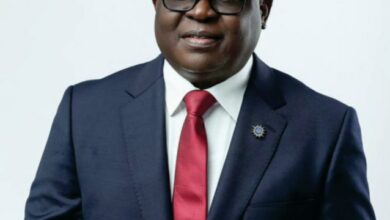
Founder and Chief Executive Officer of Beacon Consulting Ltd, an enterprise security risk management and intelligence solutions provider, Dr Kabir Adamu, speaks extensively on counter-terrorism and counter-insurgency, among other sundry issues in this interview with LINUS ALEKE
The fight against terrorism and insurgency in Nigeria seems to be stretching longer than expected, what in your opinion is responsible for the delay in winning the war?
In my humble opinion, it is because we have not addressed the root causes of the problem and the significant effort by the government is tilted towards the military and other security agencies, thereby neglecting the significant requirements to address the root cause.
You know that we have a policy called the countering violence extremism framework, it was introduced in 2014 under the then President Goodluck Jonathan’s administration. The world endorsed this policy framework and even assisted us with funding but unfortunately, we have not implemented that framework as adequately as we should. There are three major components in that framework, one of which is to address the socio-economic basis for the insurgency, social-economic, and political grievances, as well as the disaffection and reality of marginalisation, across the federation, especially in the northeast. Another example is that the Southeast is not happy that they have not produced the President.
Also, if you go to Benue, the Idoma and other minority tribes in the state are not happy that they cannot produce the governor of their state. If you go to Kogi, the same thing, the Ebira are complaining. So, there is a need to address all these to engender inclusiveness and reduce tension in the polity. Others are to address poverty, and unemployment, tackle the issue around drug addiction, weapon proliferation, the inability to adapt to climate change, etc.
All of these are captured in that policy document but unfortunately, we are not implementing it. In addition to all these, we have the counter de-radicalization programme, under which the government created Operation Safe Corridor. We also have a diplomatic partnership with our neighbouring countries, under which we have the Multinational Joint Task Force (MNJTF) headquartered in Ndjamena, Chad.
Though all of these were captured in the policy document, unfortunately, it has not been fully implemented, rather what we have is the over-concentration of effort on the military approach. Military or kinetic action alone is not the solution to terrorism and insurgency in Nigeria. I am not in any way saying that the role of the military is not important but there has to be balanced.
What can be done to redirect the government’s attention and focus away from over-concentration on a kinetic approach to a more holistic approach to the fight against terrorism?
I am of the honest opinion that it is time we review the national counter-terrorism strategy. That document was introduced in 2014 if I remember well, and it was revised in 2016 under this administration. Since then, I am not aware that we have taken a good look at that document.
It worries me that as envisaged under that document, we have a Commander on Counterterrorism, who is domiciled in the Office of the National Security Adviser (NSA). I am almost certain that you probably don’t even know about it, but it is there, statutorily created and recognised under that policy document. Apart from that, the only thing you hear when statements on terrorism and insurgency are issued are most time coming from the military. When that document sees the military as just one out of several other components of Counter-terrorism Strategy. There are 27 Ministries, Departments, and Agencies of government involved in this strategy and that document recognises their roles.
Economic hardship bites harder: Young Nigerians plot exit from country
Now, there are five thematic areas on that document, with the specific mandate of identifying the terrorist groups, identifying their funding, identifying their weapons’ application, and then using legal operational means to block all the three things that I had just mentioned. Then the fifth one is to build the resilience of the local population. So, these five functions are not what one government agency can do. It is a function that every agency involved in that strategic document would have to come together to perform. So, when you have a situation where only the military for some innocuous reasons is taking the lead role, it becomes sectional and that is why we are having the gap that now exists.
I am not in any way accusing the military and saying that they are the only ones that are doing stuff, all I am saying is that instead of the Office of the National Security Adviser taking the lead and coordinating the counter-terrorism strategy, the military is the ones doing it. And it is so because the office of the NSA has not been given the mandate, it is the military that has been authorized by the President to do it and that is why they are doing it. I honestly don’t know the reason for this but what I know is, that the strategic document is not being implemented.
It is time you people visit that office to find out why the strategic policy document is not being implemented, and then create the right modality to implement the strategy. If you look at the funding avenue for the terrorists, if you block it, block their recruitment channel and source of weapons, then terrorism will come to an end.
In the past decade, the Defence and Security sector has enjoyed the largest chunk of budgetary allocation at the national level, but frontline troops still complain of a lack of sophisticated military armament to match the firepower of these terrorist fighters. What do you think is responsible for this recurring complaint by soldiers on the war front?
No matter the amount of money that is voted either from the budgetary point of view or other sources, if the leakages are not blocked, the funding would never be enough. It would just be like someone trying to fetch water with a basket, he would never be able to fetch enough water. That is the situation in the defence and security sector and anyone who is doubting it should look at what is happening in the sector.
Two years ago, the General Officer Commanding (GOC), 8 Division of the Nigerian Army, Sokoto, Maj-Gen. Hakeem Otiki was convicted by a military court-martial for transporting N400 million from Sokoto to Kaduna, which was stolen by the five soldiers escorting the illicit fund. Today, the case of ACP Abba Kyari is there. Apart from that, the National Assembly, House of Representatives to be precise, is alleging that the Ministry of Interior and the Correctional Service need to account for another huge sum of money, another serving General is also reported to have forfeited properties valued at over N10 billion, so, there are leakages. All these are evidence of leakages and these are some of the reasons why Nigeria is failing in the security sub-sector.
We need to reduce these leakages and one of the biggest ways to do that is to enhance monitoring and evaluation. We also need to enhance the auditing function within that sector so that there are key performance indicators that we as Nigerians and you as a journalist and the civil society organisations can easily look at to know whether this sector is performing or not.
Last year, over eight thousand people died in the security sub-sector in Nigeria, not a single person in the leadership of that sector was penalised. If you know anyone, please tell me, I don’t, and I have not seen any country of the world where something like that will happen and you will not have anyone being held accountable for the loss of 8,000 persons. That is number one, number two, the role of the National Assembly, both in terms of legislation and oversight functions needs to be strengthened. Let us remember that this is what democracy portends.
In other climes, the legislature ensures that the MDAs they exercise oversight function over are made to do their job very well. Unfortunately, the reverse is the case in Nigeria as they are alleged to collect money from them and share, so they cannot stop them from siphoning the money. Then of course lastly, the civil society organization and the media have a role in ensuring that those tasked with certain responsibilities do not abrogate them by constantly exposing their activities, through media reportage.
Many believe that the procurement of the Super Tucano aircraft by the Federal Government was going to be a game-changer in the ongoing counter-insurgency operations but that is not to be due to the asymmetric nature of the warfare. Do you still believe that the decision to buy the modern platform is not defeated as some have criticised?
No, I don’t, the Super Tucano has multiple functions of intelligence, and reconnaissance functions, apart from the military function. So, whoever is criticising the purchase of the platforms does not understand its functions. The role of intelligence and kinetic operations go hand in hand, you cannot divorce one from the other. The area I feel the military needs to strengthen is the area of light deployment.
If you look at the nature of Nigerian terrain, let me use North-East, for example, there are two divisions in the North-East, one in Maiduguri. If an incident is happening in Baga and you have to deploy by land, it will take nothing less than two hours and by then the damage must have been done. And even if you are deploying from the nearest response unit, it will take nothing less than 45 minutes or one hour to get to the location. But if you have great response capability, which in modern times should not take more than seven minutes.
Anywhere in the country where there is an attack, the military should be able to deploy troops that can respond within the given time frame but we currently don’t have that kind of capability. So we need to helicopter gunships and other great response platforms that would enable the military to deploy in record time. The other one is communication, we need sophisticated communication gadgets, GSM is very weak, it can easily be intercepted and that can lead to ambush.
In the area of training and retraining, what skill gaps do you think need to be breached to bring the troops up to speed with the modern trend in unconventional warfare?
I don’t want us to fall into the trap of emphasising the role of the military. Remember that we have a national strategy on counterterrorism that outlined the role of several stakeholders which the military is just one. So, if we continue to look at the military alone, we are making a serious mistake. In any case, any knowledge that will support modern warfare and help in countering insurgency would be helpful to the Nigerian government. Let us not also forget the other thing I mentioned earlier such as force multipliers, etc.
What is your assessment of the current crops of Service Chiefs and Heads of other security agencies?
It is difficult to assess them because there is no key performance indicator that has been made public to us as people that we can use to evaluate their performance. Last year like I mentioned earlier, 8,000 people died, now we cannot single out the military and other security agencies and say that they are responsible for the death of the 8,000 people. But if you are using that as an indication of measuring their performance, then I think they have not done better.
How did we get to this point where the military is performing all the functions of the police?
We got here because of our history of military incursion into civic space or military misadventure as it were. We have not been able to move away completely from the military regime. There is a strong element of the military in our democracy.
Don’t also forget that our incumbent President is a retired General. There is also a significant number of these retired military personnel in the National Assembly. So, they have become an integral part of government and that has made it difficult for us to see them as the military. The other part is the politicians, the politicians don’t seem to recognise the constitutional role of the military.
Just recently, the governor of Ondo State publicly begged the military not to withdraw its personnel deployed to provide security at the correctional centre in the state. So the politicians too, are playing that role of not wanting the military to leave the civic space. Not too long ago, just before the Anambra elections, the outgoing governor, was addressing journalists and I looked at his face, all by his side were uniformed men, and that symbolizes our current situation. Even though we are in a democracy, unfortunately, we have not extricated ourselves from military rule in the country.
I think that the National Assembly has to look at the laws that set up most of this organizations, review them and ensure that the military should not be allowed to get involved in internal security matters. So that the core agencies like the police and others will take up their constitutional role.
The Nigerian military has records of human rights abuses, what can be done to minimise this ugly phenomenon?
The reality is that the entire system, through which the security organizations are based does not recognise respect for human rights. Even though there is recent advancement that hopefully will enhance improved respect for human rights in the future. Some of these advances include the introduction of the new Police Act 2020, etc.