By Cross Udo
and Anthony Otaru, Abuja
According to the latest record from the National Bureau of Statistics (NBS), Nigeria’s economy grew 3.19 percent year-on-year (Y-o-Y) in the second quarter of 2024.
The growth rate was quicker than the 2.51 percent recorded in the second quarter of 2023 and the 2.98 percent seen in the first quarter of this year.
The NBS, however, said yesterday that in terms of growth, the non-oil sector contributed 94.3 percent to the nation’s GDP in the second quarter of 2024, lower than the share recorded in the second quarter of 2023, which was 94.66 percent, and higher than the first quarter of 2024, recorded as 93.62 percent.
It explained that the underlying factors for this stagnation could include structural challenges, limited diversification, and persistent economic uncertainties, which may hinder the sector’s potential to drive more robust and sustained economic growth.
It stressed that Nigeria’s non-oil sector has exhibited signs of stagnation despite Nigeria’s overall growth in Gross Domestic Product (GDP) in the second quarter of 2024.
According to the latest GDP put forward by the NBS for the second quarter of 2024, the non-oil sector recorded a growth rate of 2.80 per cent in real terms, mirroring the growth rate seen in the first quarter of 2024.
This growth rate is notably lower than the 3.58 per cent recorded in the same quarter of 2023, indicating a slowdown and raising concerns about the country’s economic diversification efforts.
It stated that the growth performance was driven primarily by financial and insurance services, Telecommunications, Agriculture, Trade, and Manufacturing, suggesting a concentration of growth in specific industries. Yet, the broader non-oil sector needs to exhibit dynamic growth.
This stagnation is further highlighted by the non-oil sector’s contribution to GDP, which stood at 94.3 percent in Q2 2024, down from 94.66 percent in the same period the previous year.
Reacting, Prof Uche Uwaleke said that the CBN’s aggressive hike in the monetary policy rate in February and March 2024 took a toll on output in Q2 2024.
He stressed that this may explain the decline recorded in major contributors to GDP such as Manufacturing, Trade, ICT, and Real Estate.
The professor of Economics at the Nasarawa State University stated that the impact of the high cost of petroleum products manifested in the massive decline in Transport GDP from 3.33 percent to -13.53 percent. Just like in Q1 2024, when growth was driven by the oil sector, growth in Q2 2024 was also driven by the oil sector, at 10.15 percent.
The oil sector growth was mainly aided by the increase in crude oil price during the quarter as average crude oil production fell (from 1.57mbpd in the previous quarter to 1.41mbpd)
The non-oil sector’s performance was powered by the services sector, chiefly financial services and ICT. This sector’s contribution to GDP in Q2 was 2.80 per cent, the same as in Q1 2024
The manufacturing and agriculture sectors appeared hugely impacted by economic headwinds during the quarter. Growth rates were a mere 1.28 percent and 1.41 percent, respectively.
The agricultural sector (comprising four activities dominated by crop production) improved in Q2 2024 to 1.41 percent from 0.18 percent in the previous quarter.
The financial sector grew by 28.79 per cent, a clear demonstration that it is detached from the productive sectors of the economy.
This identified growth pattern, weighted in favour of the services sector, must be revised for a developing economy like ours. Little wonder economic growth does not appear inclusive, reflecting rising unemployment and poverty levels.
It is time we reset this faulty economic structure, leveraging technology, in favour of the productive sectors: Industry and Agriculture.
Indeed, structural change is strongly recommended (by UNCTAD) as one ingredient in building productive capacities.
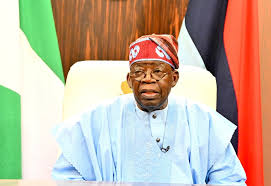
•We’re working to build solid, resilient economy, Tinubu reacts to growth
President Bola Tinubu has welcomed the latest report by the NBS on the state of the economy, as the country’s GDP posted another growth.
According to NBS, the real GDP grew by 3.2 percent year over year in Q2, higher than the 2.51 percent recorded in the same period of 2023.
A statement issued by Bayo Onanuga, Special Adviser to the President on Information and Strategy, explained that after another report on declining food and headline inflation, “this latest report affirms that the economy is on the right trajectory and is indeed on the path to recovery.”
According to the statement, “As the President said in his August 4, 2024 national broadcast, our economy is recovering. Sooner than later, Nigerians will begin to feel, see, and enjoy the impact of his administration’s economic re-engineering efforts.
“We want to reiterate that this government will continue to work assiduously to rekindle Nigerians’ hope and confidence. President Tinubu is working to build a solid and resilient economy.
“President Tinubu urged Nigerians to retain their faith in the government and not allow themselves to be swayed by naysayers’ intent in aborting and undermining the current reforms for their selfish ends.”
According to the NBS report, the growth rate in Q2 is higher than the 2.51 p cent recorded in Q2 2023 and higher than the 2.98 per cent growth in Q1 2024.
The GDP’s performance in the second quarter of 2024 was driven by the service sector, which recorded a growth of 3.79 per cent and contributed 58.76 per cent to the aggregate output.
The agriculture sector grew by 1.41 per cent in contrast to the 1.50 per cent recorded in the second quarter of 2023. The industrial sector’s growth was 3.53%, up from the -1.94 per cent recorded in the second quarter of 2023.
The NBS also reported that crude production grew to 1.41 million barrels per day, compared with 1.22 million barrels a year earlier.
“We are confident that with the policies we have put in place, we expected production to rise to about two million barrels very soon,” Tinubu said.
The statement further said, “In terms of share of the GDP, the industry and services sectors contributed more to the aggregate GDP in the second quarter of 2024 compared to the corresponding quarter of 2023.
“In the quarter under review, aggregate GDP at basic price stood at N60.93m in nominal terms. This performance is higher than the second quarter of 2023, which recorded an aggregate GDP of N52.1m, indicating a 16.94 per cent year-on-year nominal growth