By Nathaniel Zaccheaus, Abuja
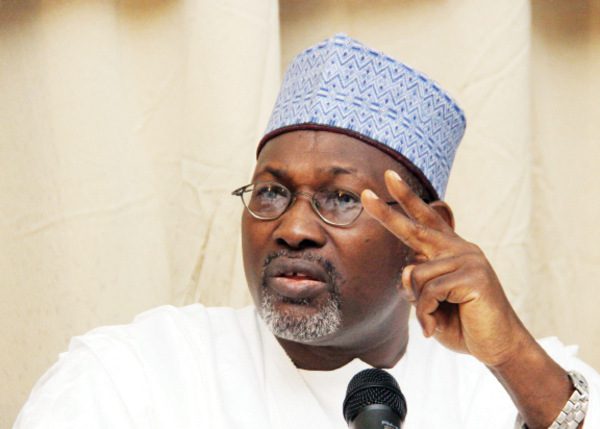
Nigeria’s former Chairman of the Independent National Electoral Commission (INEC), Prof Attahiru Jega, has sounded a grave warning that the country’s democracy faces imminent peril unless urgent and far-reaching reforms are implemented to restore credibility and integrity to its electoral process.
Speaking on Monday at the 9th Convocation Ceremony of the National Institute for Legislative and Democratic Studies (NILDS) in Abuja, Jega declared that “no democracy can survive when citizens lose confidence in elections and when politicians continue to undermine institutions meant to ensure credible polls.”
Delivering a keynote lecture titled “Electoral Integrity as a Panacea for Democratic Development in Nigeria,” the former INEC boss said Nigeria’s democratic journey, despite spanning 25 years of uninterrupted civil rule, remains fragile because the electoral process has consistently failed to produce leadership that genuinely reflects the will of the people.
According to him, the foundation of democracy rests squarely on credible elections conducted with fairness, transparency, and justice, not on mere voting ritual.
“Elections that lack integrity undermine democracy, weaken public trust, and lead to governance failure,” Jega warned. “Only elected officials who truly reflect the genuine choices of the electorate can drive good governance that protects citizens’ rights and aspirations.”
Quoting former United Nations Secretary-General, Kofi Annan, Jega reminded political actors that “power, and the competition for power, must be regulated,” stressing that Nigeria’s democracy would remain in crisis for as long as politicians continue to disregard the independence of electoral and judicial institutions.
He lamented that vote-buying, voter suppression, result manipulation, and judicial compromises have become systemic features of Nigeria’s elections, thereby eroding citizens’ confidence in democracy.
“Electoral integrity must encompass all aspects of the electoral cycle — from voter registration to result management,” he said. “It ensures fairness, equity, and justice such that outcomes are legitimate and acceptable to all.”
Jega, who oversaw the 2011 and 2015 general elections, said the integrity of a democracy is not measured by the frequency of elections but by the credibility of their outcomes.
“Democratic development is impossible without credible elections that produce legitimate governments committed to good governance,” he maintained. “Only elections imbued with integrity can confer legitimacy, stability, and responsible governance.”
The former INEC boss, therefore, called on the National Assembly and civil society organisations to lead a new wave of electoral reforms that would enhance transparency in voter registration, campaign financing, and result management.
He particularly warned against the political capture of electoral management bodies and the judiciary, insisting that once such institutions lose their independence, democracy becomes hollow and dysfunctional.
“Independent electoral management bodies must be protected from political interference. Similarly, the judiciary must be insulated from pressure to manipulate electoral justice,” he said. “Without independence, impartiality, and professionalism of these key institutions, democracy is hollow.”
Jega concluded that the ultimate goal of democracy is not merely the conduct of elections, but the promotion of citizens’ rights, justice, and human security.
“Democracy must translate into better governance and improved quality of life for citizens,” he asserted. “The main purpose of governance in a democracy is the protection and promotion of citizenship rights and human security.”
*NILDS, lawmakers push for education investment, institutional reforms
At the same convocation, the National Institute for Legislative and Democratic Studies (NILDS) reaffirmed its commitment to strengthening Nigeria’s democratic institutions through education, research, and capacity building.
The ceremony, held at NILDS’ permanent site in Piwoyi District, Abuja, attracted top government officials and legislators, including the President of the Senate and Chairman of NILDS Governing Council, Senator Godswill Akpabio; the Speaker of the House of Representatives, Abbas Tajudeen; and the Director-General of NILDS, Prof Abubakar O. Sulaiman.
Senate President Akpabio, who chaired the event, emphasised that education and institutional reforms are the bedrock of sustainable governance.
He noted that, through improved oversight and fiscal discipline, the National Assembly has contributed to increased national revenue and to more equitable allocations to states and the federal government.
“As members of the 10th Senate, we are determined to strengthen legal frameworks and enhance oversight for transparency, efficiency, and fairness in governance,” Akpabio said. “Our duty is to ensure that the dividends of democracy reach every Nigerian.”
He urged state assemblies to complement the legislature’s accountability drive by holding governors responsible for the management of public funds and ensuring that appropriations translate to real development.
Speaker Abbas Tajudeen lauded NILDS for its productive collaboration with the University of Benin (UNIBEN), describing the partnership as a model for academic excellence and practical governance training.
He said the Institute’s graduates were already contributing to strengthening democratic institutions and legislative processes across the country, noting that “education remains a powerful tool for deepening democracy and promoting transparency.”
Abbas also expressed cautious optimism about the trajectory of the national economy under President Bola Ahmed Tinubu, noting that recent fiscal reforms were beginning to stabilise the naira and reduce inflationary pressure.
“Our economy is on a better growth trajectory today than it would have been under a business-as-usual scenario,” the Speaker said. “We will continue to reform the budget process for greater transparency and timely implementation.”
In his remarks, NILDS Director-General, Prof. Abubakar Sulaiman, underscored that education and research remain vital to institutional reform and democratic consolidation.
He warned, however, that inadequate funding for tertiary institutions could erode gains in human capital development, urging federal and state governments to prioritise education in the 2026 fiscal budget.
“The funding of higher institutions has a direct relationship with the quality of human capacity development,” Sulaiman stated. “Low funding translates to poor-quality graduates and weak institutions.”
Sulaiman disclosed that a total of 79 students graduated from the Institute’s programmes, comprising 19 Higher National Diploma recipients, nine Postgraduate Diploma holders, and 51 Master’s degree graduates in Legislative and Democratic Studies.
He further announced new postgraduate offerings in Elections and Party Politics, Legislative Studies, and Constitutional Law and Development, all designed to produce competent professionals for Nigeria’s democratic institutions.
“With these new programmes, NILDS is positioning itself as the intellectual hub for Nigeria’s democratic renewal,” Sulaiman said, commending UNIBEN and the National Board for Technical Education (NBTE) for their support in maintaining academic standards.
As the event drew to a close, lawmakers, academics, and civil society representatives agreed that credible elections, quality education, and strong institutions remain indispensable pillars for Nigeria’s democratic sustainability.
NILDS, they said, has continued to serve as a critical bridge between knowledge and governance — an institution where scholarship meets statecraft, and where the blueprint for a more accountable, democratic Nigeria is being charted.