By Cross Udo, Abuja
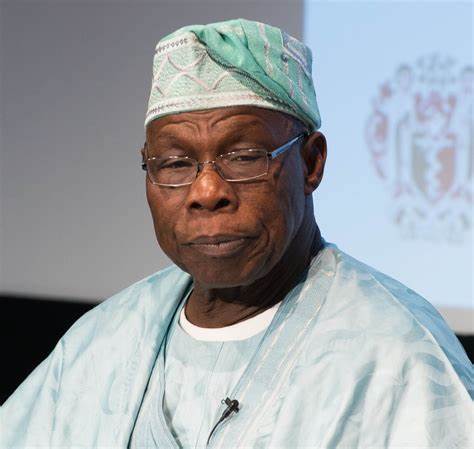
Former President Olusegun Obasanjo on Wednesday declared that the labour reforms he initiated as military Head of State rescued Nigeria’s organised labour movement from foreign intelligence influence and external funding during the height of the Cold War—an arrangement he said gravely threatened the country’s sovereignty and independence.
Obasanjo also disclosed a previously unknown strategy he adopted with late labour icon and former Nigeria Labour Congress (NLC) President, Hassan Sunmonu, revealing that he encouraged Sunmonu to publicly criticise his government—even after private consultations—so the labour leader could retain workers’ confidence.
The revelations were made as former Edo State governor and ex-NLC President, Senator Adams Oshiomhole, reaffirmed his lifelong commitment to the labour movement.
At the same time, current NLC President, Comrade Joe Ajaero, renewed his attack on the Federal Government’s tax regime, accusing authorities of deliberately excluding Labour from key policy decisions.
Obasanjo, Oshiomhole, Ajaero and other prominent figures spoke at the 85th birthday celebration and public presentation of Sunmonu’s memoir, “Memoirs of an African Trade Union Icon: Organise, Don’t Agonise.”
*Labour under foreign influence
Recalling the political climate of the era, Obasanjo said two dominant labour organisations then operated outside Nigeria’s effective control and were allegedly funded by rival foreign intelligence blocs.
According to him, one group was financed by the Soviet Union’s KGB, while the other received backing from the United States’ Central Intelligence Agency (CIA).
“That was the reality,” Obasanjo said. “They were Nigerian labour organisations, but they were neither organised nor funded by Nigeria.”
He explained that the situation compelled him to initiate comprehensive labour reforms aimed at creating a truly Nigerian trade union movement—organised, controlled and financed locally.
“I needed a Nigerian labour union organised by Nigeria, controlled by Nigeria and funded by Nigeria. That was the basis of the reform,” he said.
Obasanjo said the reform process, spearheaded by Justice Adebiyi, led to the restructuring of trade unions and the enactment of laws that gave birth to the Nigeria Labour Congress.
He stressed that the NLC leadership emerged from elections conducted without government interference, resulting in Sunmonu’s election as its first president.
“When the reforms were completed and the NLC was established, without the government’s hand, they elected their leader, and Hassan became the first elected president. I felt comfortable,” he said.
•Ex-president reveals secret pact with Sunmonu to sustain labour credibility
Reflecting on his relationship with Sunmonu, Obasanjo said both government and Labour needed each other but had to maintain institutional independence.
He disclosed that he advised Sunmonu to openly criticise government policies after private engagements to preserve his credibility among workers.
“I told him, ‘After meeting me, go out and abuse me publicly so that your members will trust you,'” Obasanjo said.
He added that the introduction of a compulsory check-off system guaranteed stable union funding and permanently eliminated foreign financial influence from Nigerian Labour.
Obasanjo described Sunmonu as the most influential labour leader after Pa Michael Imoudu, crediting him with elevating Nigerian Labour’s standing across Africa and globally.
*Ajaero: Tax laws punish workers
In his address, NLC President Joe Ajaero sharply criticised the new tax laws, rising public debt and what he described as the systematic exclusion of Labour from critical policy processes.
He accused the government of crafting policies that deepen poverty and undermine democracy without engaging workers.
“Tax laws that tax the national minimum wage, impose heavier burdens on workers and the poor, and worsen excruciating poverty are not progressive but regressive,” Ajaero said.
He alleged that Labour was deliberately excluded from the Presidential Committee on Tax because workers were “meant to be on the menu.”
Ajaero also queried Nigeria’s growing debt profile, asking pointedly: “Where are all the monies being borrowed by the federal government?”
He warned that ruling by exclusion, distorting legislative processes and bypassing stakeholders eroded public trust and threatened national stability.
“The philosophy of Organise, Don’t Agonise demands engagement, not enragement,” he said, calling for structured dialogue on fuel pricing, taxation, wages and social services.
He further demanded the immediate constitution of the PENCOM board and clarity in tax administration, warning that the current approach was dangerous for democracy.
*Oshiomhole: I’ll stand with Labour for life
Senator Adams Oshiomhole, who stood in for Obasanjo before his arrival, urged workers to organise rather than agonise, stressing that Labour needed facts, strategy and sustained struggle—not tears.
“If labour doesn’t get its facts right, it will play into the hands of those who don’t understand its challenges,” he said, adding: “I will be with labour till the end of my life.”
Human rights lawyer, Chief Femi Falana, SAN, also urged the NLC leadership to emulate Sunmonu’s principled and courageous leadership style, noting that 62 per cent of Nigerians are currently classified as multi-dimensionally poor.
Honouring Sunmonu, Ajaero said the book launch had become a moment of national reflection on the condition of Nigerian workers, pledging that organised Labour would continue to challenge policies that perpetuate poverty, insecurity and inequality.
“We will continue to organise. We will continue to fight for a Nigeria where no worker has to agonise over poverty, heavy taxation or a stolen future,” he said.