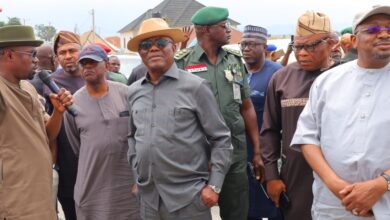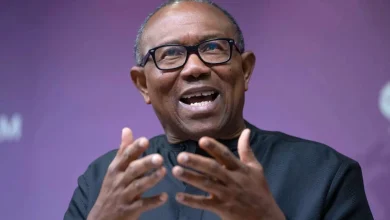
The appearance of the Nigeria Democratic Congress presidential candidate, Peter Obi, at the inauguration of the 2027 presidential campaign office of Oyo State Governor, Seyi Makinde, has divided political commentators, with some describing the move as a calculated opposition strategy and others questioning whether it amounts to anti-party activity.
The development has also fuelled speculation about possible political realignments ahead of the 2027 presidential election, particularly following Obi’s decision to attend Monday’s event alongside Makinde and the Bauchi State Governor and leader of the Allied Peoples Movement, Bala Mohammed.
While some commentators interpreted Obi’s presence as a strategic move aimed at weakening the ruling All Progressives Congress in its traditional stronghold, others accused him of undermining his own party by openly appearing at the campaign event of another presidential contender.
Reacting to the controversy on Tuesday, however, Obi said his presence at the event should not be interpreted through the lens of political rivalry, stressing that political differences should not override the common interest of Nigerians.
He said his attendance was intended to demonstrate that competition for political office should not prevent politicians from maintaining mutual respect or working towards the broader interests of the country.
Obi said Nigeria needed a political culture built around “Unity, Love, Justice, mutual respect, and inclusion”, arguing that the 2027 election should focus on competing ideas and solutions rather than personal attacks and bitterness.
“We must insist that our shared love for our country should always be greater than our political differences. This is my call to all contestants in the forthcoming elections,” he said.
He added that politicians should use the forthcoming election to present practical solutions to the country’s pressing challenges, including insecurity, poverty, hunger, inequality and the rising number of out-of-school children.
“Let our contest be about ideas and solutions that will address the enormous challenges facing our country today: insecurity, poverty, hunger, inequality, and the growing number of out-of-school children,” Obi said.
The former Anambra State governor also urged political actors to conduct their campaigns with decency and respect, saying political competition should ultimately be about improving the lives of Nigerians.
“Let us compete on ideas that will unite our people, improve their lives, and restore hope to our nation, while maintaining respect, decency, and love for one another,” he added.
His explanation, however, has not ended the debate over the political meaning of his appearance at Makinde’s campaign office.
Reacting on Facebook, Ossai Ovie Success described the development as an indication of possible “anti-party” activity, saying Obi’s public appearance in support of the APM could expose him to disciplinary action within the NDC.
He wrote, “I am disappointed in Peter Obi shouting APM as an NDC Presidential candidate. This is an Anti Party that might lead to Peter Obi suspension from NDC.”
Another commentator, Enuechie Cletus, took a different position, arguing that opposition parties could be deploying a broader strategy ahead of 2027 and predicting that the ruling party could face a divided vote in the South-West.
He wrote that the ruling party and its supporters were “going to learn advanced politics this time around”, adding that “a lot is unfolding” ahead of the election.
Jonathan Adaidu also criticised Obi, accusing him of pretending not to be interested in the presidency and arguing that major presidential contenders were ultimately seeking the power, influence and privileges attached to the office.
On X, WemaDtalkactive questioned the logic behind Obi’s support for Makinde, arguing that if the Oyo governor was considered suitable for the presidency, President Bola Tinubu should equally be considered fit for the office.
Other commentators, however, interpreted Obi’s action positively.
The Emir Sirdam Show described Obi as a politician whose moves were unsettling his opponents, while suggesting that his appearance at the APM event represented a new style of political engagement.
Dr Umaru, writing on X, said Obi’s decision could offer an indication of the kind of leadership he would provide, describing the gesture as evidence of his willingness to engage and respect political opponents.
Some commentators went further, interpreting the development as a calculated electoral strategy.
Jeffrey Okpipi argued that Obi might be seeking to strengthen Makinde’s profile in the South-West, where Obi would face a tougher electoral battle, with the potential consequence of splitting votes that would otherwise favour Tinubu.
Similarly, Salami Akorede Akorede said Makinde’s presidential bid could reduce Tinubu’s support in the South-West and, if that happened, potentially benefit Obi.
Thomas Kolapo, meanwhile, questioned whether Obi’s appearance represented “politics beyond party lines” or could be the beginning of a broader political understanding between the two politicians.
But another commentator, Ennyola, described the development as “anti-party politics”, arguing that Obi’s attendance at the inauguration of another party’s presidential campaign office while presenting himself as the NDC presidential candidate could create tension within his party.
The divergent reactions have consequently shifted attention from the event itself to what Obi’s appearance could mean for opposition politics ahead of the 2027 election.
The speculation comes against the backdrop of increasing political realignments, with several prominent opposition figures positioning themselves for the presidential contest.
Former Vice President Atiku Abubakar is contesting under the African Democratic Congress, while Makinde is seeking the presidency on the APM platform.
For Obi, however, the immediate message is that political competition should not become a barrier to national cooperation.
His position is that regardless of party affiliation or presidential ambition, Nigeria’s problems should remain at the centre of the 2027 contest, with candidates competing on how best to improve the lives of citizens rather than allowing political differences to deepen existing divisions.