Over-reliance on federal allocation has affected states negatively – Edoigiawerie

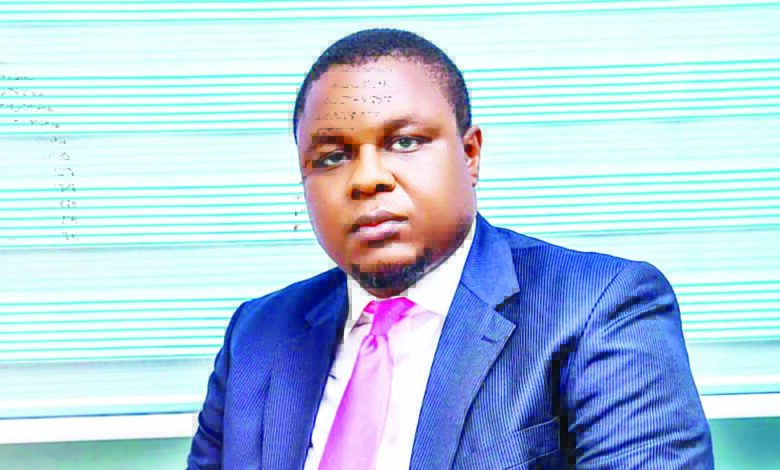
A legal practitioner and Corporate Governance Consultant, Omoruyi Edoigiawerie, speaks on the raging legal tussles between some states and the Federal Government over the Value Added Tax (VAT), and other economic issues, in this interview with Mudiaga Affe
In the 2021 outlook, Nigeria’s economy is expected to grow by 1.8%, would you say with the high uncertainty this is achievable?
If there’s anything that is very certain, it is that nothing is cast in stone, we can predict but history has told us that we can only do so much. Although analysts have said that the economy grew by five per cent at the end of 2021 Q2 which is the highest so far since 2017. In Q2, there were still a lot of uncertainties even as the different regulatory agencies released new guidelines to monitor the economy some of which were confusing and conflicting. However, if the constant depreciation of the naira is left unabated, the possibility of seamless increased economic growth would be in jeopardy.
The uncertainties we face are multi-faceted and these have compounded the problem. Capital appreciation has been largely stunted this year while devaluation and rising inflation continue to erode the purchasing power of the local currency. We also witness a rise in speculative activities among the elites and investors betting on the depreciation of the naira.
This is likely to continue in the short to medium as the global economy gets back to shape post-COVID. It is important to mention that our unhealthy reliance on imported goods and services from western countries is an inimical strong contributory factor to inflation keeping Nigeria’s inflation and when you insecurity and rising food prices, Nigeria is likely to face multiple devaluations in the coming months if not years, except something concrete is done to checkmate this trajectory.
Do you think the economy has fared well in the last three quarters of the year?
Compared to the previous year when the economy was grossly affected by the COVID-19 pandemic which saw our GDP declined by 6.1 per cent at the first half of 2020 and close at -3.62 per cent in December 2020, the economy has picked up nicely in the early quarters of 2021, rising to 0.51 per cent at the end of 2021 Q1 and a five per cent at the end of 2021 Q2. It is expected that the third quarter would closely follow the Q2 figures with the gradual return of commercial activity as well as local and international travel. Therefore, I would say the economy has fared well in light of the challenges we have faced in the past year but we definitely can and should do better.
The Rivers State Government recently got a judgement in favour of it for the collection of VAT, what is your reaction to this?
This case has emphasised the recurring issue of fiscal federalism in Nigeria. The trial court did its job by interpreting the existing lacuna in the Exclusive List of the Constitution to mean that the Federal Government lacks the power to act on matters not specifically donated to it by the Constitution. I do not think there is any dispute, the law is clear, the Constitution was unequivocal in its apportionment of powers in the Exclusive, concurrent and residual legislative lists and all the Federal High Court did was interpret the law as it should. Until the Constitution is amended, the issue of VAT in the 36 states of the country falls within the Residual list.
The Constitution has specifically designated the taxes that the Federal Government is empowered to impose and collect as stated in items 58 and 59 of part 1 of the second schedule and this must be read to exclude other species of taxes like VAT, withholding taxes education taxes, and technology tax. If you look very closely you will see that VAT is the tax on goods and services.
Uzodinma urges Imo people to ignore Monday sit-at-home order
Taxes on goods and services are not specified in either the Exclusive or concurrent legislative lists and this therefore clearly excludes the National Assembly from making laws on these taxes. And the law is clear that legislative powers not enumerated in either the Exclusive List and Concurrent lists are residual to the state. Interestingly, a similar issue had previously come up before the Supreme Court in the case of the Attorney-General of Lagos State versus Eko Hotels & Anor in 2017 wherein the Apex Court determined the legality of collecting both Consumption Tax and VAT by two different levels of government.
This Rivers State case presents an opportunity for the Supreme Court to specifically determine the appropriate agency empowered to collect VAT. Because this is a judgment that has the potential to affect the entire federation and not just Rivers State, I believe that it should be appealed to the Supreme Court to enable the Apex Court to give a definitive pronouncement on this very important issue of remittance of VAT to the Federal Government. This is good for our jurisprudence.
The FIRS has already appealed against the judgment of the Federal High Court and the Court of Appeal has urged the parties to maintain the status quo pending its judgement on the appeal, so let’s wait. However, I would love to see the case get to the Supreme Court and the birth of a definite pronouncement that will put the issue to rest.
Following the development, two of Nigeria’s richest and most populous states, Rivers and Lagos, are pushing the envelope and daring the federal government, what does it portend for states that have a low revenue base?
I am aware that the House of Assembly of Lagos State has already taken steps to implement the decision in the Rivers State case bypassing the Value Added Tax Law.
This Law would empower the Lagos State Internal Revenue Service (LIRS) to collect VAT from businesses operating within Lagos State. It is common knowledge that Lagos State as the economic centre of Nigeria contributes the most to the GDP of the country. The oil-rich Rivers State is the second richest state by GDP ranking in Nigeria. Under the present fiscal structure, VAT is collected by the FIRS and remitted into the federal purse. This sum is then distributed amongst the 36 states based on size and population. Under this structure, some large states which contribute very little to the national purse are guaranteed federal allocation.
However, if the judgment of the Federal High Court in the Rivers State case is upheld by the Court of Appeal (and ultimately the Supreme Court), it would mean that the federal government would lose one of its major sources of revenue and this would ultimately affect its allocation to the less wealthy states. This would make the different states take conscious steps to become economically self-subsistent under an ideal federal structure.
Pundits are of the view that it will be wrong for northern states who banned the consumption of alcohol due to Sharia to expect to receive VAT collected from alcohol consumption in the south, what is your take on this?
I agree with this view. If you do not support an act, you should not benefit from that act.
The ban on alcohol in the north, although supported by religious dogmas, has stifled its consumption, which has affected the revenue generated from those states. But let’s not get ahead of ourselves, these states are within their rights to ban alcohol consumption if they so choose, however, they must now find alternative ways to shore up their revenues and look the other way when it comes to proceeds from the sale of products which they have banned. You cannot eat your cake and have it.
I have always said that overreliance on federal allocation has affected the ability of states to be ingenious in their revenue-generating drive. Most states act like salary earners, every month they head to Abuja, collect their allocation, return home to spend it, and wait for the next month. You cannot be rich or self-sustaining that way, they have to look inward. Nigeria is divinely blessed and every state has what it takes to generate enough income to be self-sustaining. Also, the governors must be realistic with the costs of governance, you can’t be spending money as if you’re in completion with a state that generated multiple times what you make monthly. It’s not a once size fits all.
States in the south are beginning to pass the ant grazing bill, while Miyetti-Allah says a cow will cost N2m if open grazing is banned in Lagos, do you think such a hike would deter the south?
No, I do not think the hike would deter the southern states. The southern states who are banning open grazing are providing alternatives to open grazing in controlled areas to ensure cattle subsistence. Cattle grazing is an economic activity and the cattle grazers need the final consumers in the south as much as the consumers need the grazers and the cattle.
Let’s look at it this way, what’s the use of a cow without people who will buy them. They know that their biggest market for cow meat is in the south and if the south pulls out, who will they sell with. If that were the case alcohol sellers would have been agitating against the ban of alcohol by some states, rather they choose to channel their market where it is in legal demand and intensify sales there. Sometimes when I ponder on these issues, I see a problem in communication, these are issues that have gone from simple to complex because of egocentrism and undue politicisation of issues. Let’s not forget that cattle rearing is not an exclusive preserve of any section of this country.
Insecurity has become a major challenge in the country, are we getting it right in terms of tackling the situation?
The rate of insecurity in the country has steadily increased in the last three years. Bandits and Kidnappers have taken over the major roads both in the north and south. It was thought that the change of service chiefs earlier this year would bring a fresh perspective to the security situation, however, this is yet to be felt. In addition to the frequent attacks by bandits and men of the underworld, the volatile nature of our political structure has also seen many civil unrests in the last two years. This has led to a lot of commercial and personnel emigration in recent times. It would be safe to conclude that the measures currently being adopted by the present government to attack insecurity need to be reassessed and possibly rejigged. However, as I will always say, it’s easier to criticise from the outside, there may be factors unknown to the general public that have made our security challenges more difficult to tackle.
The continued sit-at-home order by IPOB may be gaining ground in the southeast and affecting the region economically. What do you think about the agitation?
Indeed, the sit-at-home order would economically affect the regions where it is religiously enforced. The recent arrest and trial of Nnamdi Kanu appear to have refuelled the agitation that was fizzing out. I think the Federal government should be ready to proactively treat all regions in the country equally and be as welcoming to the southern agitators as it has been to the northern bandits. Inequality, poverty, and a general lack of social justice in Nigeria are the root causes of insecurity and sectarian agitation. As a people, we’ve preferred to defend corrupt people, hoping their loot would trickle down, rather than advocate for a fairer system where we wouldn’t need to fight each other for crumbs.
The fulcrum of Nigeria’s problem is that we do not have a system that ensures credible, creative leadership and pro-people policies but rather a system that favours the strong, the wealthy, and those able to manipulate us on ethnic grounds. These agitators or ‘entrepreneurs of violence’ as someone called them will continue to profit from selling division, hate, and conflict, which will continue to rise in response to the people’s discontent. They are merely cashing in on the disenchantment of the people in this case from Eastern Nigeria and these concerns have to be addressed.
To my mind, the solution is simple, rather than hound the leaders of these groups, Government should focus on addressing the concerns that lead to these agitations, you’ll be surprised that most of the people spearheading these groups have no idea what secession entails. They have only found their voice because of people and frustrated and displeased with the status quo.
I believe we’re better off as Nigeria but not as things presently are, there should be restructuring to create a balance. Lagos gives us a healthy template for one Nigeria, in this city you have people from every state in Nigeria thriving and making a living irrespective of their ethnic background. Frankly, no one cares here, just do your thing and let me do mine. There’s a thing or two to learn from the Lagos template.