By Nathaniel Zaccheaus, Abuja
The Minority Leader of the Senate, Senator Abba Moro, has warned that communities in Benue State may be forced to defend themselves if governments at all levels continue to fail in their constitutional responsibility to protect lives and property amid escalating attacks by armed assailants.
Speaking to journalists after raising a matter of urgent public importance on the floor of the Senate on Wednesday, Moro disclosed that about 20 persons, including children, were killed in coordinated attacks across communities in Benue South Senatorial District within 72 hours.
The lawmaker, who invoked Orders 41 and 51 of the Senate Standing Orders to draw attention to the deteriorating security situation, rejected descriptions of the violence as farmer-herder clashes, insisting that the killings were part of a deliberate campaign to displace indigenous communities and seize their ancestral lands.
According to him, the attacks followed a disturbing pattern that has persisted despite repeated warnings and previous interventions by the Senate.
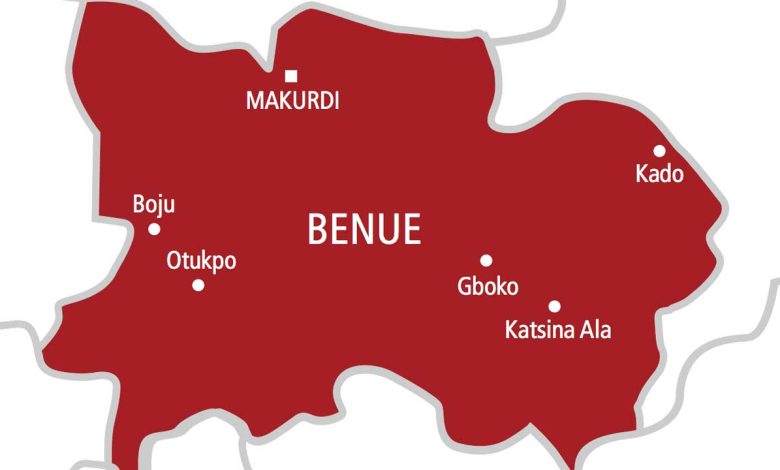
He recounted that the Utukpitu community came under attack on a Friday, followed by the killing of two persons in Akpachi, Uboju District of Otukpo Local Government Area on Sunday.
Another attack occurred on Tuesday, July 14, in the Ondo community of Uboju, where two more residents lost their lives.
Moro noted that barely three months earlier, he had brought a similar motion before the Senate, describing Benue South as being under siege.
He lamented that innocent citizens now lived in constant fear, with attackers invading communities and killing residents in their homes without provocation.
“People wake up at 5 a.m. to the sound of gunshots, and before long, a sizeable number of innocent people have been killed,” he said.
The senator revealed that intelligence reports had warned of an impending attack seven days before the latest killings.
According to him, the paramount ruler of the Idoma Kingdom alerted the Commissioner of Police after receiving information that the Otukonobi community was a likely target.
He said the police commissioner reportedly complained that he had been unable to reach the state governor despite repeated attempts.
“Seven days later, the community was attacked, and lives were lost,” Moro stated.
Invoking an Idoma proverb, he said, “If you hear the sound of the owl in the night and a child dies in the morning, you do not have to search too far to know where death has come from.”
He disclosed that three communities in one local government area were mourning about 20 victims, while several others remained hospitalised with injuries.
Moro acknowledged that Governor Hyacinth Alia later visited survivors at the Otukpo General Hospital and promised to settle their medical bills after residents rejected an earlier ₦5 million donation to the affected communities.
According to him, the victims made it clear that what they wanted was protection rather than financial assistance.
“The people said they were not interested in his money; they were interested in their protection,” he said.
The senator criticised what he described as a reactive approach to insecurity, arguing that governments had become accustomed to condemning attacks and donating money after lives had been lost instead of preventing such tragedies.
He also cited the recent kidnapping of mourners conveying the remains of a retired Deputy Corps Marshal of the Federal Road Safety Corps from Lokoja to Benue for burial as further evidence of the worsening security situation.
Moro said he had repeatedly raised the issue in the Senate because previous resolutions had yielded little practical response.
He disclosed that he had earlier proposed that the Senate leadership should meet President Bola Tinubu to brief him directly on the true state of insecurity in Benue, expressing concern that some government officials might not be providing the President with accurate information.
“The situation has become intolerable and is no longer acceptable,” he declared.
Responding to questions on whether the attacks should be officially classified as terrorism, Moro said the distinction between terrorism and banditry was largely semantic, noting that armed bandits had already been designated as terrorists.
He urged authorities to focus on ending the killings rather than debating terminology.
On claims that the attacks might have been linked to the killing of a Miyetti Allah leader in Benue, the senator dismissed the suggestion, insisting that no incident could justify the massacre of innocent communities.
“Many people have been killed in Benue South, but our people did not go to other places looking for Fulani people to kill. It does not happen that way,” he said.
He stressed that elected leaders were duty-bound to demand adequate protection for citizens and should not encourage self-help.
However, he warned that if the government continued to fail in its constitutional obligation, communities might eventually have no option but to defend themselves.
“We are not lazy people. We are not idle people. If, after some time, no action is taken by the government to protect our people, I can assure you that we are capable of protecting our lives,” he said.
Moro faulted Governor Alia’s response to the crisis, describing the ₦5 million donation to affected communities as inadequate and arguing that preventing attacks should take precedence over post-incident relief.
“Governors should be the first responders. Instead, they stay in the comfort of Government House, condemn the attacks and make donations after people have died,” he said.
On allegations of official complicity arising from repeated intelligence warnings before attacks, the minority leader declined to accuse any individual or institution but questioned why such intelligence had failed to prevent the killings.
“It is not for me to say who is complicit or negligent. The fact remains that these attacks are happening and the government has not contained the situation,” he said.
The senator also reiterated his opposition to state police, arguing that many states were already unable to adequately fund existing security forces.
Using Benue as an example, he said members of Operation Vanguard had reportedly gone for months without receiving their monthly stipends and lacked the logistics needed to confront heavily armed attackers.
He warned that unless proper safeguards were established, state police could also be abused for political purposes.
“The question is: if states cannot adequately equip and fund existing security outfits, where will they find the resources to fund state police?
“We must ensure that such an institution is created to tackle insecurity and not for political purposes,” Moro said.