By Nathaniel Zaccheaus, Abuja
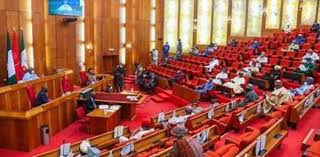
The Senate on Wednesday approved a ₦50 million intervention fund for the families of three soldiers and two teachers who lost their lives during the military operation that secured the release of 39 abducted schoolchildren and seven teachers in Oriire Local Government Area of Oyo State.
The Red Chamber described the deceased as heroes who paid the supreme sacrifice in the service of the nation.
The upper chamber resolved that each of the five bereaved families should receive ₦10 million to support the welfare of the children and other dependents left behind by the fallen personnel and teachers.
The beneficiaries include Lieutenant F.A. Isaac of the Nigerian Army, Private Silas Musa of the 81 Battalion, Sergeant Abena John Jerome of the Nigeria Police Force, and two teachers who reportedly chose to remain with the abducted pupils throughout their 56-day ordeal before the kidnappers murdered them.
The intervention followed the Senate’s adoption of a motion on Tuesday commending the successful rescue operation and paying tribute to the security operatives and teachers who lost their lives in the course of the mission.
Announcing the resolution during plenary, Senate President Godswill Akpabio praised President Bola Tinubu and the country’s security agencies for the successful operation, saying it underscored the importance of coordinated intelligence gathering and inter-agency collaboration in tackling insecurity.
“We have applauded the government and the security agencies, and we pray that similar efforts will be extended to every part of the country where Nigerians remain in captivity,” Akpabio said.
He commended President Tinubu, the Chief of Army Staff, the Director-General of the Department of State Services, the Inspector-General of Police, the Minister of Defence and other security agencies for their coordinated efforts in securing the release of the abducted children and teachers.
According to him, although the operation ended successfully, it came at a painful cost.
“An Army lieutenant, a private soldier and a police sergeant lost their lives during the operation, while the kidnappers also murdered two teachers who remained with the abducted children in captivity,” he said.
Explaining the rationale for the Senate’s financial intervention, Akpabio said the donation was intended to cushion the hardship faced by the deceased’s families and to support their dependants.
“The Senate has resolved to donate ₦50 million, with ₦10 million to each of the five families, to augment the upkeep of the children and dependants left behind by these heroes,” he said.
He directed the Senate Leader, Senator Opeyemi Bamidele, to coordinate the presentation of the cheques to the affected families.
The resolution stemmed from a motion sponsored by Bamidele, who described the May 15 abduction as “a disturbing expansion of organised criminal activities” into the South-west.
He recalled that the incident had heightened national anxiety over the safety of schools and rural communities. Still, he said President Tinubu immediately directed security agencies to deploy all lawful resources to rescue the victims.
According to him, the intelligence-led operation culminated in the successful rescue of the victims on July 10, with several members of the criminal gang neutralised and eight suspected terrorists arrested.
“The successful rescue has restored hope and confidence among Nigerians, particularly parents and school communities,” Bamidele said.
The Senate also urged the Federal Government to provide comprehensive medical treatment and full welfare support for Lance Corporal Adamu Hussain of the 81 Battalion, who sustained severe injuries while reportedly shielding the abducted children from gunfire during the rescue operation.
Lawmakers further called on the Federal Government to sustain the offensive against kidnappers, terrorists and other criminal groups through enhanced intelligence, deployment of advanced surveillance technology and modern security equipment.
Meanwhile, the Senate passed for second reading three Executive Bills seeking to reform the governance structures of key health regulatory institutions by reducing the size of their governing boards to improve efficiency, strengthen oversight and cut administrative costs.
The proposed legislation comprises the Pharmacy Council of Nigeria (Establishment) Amendment Bill, 2026, the Nursing and Midwifery Registration Amendment Bill, 2026, and the Radiographers Registration Amendment Bill, 2026.
Leading the debate, Bamidele said the bills emerged from a comprehensive review undertaken by the Office of the Attorney-General of the Federation in collaboration with the Federal Ministry of Health and Social Welfare.
He explained that the proposed amendments were designed to create leaner governing boards with clearly defined responsibilities, strengthen corporate governance, improve institutional oversight and enable management teams to focus more on healthcare delivery.
“These reforms are in line with the Federal Government’s public sector reform agenda aimed at reducing waste, promoting fiscal discipline and ensuring value for money,” he said.
Bamidele added that savings from lower administrative costs would be redirected to medical infrastructure, modern equipment, healthcare personnel, research and expanded access to quality healthcare.
“The savings arising from reduced administrative costs will be redirected to medical infrastructure, modern equipment, healthcare personnel, research and expanded access to quality healthcare for Nigerians,” he said.
He maintained that the reforms would not diminish the statutory responsibilities of the agencies but would modernise their governance structures in line with international best practices while harmonising board composition across federal health institutions.
The bills received overwhelming support from senators, who argued that smaller governing boards would reduce bureaucratic bottlenecks, accelerate decision-making and free more public resources for healthcare services and capital projects.
The Senate subsequently referred the three bills to the relevant committee for further legislative work.
Earlier, Akpabio dismissed a fresh constitutional point of order challenging the defection of Senator Maidoki from the All Progressives Congress to the African Democratic Congress, ruling that the Senate had already decided the matter and could not be reopened.
The Senate also adopted the Conference Committee Report on the National Assembly Service Commission Amendment Bill, 2026, after harmonising differences between the versions earlier passed by both chambers of the National Assembly.