Come this Saturday, Africa’s most populous and leading country, Nigeria, will be heading for another round of landmark elections.
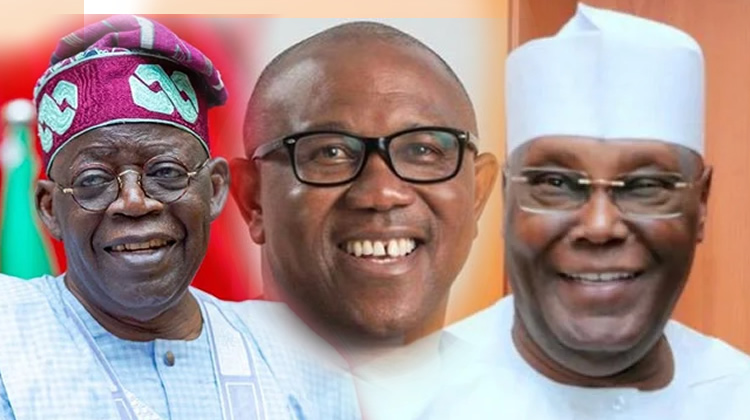
The exercise comes with a presidential election to be contested by 18 eminent candidates of which three are in the driving seat, according to ratings by several forces.
The front-runners, by popular estimates, are the All Progressives Congress (APC) presidential candidate, Bola Tinubu; Atiku Abubakar’s Peoples Democratic Party (PDP), and the Labour Party (LP) led by Peter Obi.
Those on the fringe include the Peoples Redemption Party (PDP) led by Kola Abiola; Omoyele Sowore’s African Action Congress (AAC), and Malik Ado-Ibrahim’s Young Progressives Party (YPP), among several others.
And they are parading a mixed bag of achievements and promises to win the race.
The former two-term governor of Lagos State, Tinubu (70), is credited with attracting foreign investment and improving public transport while he was in office between 1979 and 2007.
Having served briefly as a senator in the early 1990s, he is contesting the presidential election for the first time, on the ticket of the ruling party (at the national level, APC).
The clog in the wheel of his challenge is, however, rooted in various accusations of corruption and allegations of drug trafficking in the US, all of which he vigorously denies, and may have been cleared.
Traducers also finger a health challenge as one of the issues against his candidature.
On his part, former vice-president, Atiku Abubakar, 76, described as a ‘veteran president’, is running for the presidency for the sixth time. His first attempt was in 1992.
Atiku, a former top Customs official, and businessman served two terms as subordinate to former President Olusegun Obasanjo, during which he was credited with struggling with reforms to key sectors that helped kick-start economic growth.
He too, like others, has been accused of various charges of corruption, all of which he has denied.
Atiku is running the presidential race as the standard bearer of the country’s main opposition party, the PDP, alongside his running mate, Delta State governor, Ifeanyi Okowa.
Initially, the race seemed a two-horse contest between two old warhorses, Tinubu and Atiku, who seemed to have dominated the Nigerian political landscape since the return of democracy in 1999.
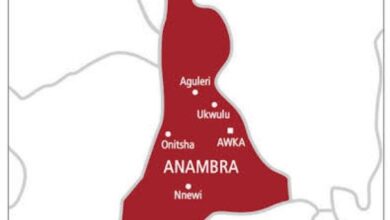
With a message that he is the only candidate offering real change, Obi, a millionaire businessman from Anambra State, has emerged from the odds to become an unexpected, powerful ‘third force’ in the presidential race.
At 61, Obi is the youngest of the three front-runners for Nigeria’s top job in this weekend’s presidential election.
For supporters of Obi, a 61-year-old Christian from the Igbo-speaking region and candidate of the Labour Party, his background is the starting point for what sets him apart.
Reputed for frugality and integrity, Obi’s tenure as Anambra governor, watchers say, is a reference point for his accountability in public service.
Also, his supporters see that as a departure from endemic corruption that has marred the nation’s public life, endearing him to younger Nigerians who represent a large portion of registered voters.
The larger base of the LP candidate’s challenge, pundits say, lies in Obi’s growing popularity and social media appeal, which, according to a source, “are unprecedented in modern Nigeria where the PDP and APC have dominated politics since the end of military rule in 1999”.
Perhaps, for the first time in Nigeria’s chequered political history, a presidential candidate in the mould, Obi, is rallying the younger electorate — mostly in their 30s — into a popular movement nicknamed ‘Obidients’, “despite the Labour Party’s lack of a national structure” way back then.
Supporters say the situation has since changed since running for and failing in the contest as the vice presidential candidate of the PDP in 2019.
Election: Banks not shutting down Thursday, Friday – ACAMB
Obi and his supporters’ belief summarize that those derogatorily referred to as ‘old-school politicians’ should give way to this election. They see the poll as an opportunity for Nigerians to vote them out.
“It’s time to take your country back,” Obi often says at campaign rallies.
*Frenzy, tension, horse-trading across parties
With Saturday’s election stacked as a three-horse race among Tinubu, Atiku, and Obi, analysts speak of the expected change the country is about to witness with his presidency if he eventually makes it.
A supporter was quoted as saying, “We need a change and with Obi, we will get that change.”
One unique feature of Obi’s campaigns is the use of opinion polls forecast, as a preparatory step to victory.
Admirers say he has been using his popularity on social media and among young Nigerians, many of whom, however, may not have voter cards.
Some also argue that the former governor and his party lack the geographical spread and political structure to win the vote, especially in the mostly Muslim north.
Under Nigerian electoral law, a candidate must win the most votes along with at least 25 per cent of votes in 24 of Nigeria’s 36 states and the federal capital, Abuja.
Despite the misgivings, Obi and his running-mate Yusuf Datti Baba-Ahmed, a northern Muslim, have had strong showings at campaign rallies, even in the north.
Even in Tinubu’s Southwest stronghold, Obi attracted large crowds, drawing support from the large population of Igbo traders and residents, especially in Lagos.
Former president Olusegun Obasanjo and his fellow Yoruba leader Ayo Adebanjo, have publicly endorsed Obi’s bid, insisting it is the turn of the Igbo to get the presidency since other regions have had their chance at the top job.
Beyond the trio of Tinubu, Atiku, and Obi, the next main contender, according to ratings, is Rabiu Musa Kwankwaso of the New Nigerian Peoples Party (NNPP), which observers note, was an offshoot of dissent in the PDP camp.
Kwankwaso, 66, is a former governor of the north-western state of Kano, where he introduced free education for residents during his two terms. He was a senator between 2015 and 2019.
He has previously been in both of Nigeria’s biggest parties – the PDP and APC – before joining the NNPP last year
Having served as a minister of defence (from 2003-2007), he has vowed to tackle the country’s various security crises to raise the army’s size to one million by recruiting an extra 750,000 soldiers.
A two-term governor, Kwankwaso is seeking the country’s highest office for the third term, having previously been in both of Nigeria’s biggest parties – the PDP and APC, before joining the NNPP) last year. His first two attempts failed in the party’s primaries.
His running mate is Odiri Idahosa, a bishop.
*Still a three-horse race of Tinubu,
Atiku, and Obi
It has been widely reported that a sizable number of the youths have said they are supporting Obi and Kwankwaso to change the status quo as represented by APC and PDP.
Many of them are said to be thronging the INEC centres for
A media aide to Atiku; Paul Ibe, and Senator Dayo Adeyeye, the national coordinator of the South-West Agenda for Asiwaju, a major support group for Tinubu, have denied comments that Atiku and Tinubu are threatened by Obi and Kwankwaso’s rising support base.
Asked if Atiku is threatened by the rising profile of Obi, his media aide, Ibe said, “Social media ballots are different from the way real voters vote. Everything will end at the ballot box. What is there to be afraid of someone making waves on social media?
“We will meet on the field. Nigerian voters will determine the fate of the candidates. We are working on marketing our candidates. Nigerians know Atiku as a unifier, who will make a difference and rescue them from the hands of people who have impoverished us.
“Supporters of other candidates are free to make their claims. We are working with decorum. 2023 will be a referendum on the failed policies of the APC. Atiku is a viable alternative given his long years of experience in government, performance as vice president, and handling of businesses.”
On his part, Adeyeye said, ‘Tinubu can’t be jittery over Obi’
According to the senator, voter registration was a sign that “Nigerians are committed to the sustenance of democracy, especially as it is coming from the youths.”
He expressed the belief that “everything would work in favour of Tinubu at the end of the day.”
Averring that Obi was not a threat to Tinubu, he said, “How can we be threatened or jittery over Obi or Kwankwaso? We don’t consider them a serious challenge. If you base your strength on the showings on social media it does not mean you are strong on the field.
“We are not jittery or bothered. Tinubu has the support of Nigerian masses across the six geo-political zones of the country. The whole thing (Obi campaign buzz) will fizzle out shortly.”
Apart from support for Obi and Kwankwaso, there is also a mobilisation to stop the APC’s Tinubu/Shettima Muslim-Muslim ticket.