By Francis Ajuonuma
The Federal Government has paid ₦1.23 trillion out of an estimated ₦3.3 trillion in legacy power-sector liabilities as it moves to stabilise Nigeria’s electricity market and unlock fresh investment.
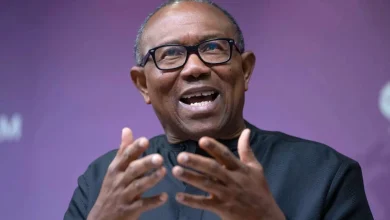
Minister of Power, Joseph Tegbe, disclosed this on Tuesday at the opening of the Nigeria Energy Leadership Summit 2026 at the Landmark Centre, Lagos.
The minister said the government was shifting attention from designing reforms to delivering measurable improvements in electricity supply, grid performance and the financial sustainability of the power sector.
Tegbe identified four priorities underpinning the strategy: strengthening energy zones, improving sector liquidity and sustainability, optimising existing assets and expanding infrastructure to meet future electricity demand.
According to the minister, accumulated liabilities, gas supply constraints, overstretched transmission infrastructure and distribution losses remain major obstacles to reliable electricity delivery.
He said the government had already paid ₦1.23 trillion of the estimated ₦3.3 trillion legacy liabilities, while efforts were being made to prevent fresh financial leakages and the accumulation of new debts.
Tegbe said the approach was necessary to restore confidence in the sector and create conditions capable of attracting additional private investment.
The minister also highlighted the continued implementation of the Presidential Metering Initiative, Distribution Sector Recovery Programme and Meter Acquisition Fund as measures to reduce technical and commercial losses.
Tegbe identified Lagos–Ogun, Benin–Enugu–Port Harcourt and Abuja–Kaduna–Kano as three priority economic energy corridors under the new strategy.
The corridors are intended to align electricity generation, transmission infrastructure, distribution readiness and identifiable demand, particularly around areas with significant industrial and commercial activity.
The minister said improving coordination across the three segments of the electricity value chain would help ensure that investments translate into more reliable power for households, businesses and industries.
He also stressed the need to maximise the performance of existing power-sector assets while expanding transmission and other infrastructure to accommodate future demand.
Tegbe said the ultimate measure of the reforms would be their impact on the wider economy, particularly industrial productivity, business expansion, investment and employment.
He said the power-sector strategy was aligned with President Bola Ahmed Tinubu’s Renewed Hope Agenda and was intended to make electricity a stronger driver of economic activity.
The Nigeria Energy Leadership Summit and Exhibition 2026, which runs from October 27 to 29, brings together energy companies, technology providers and other industry stakeholders to examine investment opportunities and solutions across the power and wider energy value chain.