By Nathaniel Zacchaeus, Abuja
The Presidency said yesterday that the tax reforms driven by President Bola Tinubu are focused on empowering, supporting and building a better economic future for young Nigerians to thrive.
The Senior Special Assistant to the President on Citizenship and Leadership, Ms Rinsola Abiola, stated this at a Youth and Tax Town hall meeting jointly organised by her Office and the Federal Inland Revenue Service (FIRS).
This came as Zach Adedeji, Chairman of the Federal Inland Revenue Service (FIRS), urged youths to be more involved in tax matters on the occasion.
He said doing so would enable a clear understanding of how it works and the benefits they stand to derive from taxation.
Abiola explained that the Nigeria’s proposed tax reforms were not just about revenue collection but also about opportunity, empowerment, and national inclusion.
She said, “A lot has been said about the proposed tax reforms. I wish to assure everyone present here today, and indeed all other young people across the country, that these reforms have been crafted with the best interests of young people at heart, whether as professionals, salary earners, or business owners.”
Abiola emphasised that young people are no longer the leaders of tomorrow but active participants in shaping economic policies today.
She listed advocacy, innovation, entrepreneurship, and policy engagement as key avenues through which youths can influence Nigeria’s tax landscape.
“By fostering entrepreneurship and job creation, young people contribute to expanding the tax base and generating revenue for national development,” she said.
On his part, FIRS Chairman, represented by his Special Adviser on Research and Statistics, Prof. Aisha Mahmoud Haman, noted that building a culture of voluntary tax compliance lies in engaging Nigeria’s young majority, who make up more than 60% of the population.
He said, “Taxation is both a fiscal tool and a social contract. It is the foundation of public trust and the most sustainable means by which governments meet their obligations to the people.”
He acknowledged the longstanding public perception of taxation as a burden but said the FIRS is actively working to rebuild that relationship.
Adesuji said, “Our role at the Federal Inland Revenue Service is not simply to collect taxes but to build a culture of voluntary compliance, transparency, accountability, and most crucially, inclusion.
“If we harness this energy productively, Nigeria can become one of the most competitive economies in the world. But if we ignore it, we risk deepening economic exclusion, unemployment, and social tension.”
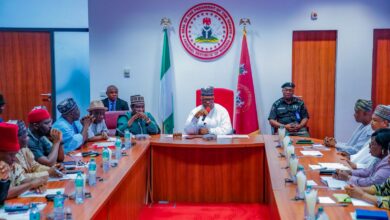
Meanwhile, the Senate yesterday adopted the harmonised Conference Committee Report on the four Tax Reform Bills.
The resolution of the Senate followed its consideration and approval of the recommendations of the Conference Committee, which was set up to harmonise the Bills.
The Chairman of the Senate Committee on Finance and leader of the Senate delegation in the Conference Committee, Senator Mohammed Sani Musa, presented the report.
The four tax reform bills were transmitted to the National Assembly in November last year by President Bola Tinubu.
They included the Joint Revenue Board (Establishment) Bill, 2025 (SB 583); the Nigeria Revenue Service (Establishment) Bill, 2025 (SB 584); the Nigeria Tax Administration Bill, 2025 (SB 585); and the Nigeria Tax Bill, 2025 (SB 586).
Nigeria’s recent tax reform bills, passed by the Senate on May 9, 2025, represent a significant overhaul of the country’s fiscal landscape.
These reforms aim to increase government revenue, streamline tax administration, and promote economic equity.
The Value Added Tax (VAT) rate will rise incrementally from 7.5% to 12.5% by 2026, reaching 15% by 2030.
However, essential goods and services, such as food, healthcare, education, transportation, and rent, will remain exempt.
These exemptions cover approximately 82 per cent of household spending, aiming to alleviate the financial burden on low-income earners.