By David Lawani
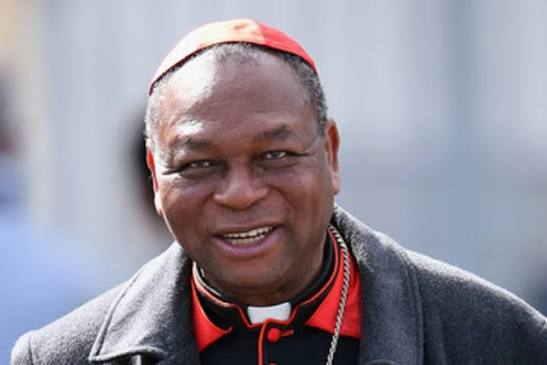
The Presidency has criticised the Catholic Archbishop Emeritus of Abuja, Cardinal John Onaiyekan, over his public comments on the recent closed-door meeting between President Bola Tinubu and the Catholic Bishops’ Conference of Nigeria (CBCN), describing the cleric’s television interview as an inappropriate disclosure of a private engagement.
The criticism was contained in an article titled “Cardinal Onaiyekan’s Abuse of Clerical Privilege,” written by the Senior Special Assistant to the President on Media and Publicity, Tope Ajayi, who argued that the cardinal’s decision to interpret discussions held during the meeting publicly undermined the confidentiality and dignity expected of such engagements.
Ajayi maintained that while the bishops were entitled to present their concerns about the country’s economic, security and social challenges, it was improper for one of the participants to subsequently grant a television interview offering what he described as a personal account of the private discussions.
“It was inappropriate for one of the participants to emerge almost immediately on national television to provide his own version of what was essentially a private conversation with the President.”
According to the presidential aide, the meeting was held at the request of the Catholic Bishops, during which they raised concerns about insecurity, economic hardship and other national issues. At the same time, President Tinubu responded to each issue presented.
He said contrary to suggestions that the President dismissed the bishops’ concerns, Tinubu acknowledged the country’s challenges but insisted that his administration had begun laying the foundation for economic recovery and improved security.
Ajayi noted that on the bishops’ demand for the return of mission schools, the President explained that the matter falls within the constitutional responsibility of state governments, reminding them that he returned mission schools while serving as governor of Lagos State.
The presidential spokesman further argued that the bishops’ assessment of the country’s condition represented only one perspective and should not be regarded as beyond public scrutiny or factual rebuttal.
“Their assessment is neither scripture nor an article of faith. It is a perspective, and perspectives can be challenged with facts and evidence.”
Ajayi defended the administration’s economic reforms, saying President Tinubu inherited a severe fiscal crisis and had taken difficult decisions that prevented a deeper economic collapse.
According to him, increased revenues accruing to states have enabled many sub-national governments to resume more regular payment of salaries and pensions, while strengthening their capacity to fund infrastructure and social services.
He also rejected suggestions that the President was detached from the realities confronting Nigerians, insisting that Tinubu receives regular intelligence briefings and policy reports that provide a broader picture of national conditions than information available in the public domain.
“The President receives operational briefings, intelligence assessments and economic reports unavailable to the general public.”
Ajayi argued that the President remains constantly exposed to diverse opinions through security reports, economic assessments, newspapers, television programmes and consultations with advisers and associates drawn from different sectors of the country.
He therefore dismissed the notion that only religious leaders or public critics could acquaint the President with the realities facing Nigerians.
“The suggestion that President Tinubu somehow needs only the Catholic Bishops to acquaint him with the truth is an overreach.”
The presidential aide said democratic governance requires balancing competing national interests and making difficult policy choices that may not satisfy every constituency, adding that no administration could resolve Nigeria’s longstanding challenges overnight.
He maintained that both the bishops and the President discharged their respective responsibilities during the meeting—the clerics by presenting their concerns and the President by responding to them—without any breakdown in civility.
Ajayi, however, argued that the confidentiality of the engagement should have been preserved after the meeting, stressing that holders of clerical office have a responsibility to exercise discretion in matters involving the state.
“Public influence should be exercised with discretion, not by converting privileged access into a platform for post-meeting commentary.”
The article represents the Presidency’s first formal response to Cardinal Onaiyekan’s televised remarks following the meeting between President Tinubu and members of the Catholic Bishops’ Conference of Nigeria, which centred on the country’s security, economic and governance challenges.