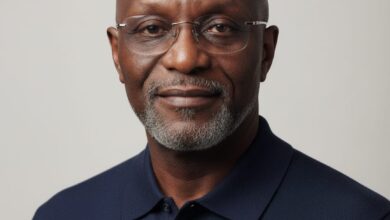
By Rekpene
The Federal Government’s announcement that more than one million out-of-school children have returned to classrooms in the past 20 months is one of the more consequential education developments of the current administration.
Announced by the Minister of Education, Dr Tunji Alausa, the figure represents important progress. But it should also provoke a deeper question: are we merely returning children to classrooms, or are we rebuilding the social contract between the Nigerian state and its youngest citizens?
Education in contemporary Nigeria is no longer simply a development portfolio. It is an instrument of human security, social stability and national resilience.
The Minister disclosed in Abuja while receiving the newly appointed UNESCO Country Representative to Nigeria, Prof. Isaiah Barreto Da Rosa, during discussions on strengthening Nigeria’s partnership with UNESCO.
Alausa also called for a more balanced approach to educational inclusion, arguing that the country’s vigorous campaign for girl-child education should be complemented by greater attention to boys.
This should not be interpreted as retreating from the legitimate struggle for girls’ education. Rather, it recognises that every child excluded from meaningful education represents a loss to the nation.
The challenge remains enormous. UNICEF estimates that about 10.5 million Nigerian children are still out of school, while World Bank data indicate that only about one in four Nigerian children aged 7 to 14 demonstrates foundational literacy. Nigeria therefore faces a double crisis: children who are not in school and children who are in school but are not learning enough.
That distinction is fundamental. Enrolment is an input; learning is an outcome. Filling classrooms may produce impressive statistics, but genuine educational success requires children to read with comprehension, perform basic mathematics, think independently, communicate effectively, use technology responsibly and acquire skills that enable productive participation in society.
This is where education becomes a national-security issue. An excluded child is not automatically a security threat, and poverty must never be used to stigmatise young Nigerians. But persistent educational exclusion creates structural vulnerabilities that violent extremist organisations, criminal networks, traffickers and political entrepreneurs can exploit. Where schools disappear, legitimate state authority can also recede, leaving others to occupy the social space.
Nigeria’s experience with the mass abduction of schoolchildren has made the security dimension painfully clear. Since Chibok, school kidnappings have become a recurring feature of the country’s insecurity, with attacks continuing in 2026. The spread of attacks beyond traditional insurgency theatres should be treated as a strategic warning.
A school is an unusually attractive target because it contains vulnerable people, generates immediate public attention and places enormous psychological pressure on the government.
School kidnapping is therefore not merely a crime against children; it can become psychological warfare against the state. Every successful attack tells parents that government cannot protect their children, while every prolonged school closure weakens confidence in public authority.
Nigeria must consequently move beyond the old concept of school security as simply placing police or soldiers at the gate. Static protection has its place, but modern school security requires risk assessment, intelligence, early warning, community participation, physical protection, emergency communication, rapid response and post-incident recovery.
The country should establish a National School Security and Resilience Architecture, jointly coordinated by the Federal Ministry of Education and relevant security and law-enforcement agencies.
Every school should have a risk classification based on exposure to terrorism, kidnapping, communal conflict, criminal networks and other hazards. High-risk schools should receive enhanced protection, secure communications, emergency evacuation plans and regular security audits.
The intelligence component deserves particular emphasis. Principals, teachers, traditional leaders, parents, transport operators and youth organisations constitute a potentially valuable human-intelligence network. They are often the first to notice suspicious movements, abandoned motorcycles, unusual vehicles, recruitment attempts or changes in criminal behaviour.
Properly structured community intelligence, without turning teachers into informants or exposing children to danger, could provide early warning that formal security agencies may miss. The principle is simple: security agencies cannot physically protect every school at all times, but communities can become additional sensors within a national early-warning system.
International experience provides useful lessons. The Comprehensive School Safety Framework 2022–2030, promoted by organisations including UNESCO and UNICEF, advocates an all-hazards approach that protects learners and staff, reduces risks and ensures that education continues during crises and recovers afterwards. Nigeria needs precisely this conceptual shift.
The threat to a school is not always a terrorist with a gun. It may be kidnapping, communal violence, fire, flood, epidemic disease, building collapse, cyberattack or climate-related disaster. School safety must therefore become a system rather than a project.
Pakistan offers another instructive, though imperfect, comparison. Following the 2014 Army Public School massacre in Peshawar, school security became a national priority, leading to greater emphasis on access control, emergency exits, physical protection and preparedness.
Nigeria needs not to turn schools into fortresses, but vulnerable institutions require layered protection and rehearsed emergency procedures. Physical security must also be accompanied by psychological support and institutional recovery.
Ukraine offers an even more striking lesson in educational resilience. Communities facing war have developed underground classrooms, shelters, hybrid learning and other mechanisms to maintain education.
Nigeria obviously does not need Ukrainian-style bunkers everywhere, but the principle is invaluable: security threats must change the architecture of education without being allowed to destroy education itself.
In terrorism-affected and kidnapping-prone communities, government should therefore avoid simply closing schools indefinitely. Where conventional schools are temporarily unsafe, alternative learning centres, secure transportation, community classrooms, temporary learning spaces, radio instruction and carefully designed digital platforms should be activated. Continuity of learning matters because prolonged interruption can become a pathway to permanent dropout.
Yet security cannot obscure poverty, which remains one of the principal drivers of educational exclusion. UNICEF has reported that two out of every three Nigerian children live in multidimensional poverty, while more than half experience some form of violence before adulthood.
School feeding, targeted cash transfers, transportation assistance, uniforms, learning materials and health interventions should therefore be treated not merely as welfare measures but as education-security investments.
Nigeria must also shift from measuring enrolment to measuring learning. Evidence from education interventions in northern Nigeria suggests that properly designed mother-tongue instruction can improve foundational literacy and numeracy.
The broader lesson is that education policy works best when adapted to the cognitive, linguistic and social realities of the child rather than imposed as an abstract bureaucratic model.
Teacher quality must become central to the next phase. Government can build classrooms relatively quickly; it cannot produce competent teachers overnight. Teachers require continuous professional development in foundational literacy and numeracy, digital learning, inclusive education, trauma-informed teaching, classroom management and emergency preparedness.
In conflict-affected communities, teachers may simultaneously serve as educators, counsellors and stabilising figures and therefore require both professional recognition and protection.
Another frontier is cybersecurity and child protection in the digital classroom. As digital learning expands, so does the exposure of schools and children to cyber threats, exploitation, fraud, harmful content and manipulation.
Digital literacy, parental awareness, stronger safety systems and responsible technology policies must therefore become integral components of modern education security.
Nigeria’s partnership with UNESCO and other development institutions should now be converted into a measurable national education-security compact. UNESCO, UNICEF, the World Bank, the Global Partnership for Education and other partners can provide technical expertise, data and financing, but Nigeria must retain strategic ownership.
The $552 million HOPE-EDU programme presents a major opportunity, particularly if its investment translates into measurable improvements in learning, teacher quality and school security rather than merely expenditure.
The country should establish an annual National Education and Human Security Index, publishing performance by state and local government. It should measure enrolment, attendance, dropout, foundational literacy and numeracy, teacher availability, school safety, attacks on education, emergency response, infrastructure, digital access and transition from school to employment. Funding should increasingly follow vulnerability and measurable performance because equity sometimes requires unequal investment.
Nigeria should also establish a permanent mechanism for children affected by insecurity. Children rescued from captivity or displaced by terrorism and communal violence require more than transportation home. They need medical screening, psychological support, accelerated learning, family reintegration and protection from stigma.
Teachers traumatised by attacks require similar institutional support. A child may return physically to the classroom while remaining psychologically trapped in the experience of violence.
The deeper question is what kind of nation Nigeria seeks to build. Education is the process through which a society reproduces not merely knowledge but its conception of citizenship.
If children grow up believing that the state cannot protect their schools, provide competent teachers or guarantee a meaningful future, the resulting crisis will eventually manifest in migration, unemployment, criminality, extremism, political alienation and declining institutional confidence.
Nigeria should therefore establish a Ten-Year National Education, Security and Human Capital Compact with clear targets: dramatically reduce the out-of-school population; guarantee foundational literacy and numeracy; secure vulnerable schools; professionalise teachers; expand technical and vocational education; strengthen school feeding and social protection; protect children online; improve education data; and guarantee continuity of learning during emergencies. The compact should survive electoral cycles and undergo annual independent review.
The return of more than one million children to classrooms should therefore be welcomed as a beginning, not celebrated as a conclusion. The task is larger than putting children behind desks.
Those desks must be safe, the teachers competent, the curriculum relevant and the learning consequential. The classroom must become a sanctuary from violence, a laboratory of citizenship and a bridge to economic opportunity.
A country that protects its oil pipelines but cannot protect its classrooms has misunderstood the meaning of national security. A nation that secures its borders while leaving millions of children intellectually excluded has secured territory without securing its future.
Nigeria’s greatest security asset may ultimately not be another battalion, aircraft or intelligence platform, but a generation of educated, confident and employable young Nigerians with no reason to surrender their future to violence. The battle for the Nigerian classroom is, in the deepest sense, a battle for the Nigerian state itself.
*Rekpene Bassey is the President of the African Council on Narcotics and a Security Specialist.