By Chukwudi Obasi, Abuja
The House of Representatives Committee on Finance has directed the Infrastructure Concession Regulatory Agency (ICRC), the Nigeria Electricity Regulatory Commission (NERC), the Nigeria Sugar Development Commission (NSDC), and others to provide proper details of their budget performances.
The Committee is to ascertain their level of compliance with extant financial regulations.
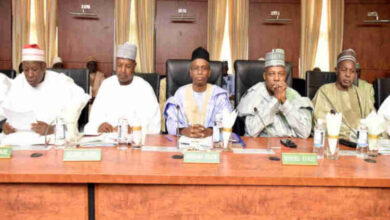
The directive was given through resolutions when the agencies appeared before the Committee at its interactive session, which was held by the Committee on budget performance yesterday.
The Committee directed the ICRC to produce all concessionaires and the fees charged since 2008 after a presentation by the agency’s Director of Infrastructure, Shehu Sani Danmusa, who represented the Director General (DG), Dr Jobson Ewalefoh.
The Chairman of the Committee, James Faleke, and members who picked holes in the presentation, especially the breakdown of revenue and expenditures, said the agency needs to present comprehensive details as required by standard accounting and financial practices.
In his submission, NERC Chairman, Sunusi Garba, who also presented the agency’s income and expenditures for 2023 and 2024, informed the Committee that the agency’s main source of revenue is the electricity market.
He said, “The law provides that we prepare a budget and take just enough from the electricity market to fund our operation. The amount we take from the market depends on the budget that we prepare.
“So in the Commission’s early days, when the market was mature, the Commission was taking money from the market and the federal appropriation. But in the last two or three years, the Commission has been 100 percent dependent on the workings of the market for our revenues.
However, the Chairman of the Committee interjected, saying, “You take just enough? What is just enough? So how much do you take? We want to determine your revenue. Yes, so. So when you say just enough, it’s not a figure.”
The NERC Chairman replied that, financially, as a regulatory institution, the NERC is not designed to be a revenue-generating agency, with which Faleke disagreed because the agency is supposed to be self-funded, which the Chairman answered in the affirmative.
Faleke added, “Yes. Are there rules? Who is the DFA? Are you the DFA? Where is the DFA? Okay. Are there rules guiding self-funded agencies in terms of deductions and remittances?”
The agency’s Director of Finance and Administration explained that the law establishing the Commission provides that 80 percent of the operating surplus at the end of the year should be transferred to consolidated revenue.
Faleke said, “So how do we determine operating surplus if we don’t know your income? It’s not that I don’t know. I’m just saying that. You are trying to hide it. Remember, you said you take just enough.
“So, I mean, that’s my area of concern. Okay, why don’t we say? If you can give us the figure. For example, all of us sitting here operate in the same market. We are like your customers, but we are more or less directly your customers. We pay through your service providers.”
After the presentation, the Committee directed that the NERC also submit all the details of its revenues, expenditures, and invoices to industry players on energy purchases and reconciliations.
Similarly, the Committee also promised to investigate the National Sugar Development Council’s (NSDC) frivolous spending on non-essentials like foreign travel and office renovations while neglecting its core responsibilities to develop the Sugar sector.
In his presentation, the Director General (DG) of NSDC, Kamal Bakari, informed that the organisation is being funded principally by the Sugar Levy and other revenues.
However, the DFA explained that other revenues, including VAT, Withholding Tax, and others realised as revenue, were remitted to FIRS and receipted, which they promised to provide to the Committee.
A member of the Committee also queried the grower support funds spent, compared to the production.
The chairman noted concerns about the Commission’s Internally Generated Revenue (IGR).
He said, “Looking at the trajectory of the Commission and its activities, Nigeria has a long way to go compared to Brazil, which he said is cultivating millions of hectares through advanced agricultural mechanisms and is utilizing all the Sugar by-products, including producing fuel for cars.”
The Committee committed the Commission to doing due diligence and providing it with more comprehensive records to determine its budget performance.
Other agencies that attended the meeting were also directed to do the same, and the Committee resolved to set up an ad-hoc committee to analyse the Securities and Exchange Commission’s budget performance.