The Speaker of the House of Representatives, Abbas Tajudeen, yesterday unveiled a policy document on training, retraining, and capacity building of members of the 10th House, legislative aides, and support staff for better performance and output.
The document, titled ‘Parliamentary Development Programme for 10th House of Representatives, National Assembly, 2023-2027’, was prepared by the Office of the Speaker in collaboration with the United Nations Development Programme.
The Programmes Coordinating Unit (PCU) in the Research and Policy division of the Office of the Speaker spearheaded the process of formulating the document.
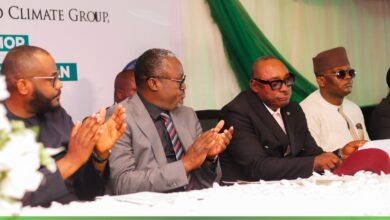
At the unveiling done by the Deputy Speaker of the House, Rt. Hon. Benjamin Okezie Kalu, on behalf of the Speaker, were several local and international development and technical partners of the National Assembly.
Abbas, in his address, noted that the document contained the results of the assessment study conducted by the House with the support of the UNDP and other partners.
“The results are presented today in a document titled Parliamentary Development Programme. This is in line with our Legislative Agenda, which identifies the strengthening of the internal capacity of the legislature as a critical factor in achieving all our other legislative objectives.
“As a result, the document before us today reflects our current capabilities and the urgent requirements needed to elevate the standards of our legislative functions,” he said.
The Speaker noted that the need for continuous capacity strengthening in the legislature was well known to all. He also stated that the high turnover rates at the National Assembly posed a significant challenge to maintaining continuity and building on the institutional knowledge crucial for effective governance.
He said, “In this 10th Assembly, over 80 per cent of the members are new to the legislature. This phenomenon, combined with the growing expectations of our citizens for transparency, accountability, and efficiency, underscores the urgent need for a robust framework for capacity building within the legislature.
“As evidenced by the level of engagement, especially on social media, our constituents are becoming increasingly aware and involved in the governance process, demanding greater accountability and better service delivery from their representatives.
“This heightened expectation requires us to be at the forefront of legislative knowledge and practices. Also, the intricate landscape of modern governance demands a higher level of expertise, analytical skills, and adaptability among our members and supporting staff.”
The Speaker added that the UNDP’s Capacity and Institutional Needs Assessment Study had “laid bare the gaps in our current system,” stressing that it had highlighted areas where the House needed to strengthen its capabilities to meet the demands of contemporary governance.
He noted, “These include but are not limited to strengthening our law-making functions, enhancing our legislative drafting capabilities, improving our research and analysis functions, bolstering our oversight mechanisms, and advancing our engagement with the citizens we serve.
“Given these challenges, we must embrace a culture of continuous learning and capacity development. We must invest in human capital development, ensuring that members, staff, and legislative aides are equipped with the knowledge and tools necessary to navigate the complexities of modern legislative work.