Sanwo-Olu urges residents against destruction of green infrastructure

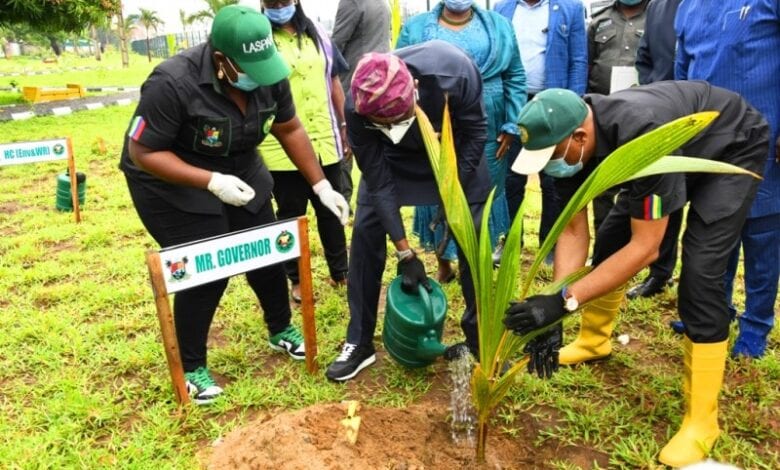
Gov. Babajide Sanwo-Olu of Lagos State has advised residents to stop further destruction of critical green infrastructure in the state.
Sanwo-Olu gave the advice on Wednesday during the 2021 Lagos State Annual Tree Planting Day Celebration with the theme: ”Restore and Recover”.
Green infrastructure refers to any vegetative infrastructure system which enhances the natural environment through direct or indirect means, of which tree planting is among.
This year’s exercise took place simultaneously in 57 locations across the state.
He said it was cheaper to conserve natural habitats than to restore them later.
The governor said that trees were important in healing the world from the devastating effect of the COVID-19 pandemic.
According to him, this year’s edition of tree planting is the most significant, as it is the first since the outbreak of the coronavirus pandemic and the socio-economic toll of the EndSARS protests.
”Fellow Lagosians, our mutual and sincere efforts are needed for complete restoration and recovery.
”Tree planting is a good way to restore local ecosystems and it is gratifying to note that many Lagosians have become enthusiastic about tree planting.
”Trees are astonishing, they capture carbon from the atmosphere, protect and fertilize soils and harbor many of the planet’s animals, birds, and insects.
Kano State Plants Trees In Honour Of Bill Gates
”The cultural, spiritual, and recreational role of trees makes them essential for the wellbeing of humans. All of these benefits make us more resilient, despite economic and environmental shocks,” he said.
Sanwo-Olu said that Lagos was one of the world’s megacities with rapid urbanization and by 2030, it was expected that the population would double and urban space would increase.
He noted that as this happens, ecosystems and the essential natural assets they provide would come under threat.
He further said that during this time of expansion and innovation, it was imperative that natural spaces were protected and incorporated into urban landscapes.