Seeking UN, US help better than hiring mercenaries – Gen Akpa

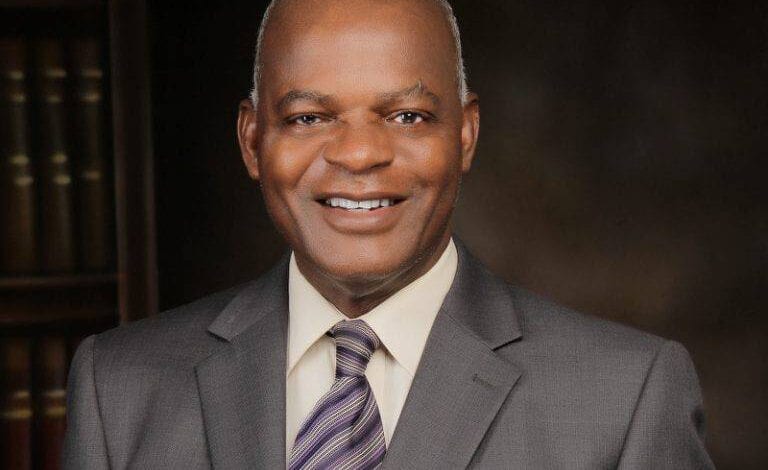
A former Commandant of the Nigeria Defence Academy (NDA) and now a member of the All Progressives Congress, Maj.-Gen. Patrick Ademu Akpa, shares his thoughts on security challenges as well as other national issues in this interview with Kassim Omomia
Can you appraise the current state of the nation and tell us possibly what went wrong and how it can be remedied?
By this question you have assumed that Nigeria is a nation. Strictly speaking, we are yet to be a full-fledged nation. We are not a nation in the real sense because the various ethnic societies that were brought together to form Nigeria have different cultures, different languages and religions and dissimilar histories. I felt I should make this clarification. Given this situation, the main task of the political leaders would be to unite and weld the various societies into a nation, but they have failed to do so. The political elite have been unable to manage the multi-ethnic and multi-religious nature of the country and as a result we now have insurgency, banditry, kidnapping, farmer/herder clashes in various parts of the country.
There are ungoverned spaces in many parts of the country, especially in the North. The international borders are also open. Today, we have found that Boko Haram have crossed into the North-West with bandits. The Islamic State West Africa Province are demanding an Islamic State. The Nigerian State has not shown capacity or is unable to assert its power in many places. Unemployment is over 30 per cent and there are about 15 million out of school children. Kidnapping is now a business by organised criminal groups. Monies collected are used to purchase more weapons and the cycle continues.
If you want to know what went wrong, then you must go back to how the state was formed. The amalgamation of the North and the South was done by the British to serve their interest and not the interest of the people. When you hear statements like ‘Nigeria is a mere geographical expression’ and the mistake of 1914, you can understand what I mean. Since then, there has been several colonial, independence and military constitutions.
These constitutions have not addressed the yearnings and aspirations of the people in the most part. From a federal constitution at the time of independence, we now have a constitution, which vests enormous power at the centre. The political elite, who captured the state have been unable to manage the affairs in a just and fair manner leading to calls for restructuring, resource control, state police and other demands. The political parties have been taken over by vested interests and not by those with the interest of the country.
How did we get to this point?
Well, we got here through bad governance. Corruption has not abated, and state institutions are rather weak. A recent report by the Chandler Good Governance Index placed Nigeria 102nd out of 104 countries surveyed. We emerged the third worst nation in Global Good Governance, beating Venezuela and Zimbabwe. The Index used such factors as leadership and foresight, robust laws and policies, strong institutions, financial stewardship, attractive marketplace, global influence and reputations and helping people to rise.
As you can see from what I have narrated, this problem started several decades ago, and it will take time to resolve. There are areas that need urgent attention, and I will not go into any detail. We need to look at political parties and leadership recruitment. We need to review the constitution, tackle the problem of ungoverned spaces and impunity by top government and businesses officials including those who have access to power. We should look at human security, reform of the security services and strengthening of civil society organisations. We should also work on those factors used in computing the Global Good Governance Index.
There is instability everywhere in the country. There are also socio- economic issues: hunger, insecurity, regional militia, secessionist agitations, call for Biafra and Oduduwa republics. What can be done to assuage this anger and overcome these challenges?
Everyone knows that there is insecurity in the country and there is palpable fear in the land. A few days ago, the Niger State governor announced to the world that Boko Haram has hoisted its flag in the state. This is a place that is not far from the federal capital. Nowhere is safe in Nigeria. The economic down town is largely due to the COVID-19 outbreak. Farmers in the North cannot go to their farms due to insurgency and the farmer-herder crises have taken their toll on food production. The consequence of this can be imagined.
As far as the regional militia and secessionist agitations are concerned, I would regard them as forms of protest over their perceived marginalisation. Let us take secessionist agitation, Biafra and Oduduwa.
In the South East, the people have complained of marginalisation over the years, and they are angry about it. I remember former Governor Mbakwe of Imo State wept at a time and he got concession from the federal government of President Shehu Shagari. The weeping has taken a new dimension and upgraded to IPOB and Biafra.
In the case of Oduduwa, let us go back to the 1990s. MKO Abiola, a member of the Yoruba ethnic group, won the 1993 Presidential election which was annulled. The Oodua Peoples’ Congress (OPC), then started agitation in 1994 and advocated an autonomous region for the Yoruba speaking South-West. Their message at the time was the alleged marginalisation of the Yoruba ethnic group. It is the cry of marginalization in the South-East and South-West that is being expressed in different forms. They want attention from the Federal Government. They also perceive that the present system does not fully allow for their culture, economy, and way of life to flourish. In all these situations, a review of the constitution which decentralises power to the sub-units or federating units would temper nerves and partly assuage the anger as you put it.
What can the FG do to stop the menace of terrorism, banditry, herdsmen-farmers’ crisis, and other criminality in the country? Will the military option solve this problem permanently?
Let me make it clear, from the onset, and many people know, that the Nigerian Police Force is constitutionally charged with the responsibility of maintaining law and order and tackling internal security challenges. But because the Nigerian Police have been poorly funded, ill equipped and not professionally trained to handle these responsibilities, the civilian authorities have come to rely heavily on the Armed Forces, especially, the Army.
On-going efforts to re-tool the police force should be expedited as this would release the armed forces from internal security duties. The farmer-herder crisis presents several problems. There are foreign based herders and the Nigerian herders. The foreign herders need to be identified and appropriately educated about the laws of the land. The local herders and farmers and indeed all Nigerians need to be given mass orientation and education on the need for creating cattle ranches and grazing reserves. The present system of transhumance is outdated, and modern methods are preferable.
You want my opinion on what the FG can do on the menace of terrorism and insurgency? Recently, Boko Haram members have expanded their operational area from the North East to include Niger State in the North Central region. This insurgency is being driven by ideology. Fighting them would require the deployment of all instruments of national power from diplomacy, economy/finance, political, legal, psychological, law enforcement, information, and military strategies.
As you can see, the military is just one of the means of tackling insurgency. We need to deploy all the other options and instruments available to the government. The military will fail if the right policies and strategies are not in place. Another problem is that the military seems to have been politicized. A reform of the institution would be necessary.
The general elections are a few years away and your party could zone the presidency to the South. Morally, which zone deserves it, given that the North-East is also clamouring for the position of President.
There are six zones in the country, three in the North and three in the South. The two main parties have settled for a turn-by-turn rotation between the North and South. On that basis, you are right to speculate that my party could zone the presidency to the South. Since the South-West and South-South have held the Presidency, it is quite natural to think that it is the turn of the South-East. Politicians in the zone would need to negotiate for power if that is to materialise.
We will not hire mercenaries in fight against banditry says Munguno
But this is human reasoning. God has the final say. He can decide who the King would be; examples abound in history and in the Bible. He can anoint anybody irrespective of the zone where the man or woman comes from.
If you were in the current cabinet and an adviser to the President, what will you tell him to do about the current state of the country, does the country needs mercenaries to fight insurgency?
This question is like the first question you asked earlier. Presently, Nigerians are worried on many fronts –security, economy, unemployment hunger and many others. If I am an adviser to the President, I would advise that he takes certain strategic decisions that would reduce tension in the land and give direction to our future.
First, he should review the constitution and devolve power to the federating units. Secondly, he should encourage the National Assembly to complete the review of the electoral act, so that quality leaders are recruited into the government in 2023. Thirdly, he should as matter of urgency adopt an inclusive economic and political system in such a manner that engenders loyalty to the nation by all and sundry. Fourthly, he should dissolve his cabinet and bring in people with new ideas on moving the country forward and lastly, he should reform the Armed Forces and other Security Services to make them responsive to the needs of the country.
Going into the issue of mercenaries, their employment goes against the UN International Convention, against the recruitment, use, financing and training of mercenaries. There is also an equivalent convention for the African Union. It would therefore be illegal for us to use mercenaries, but these are no normal times.
The battlefield has gone beyond the North-East to the North-West and North-Central. On April 26, 2021, the President requested the US Secretary of State to consider re-locating the AFRICOM HQ from Germany to Africa.
Having gone so far, I believe he would be prepared to ask the United States to help in fighting Boko Haram. Such a situation would damage our ego, pride and reputation in Africa and the world, but it is a better option to hiring mercenaries. We are on our knees because the political elite have refused to be accountable, refused to offer good governance and refused to fund the military.