By Francis Ajuonuma
A storm is brewing over the Federal Government’s latest hike in Nigerian passport fees, as the Socio-Economic Rights and Accountability Project (SERAP) has urged President Bola Tinubu to immediately reverse what it described as an “arbitrary, unlawful and excessive” increase.
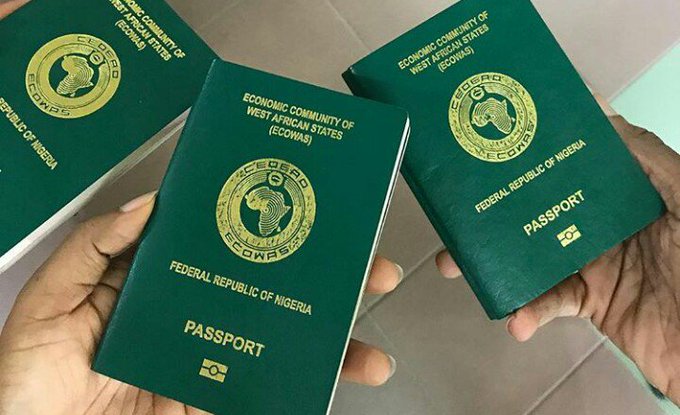
In a strongly worded letter dated August 30, 2025, and signed by its deputy director, Kolawole Oluwadare, SERAP called on Tinubu to direct the Minister of Interior, Olubunmi Tunji-Ojo, and the Comptroller General of the Nigeria Immigration Service (NIS), Kemi Nanna Nandap, to scrap the new rates, which peg a 32-page, five-year passport at ₦100,000 and a 64-page, 10-year booklet at ₦200,000.
The new charges, announced by the NIS last week, are scheduled to take effect on September 1, 2025.
The organisation warned that the steep increase, coming barely a year after the last upward review in September 2024, would effectively deny millions of Nigerians access to passports and, by extension, their constitutional rights.
“The unlawfully high fees amount to a discriminatory denial of access to passports for millions of socially and economically vulnerable Nigerians and unlawful restrictions of their other citizenship rights,” SERAP said.
According to the rights group, the new policy disproportionately targets the poor and working-class citizens who are already grappling with economic hardship.
It stressed that compelling Nigerians to choose between basic survival needs and obtaining travel documents was a violation of both the Nigerian Constitution and the country’s international human rights obligations.
“The increase is incompatible with chapters 2 and 4 of the Constitution covering fundamental objectives and directive principles of state policy and fundamental rights. Nigerians who cannot afford the excessive fees would be denied the effective enjoyment of their citizenship rights,” the group stated.
SERAP maintained that the Minister of Interior and the NIS Comptroller General acted unlawfully by arbitrarily imposing the hike without assessing its economic impact.
It added that the decision not only undermines the right to freedom of movement but also deepens poverty at a time of worsening financial crises in the country.
The organisation issued a seven-day ultimatum to the government to rescind the increment, failing which it vowed to take legal action to compel compliance.
“We would be grateful if the recommended measures are taken within seven days of the receipt and/or publication of this letter. If not, we shall take all appropriate legal actions in the public interest,” it warned.
SERAP further described the move as discriminatory, stressing that it will “undermine the effective enjoyment of citizens’ fundamental rights as guaranteed under the Nigerian Constitution, the African Charter on Human and Peoples’ Rights, and the International Covenant on Civil and Political Rights.”
The Immigration Service justified the review last week, saying the new rates were necessary to cover operational costs.
However, critics argue that the decision overlooks the harsh realities facing Nigerians. Only a year ago, in September 2024, the NIS increased the prices of a 32-page booklet from ₦35,000 to ₦50,000 and a 64-page booklet from ₦70,000 to ₦100,000.