By Olusegun Olanrewaju
Is Nigeria ready for the fourth wave of the COVID-19 pandemic? This sums up the apprehension that has trailed the reported discovery of yet another variant of the virus on the continents, including South Africa, which is triggering moves for another wave on the pandemic.
The poser comes in the wake of apparent lapses discovered in the vaccination programme of the health authorities, and some suspected non-transparent activities that are affecting the administration of amelioration measures at the health facilities nationwide.
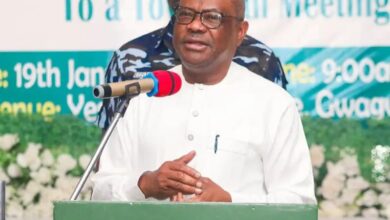
On Friday, the Lagos State government set the tone for the new onslaught when the Commissioner for Health, Prof. Akin Abayomi, declared at Alausa that the fourth wave is imminent by December, a festivity-laden month, in the wave of influx by citizens from ‘heavily burdened countries.
It could have been a response to the recent announcement by the South African authorities, among others, of the discovery of another variant of the rampaging COVID virus, B.1.1.529, which is said to have a high number of mutations.
Also, the World Health Organisation (WHO) has named the latest COVID-19 variant identified in South Africa, after the Greek name, ‘Omicron’, and labelled it a variant of concern due to its large number of mutations and possible faster rate of infection. WHO, in a statement on Friday, said that preliminary evidence also suggests an increased risk of reinfection with this variant of concern, as compared to other strains, such as the Delta variant.
Whistleblowing Lagos
Abayomi, at the Friday briefing, raised the alarm, warning that the influx of Nigerians from foreign countries, including leading traffic states like the US and UK, could spike the outbreak of new infections, and even deaths. “Many Nigerians staying abroad will be returning home to celebrate Christmas with their families. Most of these people will be coming from countries where there is a heavy burden of covid-19 and where we know the virus is mutating and changing,” the commissioner said.
He added, “The potential drivers of the fourth wave in Lagos and Nigeria are potential drivers of the fourth wave in Lagos and Nigeria are from heavy-burdened countries.”
‘Expert advice’
Experts warn that the new variant, one of the some that have been recently declared by the world health policy body, WHO, maybe a source of concern concerning immunity. This has spurned the drive for more vaccinations in the country, where the Oxford AstraZeneca vaccine has been on the driving edge of the vaccination campaign in recent times.
The new vaccination drives
For some months now, Nigerians have been receiving different doses of jabs on the Oxford AstraZeneca vaccine in hospitals and health centres spread nationwide, with varying degrees of success. But they are not sure of the direction in which the wind will now blow as the authorities -federal and states – are now darting controlled warnings that the fourth wave of the global pandemic could be in the works.
That flies even in the face of alleged corrupt practices marring vaccine administration in the country, as discovered by investigations by ThisNigeria last week at sundry health centres in the Lagos area. The general summation is that the nation has to be wary of the debilitating effects of another ‘waving’ on a deadly disease that has been holding the world ransom for the second year running.
The warning
Government warning on the likely fourth wave is hinged on addresses by the Federal Government and some states, including the largest, Lagos, where the epidemiological statistics on the disease have been fluctuating.
Reports last week indicate that the Federal Government’s position is hinged on the tendency that the new COVID-19 variant from South Africa tagged ‘Omicron’ could constitute ‘serious concern’. The Federal Government agency responsible for the control of COVID-19 responses in the country, the National Centre for Disease Control (NCDC), last week, disclosed that it had recorded 52 fresh infections in seven states of the federation on Tuesday, though without fatalities. The News Agency of Nigeria (NAN) also reported that the 52 infections recorded on Tuesday represented an increase from the 36 recorded on Monday.
It also noted that those new cases increased the country’s infection toll to 213,625, while the fatality toll stands at 2,974, and that a total of 20,6797 people had been successfully treated and discharged in the country. According to the NCDC, Rivers State reported 20 cases on Tuesday, while Lagos marked 15; as well as Plateau and Jigawa, eight and six cases respectively.
The Nigerian public health agency added that a multi-sectoral National Emergency Operations Centre, activated at Level 2, continued to coordinate its national response activities. According to the NCDC, since the country recorded its first cases in February 2020, no fewer than 3,440,172 had so far been tested, of which 3,906 cases were active in various parts of the country.
As of June 27, 2021, it added that 65 new cases of COVID-19 infections were reported, confirmed with an average seven-day average of 56. Also, only 2.2 per cent of the allegedly infected 3,456, 204 of the population, and 4.4 per cent of the first dose were recorded. The total population of the country was put at an estimated 154 million people. The dose per average was 6.26 per 100.
The variant, B.1.1.529, is said to have a high number of mutations, which may be a source of concern about immunity and transmissibility. Confirming the discovery in a statement on Thursday, the NICD said 22 positive cases of the new variant have so far been detected in the country.
The National Institute for Communicable Diseases (NICD), a division of the National Health Laboratory Service, confirms that through collaborative efforts with private laboratories and the NGS-SA members, a new COVID-19 variant, B.1.1.529, has been detected in South Africa,” the statement reads. “Twenty-two positive cases of variant B.1.1.529 have been recorded in the country following genomic sequencing collaborations between the NICD and private laboratories. In addition, other NGS-SA laboratories are confirming more cases as sequencing results come out.”
According to the statement, Adrian Puren, NICD acting executive director, said it is “not surprising” that a new variant has been detected in South Africa. “Although the data are limited, our experts are working overtime with all the established surveillance systems to understand the new variant and what the potential implications could be. Developments are occurring at a rapid pace and the public has our assurance that we will keep them up to date,” Puren said.
As of September 2021, WHO said it had identified five COVID variants — Alpha, Beta, Gamma, Delta, and Mu. Experts had earlier predicted a less likelihood of discovery of more Covid-19 variants before the detection of the B.1.1. 529 because the Delta variant had been linked to a high infection rate. The Delta COVID variant was confirmed in Nigeria in July 2021 and is currently the most dominant strain in the country.
The Lagos response
The Lagos State Government’s response on this new fourth wave is likely to reflect the path it took ahead of, and during the third wave which kicked off in May 2021.
The government continued to strengthen its response to the COVID-19 pandemic, in line with what happened in countries with similar experiences, albeit working with the Presidential Steering Committee on COVID-19. Reeling statistics, the government said, as of May 27, 2021, the state had tested 495,339 COVID-19 samples, with 58,975 of these samples confirmed positive.
Of this, some 54,426 were said to have recovered in the community, while 274 are active in the community. Of the 58,975 confirmed cases, 356 deaths were, unfortunately, recorded, with a death rate of 0.6 per cent.
‘Problem with vaccinations’
The vaccination campaign was started in Lagos, which boasts of some of the oldest infirmaries in Nigeria, on March 12, 2021.
During the third wave, no fewer than 317,916 people were reported to have been vaccinated with the first dose of the Oxford Astra-Zeneca vaccine. The government reported that 1.32 per cent of the state’s population had received the first dose.
Several strategies were mapped out to contain the COVID-19 surge, including the commencement, on Friday, May 28, 2021, the administration of the second dose of the vaccine.
The state, however, observed that, given the requirement for achieving herd immunity (60 per cent of the total population vaccinated), Lagos State would still need to vaccinate about 14 million people to reach this target, “as is actively happening in many parts”.
Federal responses
For now, the government has not stated in clear terms, whether subsequent Covid-19 campaigns in the country will go beyond the enforcement of ‘traditional restrictions’ such as hand washing, use of face masks, social distancing, among others.
But the possibility of imposing another lockdown, experts note, is unlikely, as is being done in some western countries. Ahead of the imposition of the third wave, President Muhammadu Buhari had earlier ruled out the possibility of further nationwide shutdowns because of its long-term effect on the economy and disruptive influences on society.
Secretary-General to the Federation/Chairman, Presidential Task Force on COVID-19, Boss Mustapha, had, in a statement, dismissed reports that the Federal Government was planning to, again, lock down the country in the wake of the resurgence of the COVID-19 pandemic.
He urged Nigerians to join hands with the Federal Government to contain the spread of the virus in the country by adhering to Non-Pharmaceutical Interventions (NPIs) as recommended by the PTF.”
That went down with a cross-section of Nigerians who warned of mass protest should the government decide to impose lockdown.
Observers had earlier with the surge in COVID-19 cases before the third wave, the possibility of another lockdown loomed large as findings had shown that many citizens, like in the present instance, are no longer taking COVID-19 precautions using face masks and hand sanitisers. Also, the same obtains in many shopping malls, places of worship, and other public places.
Botswana says travel bans over Omicron variant hurts its tourism sector
Situation/field reports
The case for lockdown is locked in horns with arguments that vaccinations are not going on as effectively desired. The larger portion of the blame is laid on the corridors of apathy by the populace and ineptitude and alleged corruption on the path of government and health officials.
For religious and other inexplicable reasons, it has been discovered that many are not turning up to get vaccinated.
The correspondent who went around town in Lagos last week and over the weekend made a lot of discoveries that put the credibility of another claim of ‘wave’ in the questionable columns.
Asked whether vaccinations were being conducted at the annex of the general hospital at Agbala, in the Ikorodu area of Lagos, a security official said “we don’t do vaccination here. Go to Ita Elewa Primary Health Centre.”
At the Ita Elewa PHC, a female patient confided to the reporter on Friday that vaccination was not being conducted there despite a conspicuous display of a banner at the entrance bearing the logo of the National Primary Health Care Development Agency (NPHCDA) mobilising for patronage from people at the entrance “because it’s free and affordable”.
On Saturday, few ‘patients’ were seen ‘waiting’ for vaccination, but it was later discovered that some could have been hospital staff. No vaccines were seen in sight, except that some people’s ‘temperature’ was being taken.
Asked whether vaccination was being done, a man on ‘queue’ only retorted “they are just starting”. The hours had gone far in the day.
A repeated visit on Saturday, being a work-free day, was to uncover more. A female health official at the Ikorodu General Hospital on Beach Road, who craved anonymity, could not readily confirm whether vaccination was being done or not.
Instead, he directed the correspondent to a security man who said vaccinations are only done on ‘weekdays’.
A cleaner, however, said, “No vaccination is being done here.” But another worker contradicted that, saying that vaccination only takes place on ‘special days’ like Saturdays.
The testimony fell in the wake of hard reality that the next day, on Saturday, no such real activity was seen taking place.
The situation was no different at other health facilities visited in the Lagos area. At the Onikan Primary Health Centre (PHC), a staff member told ThisNigeria, “No, we don’t do vaccination here. Go to Araromi Health Centre at Berkeley Street (Obalende).
On getting to the partially idle premises (that time), a health official said, “Yes, we do vaccinations here, but it is only on workdays, between the hours of 9:00 am-2:00 pm., except on Fridays. If you come here on Friday, I will not attend to you.”
At the first of its kind in the country, having been established in 1893, it was expected that vaccination should be in full gear at the General Hospital, Odan, in Lagos Island, but the opposite was the case.
A security woman told the reporter casually on request, “we are not doing vaccination here. Go to the maternity. The Lagos Island Maternity was established in 1959, the year before Nigeria’s independence.
Visitation was poor when the reporter called on Thursday, but some people were on hand to receive their first and second jabs, but with complaints from experts, staff, and patients that human rights issues, logistics, apathy, and technical problems were affecting their delivery on vaccination.
While some complained of ‘time wasting’, staff sulked over alleged impatience of patients and the workability of turning up on work and market days. Though the reporter was registered here, he is yet to be given any jabs.
However, elsewhere, a journalist admits having been vaccinated at a health centre in Abeokuta, Ogun State. But even though he admitted having taken the second jab, he is not sure of the next line of action on vaccination as, according to him, the durability of the vaccines is suspect. He berated people shunning vaccination for religious and other reasons, saying he ‘felt better’ after taking his.
Politics?
A surprising trend was discovered in a suburb of Lagos. Apart from sundry hospitals ‘handpicked’ for the COVID vaccinations, individual homes of some politically connected persons are being used to masquerade vaccination centres.
At the ‘centre’ located nearby a popular market, ‘health officials’ were seen displaying chloramphenicol eye drops and other ocular appliances, and drugs, rather than vaccines. Asked why this was so, one of the handlers told the disguised reporter, “It is not only here, but that is also being done all over the country.”
WHO
Experts of the world health governing body, WHO experts have asked countries to enhance surveillance and genome sequencing efforts to better understand the new variant, before proceeding on new ‘waving’.
The organisation said several studies were underway, and that the agency’s technical advisory group, known by the acronym TAG-VE, would continue to evaluate the new variant.
WHO said it would communicate new findings to the member states, and the public, ‘as needed’. WHO’s COVID-19 technical lead, Dr Maria Van Kerkhove said the information about the now ‘Omicron’ variant is still limited.
It is not known whether the required information has landed on the tables of the authorities here in Nigeria.