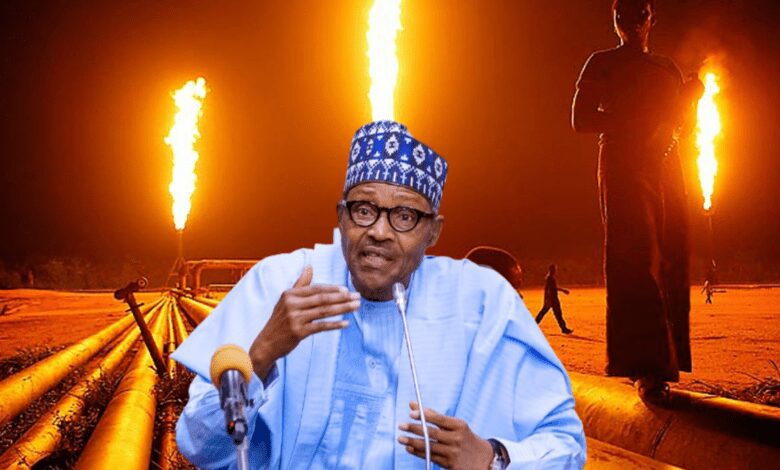
On Saturday, May 29, was the sixth year of the President Muhammadu Buhari administration.
To mark the day, the Presidency, through the communication machinery, enumerated in the media -mainstream and social – on the achievements of the administration.
The Presidency listed what was signposted as the ‘unheralded achievements’ of the number one citizen, among others to include: the breaking of budget implementation jinxes (97 per cent was listed for 2020); a successful war against corruption and significant achievement in loot recovery.
The Buhari administration also lists elimination of rivalry between the centre and the states as a gain of democracy. It says before it came on board, some 27 states or more could not pay salaries and pensions but were bailed out through the Paris Club funds.
The loudest drum was beaten about the building of infrastructure, a feat signposted as the ‘largest footprint’.
This involves the construction of roads, building of bridges (e.g. the Second Niger bridge), rehabilitation of rail, building of airports and AKK pipeline.
There were also pronouncements of building food pyramids and encouraging private investment.
Laudable as some of the achievements are, we note, however, that Nigerians have cumulatively not fared better in the 22 years of civil rule. It is not just the Buhari administration. Successive governments, in our considered view, could have done a lot more in the provision of democracy dividends.
HERDSMEN: Ex-diplomat wants FG to rescue agric sector, prevent hunger
Twenty-two years after, the standard of living for the vast majority of our people continues to plummet. Six years into the Buhari administration, hunger rules the land; frustration is on the streets. These are the real parameters for which democracy should be measured. Are Nigerians happier than they were six years ago? Are they more fulfilled?
The next two years are crucial and critical for the government to etch its name in the hearts of Nigerians by tackling huge unemployment, especially of our teeming youths and check the growing pangs of hunger in the land. The President can, if he wills it.
Indeed, many Nigerians are complaining of hunger, a lot more are angry. The free fall of the naira has further aggravated the grave situation. And like a prominent monarch, the revered Ooni of Ife, Oba Ogunwusi Adeyeye, recently pointed out, the nation risks big trouble with the volatile youth population if the hunger and anger in the land are not addressed.
Politically, we are far from the best of democracy practices. Violence, banditry, thuggery, kidnapping have combined to form a dangerous mix fuelling insecurity in the land.
Today, Nigeria, though a rich nation, sits pretty comfortably among the league of poorest nations in the world.
Health care is so poor that even the president does not seem to believe in the system that he has to be travelling abroad every now and then for medical attention. There are even reports that the hospital within the precincts of the Presidency, Aso Rock clinic is not anything close to a top rate hospital.
The clinic used to be one of the best in the country years before. Not any more. All these point to the fact that we are far from being a flourishing democracy.
Some even argue that we are closer to being a failed state. We hope and pray not. However, we all need to ensure this does not happen. Nigeria holds hope for the continent and the world. We cannot afford to betray it.
Amid worsening hunger and poverty indexes, there is the frightening problem of insecurity which cannot escape being X-rayed here.
Every day, Nigerians are being assaulted with alarming news of abductions (especially of schoolchildren), banditry, ransom payment and killings, among others. We have suddenly become a nation of perpetual mourners.
This is not the promise of democracy 22 years ago, or change, which was promised Nigerians six years ago. This ugly situation has to be reversed, and urgently too.
There is an ongoing constitutional review meetings across the country, which are meant to review some contentious issues in the constitution; federalism, state police, devolution of power to the states from a powerful and strangulating center are all expected to be placed on the burner.
But whether something tangible would come out of the frenzied exercise is a matter of conjecture. Time will tell.
After all, it is said, democracy is a work-in-progress.