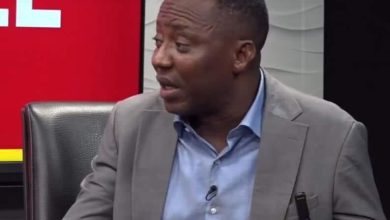
A former Minister of State for Works, Sen. Dayo Adeyeye, has described Saturday’s All Progressives Congress (APC) ward congresses in Ekiti as “a sham and unacceptable’’.
Adeyeye alleged the congresses were characterized by manipulations and irregularities which recorded one death.
The one-time spokesman of the Senate, who belongs to the Southwest Agenda for Bola Ahmed Tinubu 2023 (SWAGA), spoke with newsmen on Sunday in Ado-Ekiti.
He alleged that the state government made several attempts to disenfranchise his group from partaking actively in the exercise.
“We want to believe that the Caretaker and Extraordinary National Convention Planning Committee (CECPC) of our party meant well when it gave the go-ahead that ward congresses should hold across the country on Saturday.
“The ward congresses purportedly took place in Ekiti but the manner of their conduct was nothing near all democratic norms,” he said.
Adeyeye alleged that prior to the congresses, the “Tokan-Tokan”, a group loyal to Gov. Kayode Fayemi, had constituted a seven-man electoral committee with no input from many party stakeholders in the state.
“This is even as the CECPC had earlier advised that effort should be geared towards a peaceful resolution of conflicts so that the APC could birth consensus delegates across the board.
“You will recall that the Ekiti Chairman of SWAGA, Sen. Tony Adeniyi, had issued a statement that having consensus arrangement might not be possible in Ekiti because of the determination of the Tokan-Tokan Group to dominate and control the soul of the congresses.
“ Now the consequences of the selfishness of the Tokan-Tokan group to impose their favorites on members stirs us in the face.
“As witnessed on Saturday, the presence of Independent National Electoral Commission (INEC) officials was not felt at the congresses.
“ In places such as Ijero, Ado- Ekiti, and Oye Local Government Areas extreme violence was visited on the people, leading to one death in Ado-Ekiti Ward 10.
“We are hereby telling the CECPC, our party members nationwide and indeed all Nigerians that there was no congress in Ekiti on Saturday,” Adeyeye said.
In a swift reaction, the Ekiti APC said the outcome of the congress had come to stay, saying it was one of the best that was peacefully conducted without any coloration.
Mr. Sam Oluwalana, APC’s Caretaker Director, Media, and Communications Committee, who also doubles as Special Assistant to the Governor, said Adeyeye’s claims were frivolous.
“The APC in Ekiti is obliged to respond to reports that there was violence in the state during the APC Ward congresses held on Saturday.
“ We will like to state categorically that the exercise was overwhelmingly peaceful across the state and was a demonstration of our commitment to the principles and practice of democracy.
“Our members trooped out peacefully to elect executives of the party in the 177 wards in the state,” Oluwalana said.
He, however, said that the violence that occurred in Ado-Ekiti Ward 10, which sadly resulted in the death of one person, had no connection with the congress.
He explained the congress in the ward was peacefully concluded, followed by a celebration.
“Afterwards, there was a disagreement between two individuals around the venue on a matter totally unconnected to the congresses and this led to a fight and the unfortunate death of one of them.”
Omo-Agege urges APC leaders on party supremacy(Opens in a new browser tab)
He urged any “genuinely aggrieved“ party member to seek redress through the party’s internal conflict resolution mechanisms.
He called on them to desist from sponsoring false media narratives that were injurious to the party’s collective interests.