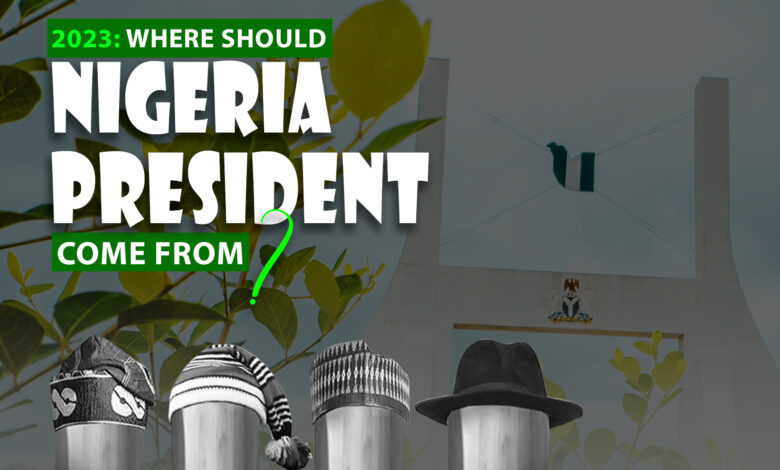
The clamour for a southern president by the ruling All Progressives Congress (APC) and the opposition Peoples Democracy Party (PDP) is a precursor to the unity, justice, and equity in Nigeria, stakeholders affirm, Kassim Omomia writes.
The quest by the APC and PDP to have the presidency zoned to the south is not by sheer coincidence, notwithstanding the current signs of disapproval and antagonism by some stakeholders from the two parts of the country.
Having a peaceful and seamless agenda over which section should rule the country should be laced with morality and sincerity that should engender peaceful co-existence, cohesion, as well as mutual trust, rather than suspicion.
The APC appeared to have settled for the south to produce its next presidential candidate until some discordant tunes from stakeholders took over the run.
Although the PDP is still dilly-dallying about which zone should ordinarily keep the presidential ticket in 2023, checks by ThisNigeria indicates that that decision will eventually be taken when the Bauchi State Governor, Mohammed Bala’s report, which was not specific on the issue, will be considered at the next National Executive Committee of the party.
Recall that Bala’s report, which aimed at assessing the state of the party and the way forward after the PDP lost the 2019 presidential election, had thrown the contest open. But the attendant sharp reactions from the south, especially, the eastern flank, have to date unsettled the party.
The outcome has resulted in general outbursts and disapproval, a herculean task for the party’s leadership over how to renegotiate political positions, settle once and for all, and have a coordinated and well-focused party ahead of the 2023 general elections.
For instance, one cannot fault the Southeast’s claim to being the most qualified zone for the top job on grounds that it is the only area in the entire south that has never produced a president.
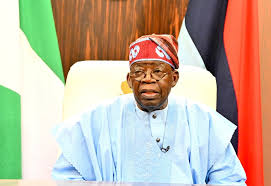
Asiwaju Ahmed Tinubu’s first outing since his return from United Kingdom
However, denouncing the report, South-East and South-South leaders lamented that the report aimed at jettisoning zoning, which has hitherto kept the country cohesive politically.
Reacting through its National Publicity Secretary, Chief Chiedozie Ogbonnia, the apex Igbo socio-cultural group, Ohanaeze Ndigbo, said the group remained irrevocably committed to the emergence of a Nigerian president of Igbo extraction by 2023.
Ohanaeze warned top Nigerians who had benefited from the unity of the country not to turn around and inflame the passion of the patient but aggrieved Igbo nation.
Part of the statement reads, “For the avoidance of doubt, Nigerians agreed on the rotation of the presidency between the North and the South, in which case it is the turn of the south after the tenure of President Muhammadu Buhari.
“For clarity purposes, both the South-West and the South-South had both taken their turns in the persons of Chief Olusegun Obasanjo and Dr Goodluck Jonathan respectively.
“It is rather very unpatriotic and a trifle on the sensibilities of the Igbo for the committee to even suggest the rotation of the presidency to the North-East in the first instance, and open to every part of Nigeria as a major slight.”
According to the Ohanaeze, “It is on record that in 1999, the Igbo were in hock with the PDP through which Chief Olusegun Obasanjo emerged the President of Nigeria; same in 2003 and the subsequent elections in Nigeria.
“On the other hand, the Igbo had invested much political capital in the PDP, only to be betrayed by its apparent lack of principles. The leadership of the PDP is advised to retract the comment made by Mohammed and countermand the content of the obnoxious committee report in the interest of the party.”
On its part, the Pan Niger Delta group, PANDEF too condemned, in strong terms, the recommendation by the PDP committee.
Speaking through its National Publicity Secretary, Ken Robinson, the Niger Delta pressure group described the recommendation as irrational and inconsistent with extant provisions of the PDP Constitution on zoning between the north and south.
Robinson said shortly after the report was presented that the position of PANDEF “is that a northern president is to complete eight years by 2023, so, the presidency must, therefore, rotate to the south in 2023.”
Interestingly the process of who becomes president, or the presidential candidate from any of the political party in the country, especially from the two dominant parties, APC or PDP, is not in a serious written clause or document embedded in the rule book or statutes of the parties, specifically the APC, or is it domiciled in the Nigerian constitution.
NEMA distributes agro-inputs to 4,365 farmers in Rivers
But over time in the PDP, for instance, having the north or the south take turns at the number one job of the country has been an unserious printed and well-guarded gentleman- agreement, in which case both sides guide the doctrine jealously without any side exhibiting domineering tendencies far above one another.
This phenomenon has been the guiding spirit of the PDP in allocating positions and evaluating power dynamics among the two blocs since 1999 when Nigeria embraced democratic government.
It was on this plank that the party won the presidential election and led government until 2015 when the party and its incumbent President then, Goodluck Jonathan, lost to the APC’s presidential candidate, Muhammadu Buhari.
During the PDP 16-year rule from 1999 to 2015, and before their big loss, ex-President Olusegun Obasanjo, a southerner, ruled from 1999 to 2007. He handed over power to Umaru Yar’Adua, a northerner from Katsina State.
The late Yar`Adua was president from 2007 to 2010 before he died on May 5, 2010. By the constitutional provision, his deputy, Jonathan, who became president from then, not only did the remaining part of Yar’Adua’s s tenure but also contested as incumbent and won the 2011 presidential election.
Incidentally, the 2011 election was not an easy task for Jonathan, a southerner, as president. Political intrigues, especially from the north, set in. The north, it was gathered then, wanted a northern candidate to continue and conclude the tenure of Yar’Adua.
This was also the position of many northern leaders, some members of the ruling party, and other revered northern opinion leaders like Tanko Yakkasai and Ango Abdullahi, who in their views, saw the north as having been short-changed, cheated by Jonathan’s aspiration.
The duo not only criticised and vehemently opposed the move, but they also attempted to scuttle plans by supporting Atiku Abubakar who had just returned to the party from the then Action Congress (AC) and contested the primaries alongside the only lady presidential aspirant, Sarah Jubril, against Jonathan.
Although Jonathan won the PDP primaries and later the 2011 presidential election, his victory became his albatross, as it were. The North never forgave Jonathan, coupled with growing Boko Haram insurgency and a fast-dwindling economy, which became the campaign point against him in 2015, when he attempted, according to his campaign minders, to complete his eight-year tenure.
Even though the 2010-2011 regime was a sort of ‘constitutional largesse’ to Jonathan by the statute after the death of his boss, Yar’Adua, a lesson was later learnt that it is unwholesome to deviate from a political agreement of North/South divide.
The PDP and its presidential candidate, the incumbent president, paid dearly for that misnomer in 2015 when the party lost the presidential election to the APC candidate, Buhari.
Jonathan’s loss, ThisNigeria gathered, was attributed to what was described as mistrust and reneging on the agreement between the north and south on power shift.
However, for the PDP, it is learnt that the party is now working assiduously not to travel the same ignoble path of the past with the recent zoning of the party’s national chairmanship position to the north, paving a leeway for the presidential candidate to come from the south.
Curiously, the APC’s deal appears done, if not for the recent discordant tunes emanating from some political leaders and critical stakeholders from the North on a simple moral obligation that power should shift to the south, after eight years of Buhari’s tenure ending in 2023.
Since Buhari became the president in two straight elections (2015 and 2019), the issue of rotation of the presidency in the APC has not reared its ugly head.
But perhaps, it is becoming a subject matter now in the north, with stakeholders like the Northern Elders Forum (NEF), whose spokesperson, Hakeem Baba-Ahmed, stirred the honest nest by affirming that power will not seamlessly return to the south, but would rather evolve through a contest of who wins with majority votes.
This is to be undertaken with the tacit support canvassed by the Coalition of Northern Groups (CNG)’s spokesman, Abdulazeez-Suleiman. This is coupled with the position of the Northern Governors Forum (NGF), the majority of whom are members of the party still insisting that power will not shift from the north.
The northern governors had in a recent meeting in Kaduna, chaired by Plateau State governor, Solomon Lalong, maintained that the issue of election is by numbers and that no constitutional provisions are insisting on power shift or power rotation to either part of the country.
The northern governors’ reaction may not be unconnected to the insistence of the southern governors that power must return to the South in 2023 at their September 16, 2021 meeting held in Enugu, where they (southern governors) had demanded a southern president.
APGA, APC Merger best strategy to win Anambra guber election – Chieftain
In a seven-paragraph communique read after that meeting, by the chairman of Southern Governors’ Forum (SGF) and governor of Ondo State, Oluwarotimi Akeredolu, the southern Nigeria governors had said that the next president of Nigeria must come from the southern part of Nigeria, in the spirit of justice, equity, and fairness.
The Enugu meeting was preceded by an earlier one in Asaba, Delta State on May 15, 2021, where the governors had converged and made their position known that it was the turn of the south to be president, and as such, power must return to the zone.
However, with the fresh position of the northern governors, it must be recalled that there were previous submissions by Governor Nasir el-Rufai and his Kano State counterpart, Umar Ganduje, as well as an ex-Kano governor, Senator Kabiru Gaya, who maintained that the south is good to go for the presidency, for equity and unity sake.
Governor el-Rufai, who though faulted the Southeast over increasing agitation for self-determination amid killings, had warned the zone that it would not get the presidency if it adopts the secessionism and force mechanism.
The Kaduna governor admonished the people of the region to rather negotiate with and persuade other parts of the country, instead of electing to intimidate the rest of the country by coercion and secessionist threats.
But on February 24, 2020, the governor was quoted as saying that there was no justification for a northerner to take over from Buhari after eight years of a northern presidency.
Although el-Rufai reportedly did not state which of the zones the presidency should go to in 2023, he, however, argued that it will be unjustified for the North to seek to retain the presidency after President Muhammadu Buhari might have completed his eight years.
He noted that even though the APC’s constitution does not make provision for a rotational presidency, like the PDP, it was a general understanding that the presidency should rotate between the two political zones of Nigeria for the sake of justice, equity, and fair play.
“The general political consensus in Nigeria is that the presidency should rotate between the north and the south. It is not written, but everyone understands it. “In some of the parties, like the PDP, it is even written down in their constitution, but it was breached in 2015. I think that every politician of honour should understand and abide by that consensus, except there is an extenuating circumstance compelling it to be set aside,“ he was further quoted to have said.
It was on the same submission el-Rufai stood when, on August 9, 2020, he vehemently denounced supporting a northern president, in an interview with the BBC Hausa Service, as published by an online platform, The Cable.
According to him, “the idea of zoning the presidential seat is necessarily not constitutional, but is based on the country’s political arrangement,” which he believes should be respected.”
Governor el-Rufai said, “The southern part of the country is supposed to produce the president come 2023; I don’t support a northerner to vie for the seat after President Muhammadu Buhari, based on Nigeria’s political arrangement.
“That is why I came out and said that after President Buhari has been in office for eight years, no northerner should run for office. Let the southerners also have eight years“.
Also, Governor Ganduje of Kano, argued that it is a moral thing that power returns to the south after Buhari’s eight years.
He, however, enjoined his counterparts from the northern and southern regions of the country to stop the war over power shift.
Speaking at the 61st Independence Day celebration, Ganduje condemned inciting words thrown at each other by the governors from both regions over 2023 presidency zoning. On the rift over leadership slot in the nation, Ganduje described the ‘political banter’ as unfortunate.
He said, “The current disagreement between southern and northern governors over power shift, leading to uncomplimentary remarks against each other, is unfortunate that must quickly stop to allow for peace to reign. “The current tussles between the governors must not be something that will be celebrated but as an unfortunate development that should immediately stop.”
Ganduje called on Nigerian Governors’ Forum (NGF), Kayode Fayemi, to quickly convene a meeting to resolve the unfortunate scenario, which according to him, can birth more problems than cures.
Supporting a southern presidential candidate, Gaya, stated that it was time for Nigeria to produce a president from the South, for the sake of equity
He said that having produced a northern president for two terms, the nation deserves a president from the south, he said, because both regions can accommodate each other. “On the issue of presidency in 2023, I will support a president from the southern part of the country,” Gaya, Third Republic governor of Kano State, said.
“I believe it is time we have a president from the southern part of the country while the vice president comes from the north. “I think it should be fair to rotate the presidency in such a way that people will have confidence in the system; both the north and the south will accommodate each other. Nigeria needs to be one country, one united country,’’ he said.
While the various positions have gained media space and somewhat raised unwarranted suspicion, as well as heightened political tension in the country, National Chairman of Zenith Labour Party (ZLP), Dan Iwuanyanwu, warned the northern governors against ‘grandstanding’.
According to him, the ongoing brick-bat between both sides, the northern and southern governors, over which part of the country should produce the next president, was sheer politicking and grandstanding.
Iwuanyanwu said in Abuja during an interview session with African Independent Television (AIT) Kakaki programme monitored by ThisNigeria, that the country will not be able to withstand any further injustice if the power does not return to the south in 2023.
The ZLP party leader explained that such injustice will further aggravate the degenerating insecurity in the country and even create new secessionists and self-determination groups, besides the Independent Peoples of Biafra (IPOB) and the Yoruba Nation agitators.
Whereas it is believed that unity, cohesion, equity, justice, as well as a sense of belonging are the consensus needed for continuous power rotation between the north and south, summing up on the likely search for a southern president by the two prominent political parties in the country, the APC, PDP, an activist and constitutional lawyer, Chief Mike Ozekhome, said such development is good for democracy.
“It simply means that no ethnic or religious group should ever again boast of overlordship over any other group,” he told ThisNigeria, in a chat.
9 lives lost in road accident
Ozekhome explained that power rotation between the north and South puts a lie to the ‘erroneous belief’ by some unscrupulous irredentists that they are born to rule, conquer, and subdue.
According to him, moving power from the two sides of the divide is a precursor to the immortal words of Nigeria’s old national anthem, “where we can eventually have our dear native land: a nation where though tribal tongue may differ, in brotherhood we stand.”