By Cross Udo, Abuja
The Presidency on Monday formally commenced the final phase of Nigeria’s long-awaited state policing reform, inaugurating a high-powered working group to draft the legal framework that will operationalise a federal and state policing system, with the Executive Bill scheduled for presentation to President Bola Tinubu on September 3.
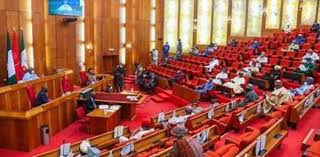
The move follows recent constitutional amendments by the National Assembly paving the way for state police. It marks the most significant step yet towards restructuring Nigeria’s policing architecture after years of national debate over decentralised law enforcement.
Speaking while inaugurating the Presidential Working Group of the National Advisory Committee on State Policing at the Presidential Villa, Abuja, the Chief of Staff to the President, Rt. Hon. Femi Gbajabiamila, described the initiative as a landmark national reform aimed at bringing policing closer to communities while safeguarding national security and constitutional standards.
“This is a monumental reform that Nigerians have debated for many years. Our task is to design a lawful, professional and sustainable federal and state policing system that places greater policing capability closer to the people while preserving national standards, national security and the rights of every Nigerian.”
Gbajabiamila, who chairs the working group, announced that the committee had thrown open the drafting process by inviting memoranda, policy papers and practical recommendations from Nigerians at home and abroad, professional bodies, civil society organisations, security institutions and other stakeholders.
According to him, submissions will be accepted until August 13, 2026, through a dedicated portal, www.
“Public participation is an integral part of this process. When the draft is completed, Nigerians will have another opportunity to examine the actual clauses, safeguards, funding proposals and transition arrangements.”
The Chief of Staff disclosed that the working group had been given a seven-week timeline to produce a comprehensive implementation package, with the Executive Bill expected to reach President Tinubu by September 3 before onward transmission to the National Assembly after nationwide consultations.
He explained that the proposed legislation would go beyond merely establishing state police by providing detailed legal, financial and operational frameworks for implementation.
According to him, the package will contain the draft National Policing Bill, explanatory memorandum, legal audit, consequential amendments, clause-by-clause analysis, implementation roadmap, fiscal framework, state-readiness assessment, risk register and transition plan.
“The final package will comprise more than a Bill. It will include all the instruments required to make the reform defensible, auditable and capable of implementation.”
Gbajabiamila noted that although both chambers of the National Assembly had approved constitutional amendments on state policing, the reforms could not take effect until they were endorsed by the required number of State Houses of Assembly and supported by implementing legislation.
He stressed that while the constitutional amendment provides the framework for a dual policing structure, it does not address critical operational issues such as recruitment, command structure, funding, jurisdiction, training standards, accountability, firearms control, pensions, complaints mechanisms, intelligence sharing and federal-state coordination.
“The amendment creates the framework,” he said, “but the operating rules must now be clearly defined.”
*Presidential committee warns: ‘It must not become 36 militias’
The Presidency also sought to allay widespread concerns over the possible abuse of state police by political office holders, insisting that the new arrangement would be built on strong constitutional safeguards and independent oversight.
Gbajabiamila warned that decentralised policing must never become an avenue for partisan control or political intimidation.
“State Police cannot mean 36 State militias.”
He explained that every state seeking to establish its own police service would first have to satisfy strict certification requirements covering recruitment standards, personnel vetting, training, remuneration, pensions, operational funding, firearms management, detention facilities, complaints mechanisms, financial sustainability and institutional oversight.
He added that while states would be permitted to exceed national policing standards where necessary, none would be allowed to operate below the minimum benchmarks established by federal law.
“Safeguards are not obstacles to State Police; they are what make State Police credible, lawful and sustainable.”
The Chief of Staff acknowledged concerns over unequal state capacity, possible duplication of policing responsibilities and funding constraints. Still, it maintained that those issues underscored the need for comprehensive legislation before implementation.
He emphasised that legal reforms alone would not solve Nigeria’s security challenges without effective leadership, professional policing, intelligence gathering, adequate funding and public confidence.
The working group comprises representatives of the Presidency, Federal Ministry of Justice, Office of the National Security Adviser, Nigeria Police Force, Nigeria Governors’ Forum, Nigerian Bar Association and other key institutions.
President Tinubu has approved a multidisciplinary Policy Advisory Committee chaired by Justice Mohammed Abdullahi Liman to provide technical oversight throughout the drafting process.
Among those present at the inauguration were the Attorney-General of the Federation and Minister of Justice, Lateef Fagbemi (SAN); Inspector-General of Police, Olatunji Disu; Ogun State Governor, Dapo Abiodun; President of the Nigerian Bar Association, Afam Osigwe (SAN); and other senior government officials.
The Presidency said the proposed legislation is intended to produce an implementation-ready policing framework capable of balancing state policing powers with national security imperatives while ensuring professionalism, accountability and constitutional safeguards across the federation.