By Cross Udo, Abuja
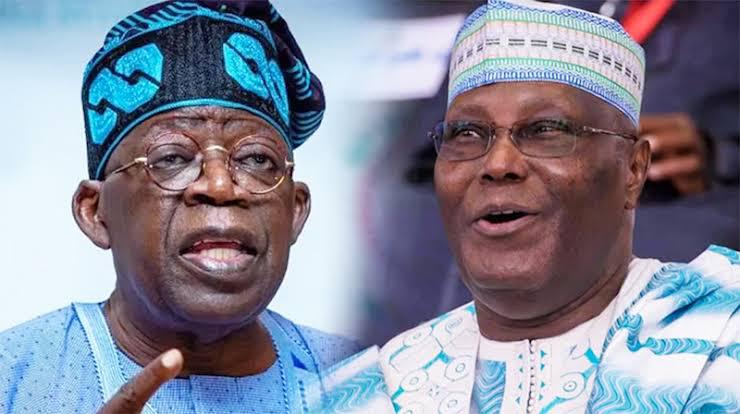
President Bola Tinubu on Thursday dismissed former Vice President Atiku Abubakar’s promise to restore petrol subsidy if elected in 2027, describing the proposal as a demonstration of “serious ignorance” of governance and the economy.
Tinubu spoke at the Presidential Villa in Abuja while receiving Osun State Governor Ademola Adeleke, who visited the President following his victory in the August 15 governorship election.
The Independent National Electoral Commission had declared Adeleke, who contested on the platform of the Accord Party, winner of the poll over the candidate of the President’s All Progressives Congress (APC).
The President’s comment came a day after Atiku, the presidential candidate of the African Democratic Congress (ADC), renewed his attack on the Federal Government’s handling of the proceeds from petrol subsidy removal and promised to restore the policy if elected President.
Atiku, speaking in an interview on Wednesday, argued that Nigerians had endured severe economic hardship since the subsidy was removed in 2023 without seeing corresponding benefits from the funds supposedly freed by the policy.
“I did not oppose the removal of the oil subsidy, but where is the money? Where did it go?” Atiku asked, insisting that the government should account for the resources generated by the reform.
He subsequently pledged that if elected President, he would restore the subsidy and recover funds allegedly stolen from the programme.
His declaration immediately reopened one of the most contentious issues surrounding the Tinubu administration’s economic reforms, with the Presidency, government officials and opposition parties trading sharply different accounts of the fiscal consequences of subsidy removal.
*Says return would reverse costly reforms
Reacting directly to Atiku’s U-Turn proposal, Tinubu said the promise exposed a fundamental misunderstanding of the relationship between public finance, government revenue and economic management.
“Let’s look at the trajectory of history. I saw one of my opponents now say he will go back to subsidy. I read it. That is a demonstration of serious ignorance about governance and the economy,” the President said.
Tinubu argued that the subsidy regime had contributed to a situation in which many states struggled to meet their basic financial obligations, including payment of salaries and pensions.
“Before I came here, 27 states were unable to pay salaries, not to even talk of pensioners,” he said, adding that state governments had repeatedly approached the Federal Government for financial assistance.
The President maintained that the resources previously consumed by subsidy had constrained governments’ capacity to provide infrastructure and essential services.
He said the benefits of increased public revenue should ultimately be measured by the capacity of governments to provide roads, housing, rehabilitate schools and hospitals, and train teachers and health workers.
The President’s latest defence of the reform comes as his administration intensifies its campaign to explain the fiscal consequences of subsidy removal and foreign exchange reforms.
The Federal Government said in its recently released economic reform scorecard that the reforms generated an estimated N15.8 trillion in additional resources. However, it stressed that the amount did not represent a separate pool of cash sitting in government coffers.
Tinubu’s remarks also came against the backdrop of the widening political contest ahead of the 2027 presidential election, with the subsidy issue emerging as a major point of difference between the incumbent administration and its opponents.
The Presidency had earlier rejected Atiku’s proposal through the Special Adviser to the President on Information and Strategy, Bayo Onanuga, who argued that restoring subsidy would amount to reversing a major structural reform in the petroleum sector.
Onanuga said the subsidy was not simply money available in the treasury to make petrol cheaper but represented the difference between the actual cost of supplying the product and the regulated pump price.
He argued that the old arrangement created substantial fiscal liabilities and was inconsistent with the framework established by the Petroleum Industry Act.
According to him, returning to the former system would require answers to fundamental questions about its cost, funding and legal framework.
“How much will the programme cost annually? What revenue source will finance it? Will the government borrow to fund it?” Onanuga asked.
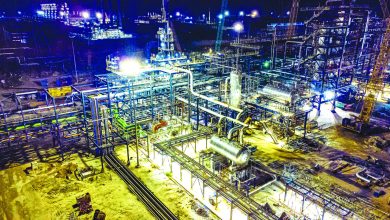
The Presidency has also pointed to the transformation of Nigeria’s petroleum industry since 2023, particularly the emergence of domestic refining capacity.
It argues that the country is moving from dependence on imported petrol towards domestic refining, foreign-exchange conservation and greater energy security.
The government has therefore warned that reintroducing an old-style subsidy could undermine the emerging market structure and recreate the fiscal pressures that prompted its removal in the first place.
*Wike calls Atiku voodoo economist’, questions feasibility of return
FCT Minister Nyesom Wike also joined the attack on Atiku, describing him as a “voodoo economist” and questioning the practicality of restoring petrol subsidy under the country’s current petroleum-market structure.
Wike spoke to journalists during an inspection of infrastructure projects in Abuja, where he accused the former vice president of changing his position on subsidy removal for political reasons.
“Atiku, who is confused, who acts like a voodoo economist, Atiku will say anything just to be president,” Wike said.
The minister recalled that Atiku had advocated removing subsidies before the 2023 presidential election, describing his latest position as a contradiction of his earlier argument.
“This was a man in 2022 who said he was going to remove the fuel subsidy because it was a fraud,” Wike said.
“Now, in 2026, he says he was not going to remove the fuel subsidy. Is he going back to the fraud which he alleged that fuel subsidy was?”
Wike further questioned how a restored subsidy would operate in a petroleum market where private refineries, particularly the Dangote Refinery, are now producing petrol locally.
“Is he going to give fuel subsidy in the Dangote Refinery? The fuel produced by Dangote Refinery, it’s not going to be possible. Tell people the simple truth,” he said.
The minister defended Tinubu’s decision to end the subsidy, arguing that the reform had increased revenues available to the three tiers of government.
He, however, urged Nigerians to hold governors and local government authorities accountable for the deployment of the additional resources accruing to them.
Wike also linked the subsidy controversy to the emerging 2027 political contest, insisting that Tinubu remained the dominant presidential candidate because the opposition was yet to build a united front capable of defeating the ruling APC.
“They have only one leading candidate, and that’s Bola Ahmed Tinubu,” Wike said, adding that “2027 is gone” because there was no opposition united enough to wrestle power from the government.
*APM rejects FG’s N15.8tn savings figure, demands full account
While the Presidency and Wike defended the subsidy removal policy, the Allied Peoples’ Movement, APM, challenged the government’s account of the financial gains from the reform.
The party rejected the Federal Government’s N15.8 trillion figure and insisted that the total proceeds from subsidy removal exceeded N27 trillion.
In a statement by its National Publicity Secretary, Abubakar Yusuf, the APM demanded a comprehensive account of the funds, including the amounts generated, the dates of disbursement, allocations to states and local governments and the purposes for which the money was spent.
The party described the government’s explanation as a “litany of lies, inconsistencies and false claims”, alleging that the conflicting figures had raised questions about the administration’s transparency in handling the proceeds.
The APM particularly questioned the N15.8 trillion figure attributed to the Minister of Finance and Coordinating Minister of the Economy, Taiwo Oyedele.
It contrasted the figure with an earlier statement by former Finance Minister Wale Edun that Nigeria had saved about $20 billion, equivalent to approximately N26.9 trillion, from the removal of subsidies.
“The disparity in these figures further validates allegations of looting and raises serious questions on the overall integrity of the report,” the party said.
The latest government figures, however, indicate that the N15.8 trillion should not be interpreted as cash retained solely by the Federal Government. The Ministry of Finance says the amount represented estimated subsidy savings across the Federation and was shared among the Federal Government, states, local governments and other statutory recipients.
The ministry also said the reforms generated about N20.4 trillion in incremental Federal Government resources, while additional expenditure pressures amounted to about N30.6 trillion, covering areas including wages, debt servicing, infrastructure, electricity support and social programmes.
The APM, however, demanded a detailed breakdown of the N15.8 trillion, including the amount retained by the Federal Government and the funds distributed to the states and local governments.
It questioned the government’s explanation that N5.4 trillion went to the Federal Government while N10.4 trillion was shared among the subnational governments.
The party asked the government to publish the disbursement dates and the specific purposes for which the funds were allocated.
“The diversionary attempt to shift the question to states and local government does not help the Tinubu administration,” the APM said.
The opposition party also rejected the administration’s claim that its reforms had significantly improved Nigerians’ welfare, citing rising living costs, poverty, and unemployment.
It described the economic situation as evidence of what it called the “insensitivity” of the Tinubu administration and urged Nigerians to make economic performance and accountability central to the 2027 election.