By Cross Udo, Abuja
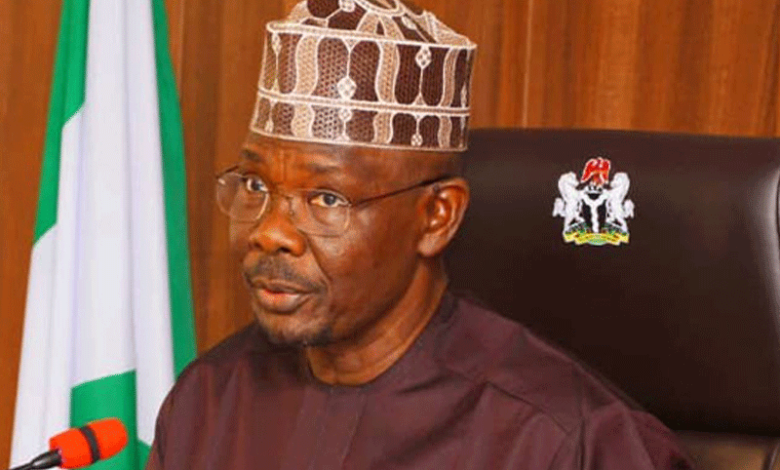
Nasarawa State Governor Abdullahi Sule stated on Wednesday that President Bola Tinubu is expected to visit the state to commission a new 6,000-metric-ton lithium processing plant, which Chinese investors built.
The Governor stated this while speaking with State House correspondents after meeting behind closed doors with the President at the Presidential Villa in Abuja.
He explained that the facility, located in the Nasarawa Local Government Area, is the second lithium plant constructed in the state within the last year and is twice the size of the previous 3,000MT capacity project launched in 2023.
He said the visit will follow the President’s return from France after a two-week stay scheduled to begin later this week.
Sule said, “They said they were going to build a bigger one…they have just concluded building it, and it is ready for commissioning.
“Mr President promised that on his return from his short vacation, he’s going to come to Nasarawa to commission the project.”
Sule further said, “Today has to do with the lithium processing plant that we have just finished building for an investor who came from China.
“If you remember, last year, we commissioned the 3000 metric tons capacity lithium processing plant in Nasarawa local government.
“And during the period, another set of investors, because of how excited they were with the quality of lithium and the commercial deposit that they noticed.”
Since the twilight of the Buhari years, the Federal Government has stated that it has been working to attract more value-added investments in critical minerals.
In May, the FG announced that it would commission at least two Chinese-backed lithium processing plants by 2025 as part of its beneficiation push, aimed at curbing raw mineral exports and boosting in-country refining capacity.
The Nasarawa plant, Sule said, is one of several such projects supported by China-based companies, following a surge in exploration activity and preliminary assessments that confirmed the presence of commercial-grade deposits in the area.
“Because of how excited they [the investors] were with the quality of lithium and the commercial deposit they noticed, they fulfilled their promise to build something bigger,” said Sule.
The Ministry of Solid Minerals planned to restrict lithium exports to encourage domestic processing, similar to models seen in Indonesia’s nickel industry and Zimbabwe’s lithium sector.
Sule also linked the state’s infrastructure expansion to reforms implemented by the Tinubu administration, including the removal of fuel subsidies and the unification of the naira’s exchange rate system.
“There has been significant revenue improvement. With the considerable progress we have seen, we are motivated to take the next step and do even more.
“Instead of borrowing from the banks, we are now utilising the improved resources that we have,” he said.
Earlier in the year, Tinubu declared Nigeria’s intention to become a regional hub for lithium-ion battery and solar panel manufacturing, citing growing global demand and Nigeria’s abundant mineral wealth.