Government should stop playing politics with health policies – Dr. Ewenla

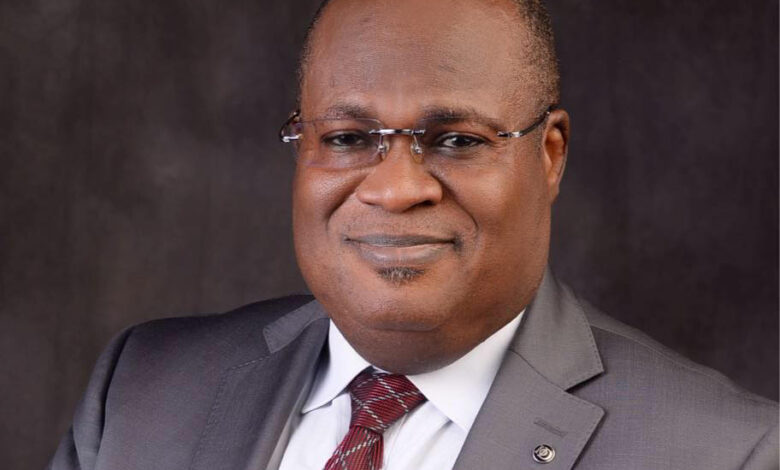
Medical expert and Managing Director/Chief Executive Officer, Ultimate Health Management Services, Dr. Lekan Ewenla, speaks on issues surrounding the pending National Health Insurance Law, the new malaria vaccine, and matters of health policy, in this interview with Idu Jude
Arraignment: Nnamdi Kanu advises IPOB members to embark on dry fasting
How has Nigeria been faring in the development of malaria vaccines?
What I am going to say that has affected our developmental strategy over the decades, is what I will call mixing politics with policies. In the developed economies where things are working well, they have over decades had policies that completely separated from politics. When we cancan does that, as a nation, then we are on the right track.
As we can see, most of the time, we have policy summersaults in this country. Sometimes, the government may have good intentions to initiate projects and programmes, but we then, see some level of politics coming into play in implementing those decisions.
I will give you an example. In this country, there was a time when the government set up a technical committee to review the restructuring of some of the federal agencies and also look into how to collapse some of them into relevant agencies, with terms of reference, because of overlapping responsibilities.
Of course, the committees made some fantastic recommendations, and if you begin to look at the functions of those committees, which included looking into the tenure of directors in the civil service at that level, that was jettisoned.
You see, those are part of the politics that affect policies, and I can go on and on. So, what affected the production of a malaria vaccine is mixing politics with policymaking, and until this is reduced to the barest minimum, we will continue to lag in the global standard set by the United Nations for member nations to develop and place the well-being of their citizens on a global scale.
Are you saying that our chances of getting it right have been politicised?
What I have just said is straightforward. Look at another practical example of what I just said. When (Prof. Attahiru) Jega was INEC Chairman, the use of electronics to transmit election results were not an issue.
But four to five years down the line, it is absurd to hear that some people are saying that transmission of results electronically had been jettisoned. So, if you look at these issues line by line, you will see politics mixing with policies.
Let’s look at the issue of fake drugs as a health menace in Nigeria. How do we combat the issue of fakery with good research?
Well, let’s look at it this way. Over the decades, the concept of government has been configured so that it is no longer the business of government to do business. The government now creates opportunities for the private sector to come in, while the government regulates.
That is why you can see that in this country, there were NITEL mobile telecommunications with the code 090. But after some time, they embraced deregulation, and it allowed other private communication agencies to come in. And we have now seen the positive results of that decision. Now, you don’t need to fight with anyone before you use your mobile. The same thing is applied in PENCOM.
The government has also shown interest to deregulate. While you are still in active service, you are entitled to a certain percentage of pension. The government also pays a certain percentage, and it is meant to be driven by pension administrators, the PFAs, while PENCOM regulates. And the same thing goes for the Health Insurance Programme.
Court permits Malaysia’s convict ex-PM Najib to go to Singapore
What I am trying to point out here is that it is one thing for the government to set up a regulatory agency, but another is, do they have the technical know-how? Do they even have the infrastructure to implement and enforce compliance? You see, let’s face the reality, there is no law you look out for that is not here. What the government does not have are enforcement and implementation tools.
There are lots of agencies springing up. What they do not have is to enforce compliance. So, coming back to your question, what is important is to ensure that when we are meant to regulate, we enhance and set up the regulatory apparatus to deal with the enforcement, and Nigerians are fantastic human beings. What you see playing out is this lack of will to enforce existing laws in all strata. Another typical example is when you drive along Nigerian roads and you see people beating the traffic lights.
You begin to wonder why such should happen. It is not even a matter of CCTV or cameras now, but let there be someone who will be there to enforce compliance, and immediately, they begin to arrest people irrespective of status, you will see some level of compliance with some ethical things that will make one think that laws are working in the country. So, it is still a lack of implemental tools to get it right that brought us to this level.
A lot of Nigerians are having challenges with accessing health care in their own country. What is your view on this?
Let me address the question this way; the mandate to enhance the wellbeing of member nations is the responsibility of the United Nations through the Millennium Development Goals (MDGs). The MDG was a strategy to begin to enhance the health status of member states of the United Nations (UN), and encourage member nations to earmark a certain percentage of their consolidated revenue to deal with that particular project, and with a timeline. After the setting of the timeline, they went back to the drawing board to access the performance. And it was said to be abysmally poor across the African continent.
The Federal Government was called in to take it up to a level. This time around, it has been reconfigured that all member nations are now looking at health care from the perspective of supply and demand value chain, and not just looking at supply alone.
What we had in this country in the past and up till now, is that the government is looking at supply as the value chain, and if you look globally, before you do the supply, the focus is, who buys the product? And that is finding the market for the product.
The government of this nation has completely changed the configuration and said, this time around, we should be looking at demand and supply, and as such, the government recently complied with the UN directive that certain percentage of consolidated revenue, which is about N55 billion, in the first instance, to deploy these funds across the demand and supply chain, and 45 per cent of that amount was given to the Primary Health Care Development Agency (PHCDA) and individual states that will access this funds to enhance their primary health status at the states.
These must provide a certain percentage as counterpart funds, and when they are accessing the funds, that 55 per cent of the fund was equally given to the NHIS to address the areas of the demand side.
And whomsoever is accessing this fund from the angle of the NPCDA will also access the fund at the NHIS, and that makes it mandatory, that is making it a law of the state level, that anyone who is accessing this fund, all the HMOs for the states would ensure that the funds given NHIS are utilised for those services on those that are vulnerable in the states. And they must ensure that they pass the law of the NHIS to all the states.
So, that is what is ongoing now. Now, let me come to your question, of low enrolment in the NHIS programme.
When the issue of health insurance came up, we, first of all, started looking at the Organised Private Sector (OPS), where a certain percentage of individual staff were being paid a medical allowance.
Why oil theft, insecurity fester in Nigeria – Aboderin
But what was on the table was the conversion of that medical allowance to premium for employees, because when this country became independent in 1960, we were meant to become a signatory to all the United Nations treaties, and part of the treaty was that every employer of labour must provide for the medical needs of their employees, which transited to ten per cent of basic salary for every employee, to be paid as medical allowance. But the government of this nation, from the federal, state to the local, never paid medical allowance.
However, in an organised private sector, that is being complied with, and shortly after the law was passed, we discovered that staff never utilised the medical allowance to access health care. What happens here is that they spend medical allowance with their salaries, and that was part of the challenge that the government of this country faced on the verge of getting independence in the 1960s.
So, if you go through the history of this country, the first minister of health started looking at how to make health care affordable to the people shortly after independence by setting up committees to look at how the government can achieve the purpose.
Committees were set up, and when they came back, they recommended that the only way through which Nigeria could access free and affordable healthcare is through the NHIS. And this system, I have to reiterate today, is a global phenomenon. And it is similar to what we have in Nigeria.
That is why when we talk of National Health Insurance, we talk about Ghana, Botswana, Kenya, and so on. This is because these are the only way nations that can eliminate the problems of lack of affordable health care. So, when the government now felt that Nigeria was going to start the NHIS, the focus was on the formal sector. The formal sector is divided into two, the government at the three levels, and the organised private sector.
What is responsible for low participation in the NHIS?
What I would say was responsible for the low key was because what the Federal Government did in 2005 was to have led by example, and to convert 10 per cent of basic salaries of every Federal Government civil and public servant to a premium for them.
This is because, statutorily, the government was expected to take care of medical care of their staff by paying ten per cent of their basic pay as medical allowance, and it is not only at the federal level; it cuts across the state and local government levels.
So, what they did was just so simple– instructing the Head of Service to generate a nominal roll that was transmitted to the Office of the Accountant-General of the Federation, and ten per cent was worked out, and that was it.
That is being paid to date for the federal civil servants. Why you see it working for them is because all civil servants must be on the scheme. And, let me take you back a little bit of what I mean by playing politics with policies.
You see, that particular concept was not meant to be discussed; it was meant to go the states, from the states to the local governments, but for the fact that we play politics with our policies, and for the fact that a particular policy was initiated by a particular party, then the other particular party that is not a party to other party’s submission will never welcome the idea.
APC Congress: Bilal re-elected Adamawa APC Chairman
They feel it is not their business. Yes, and that is completely a typical example of eliminating politics with policies. That is my superior augment, and that is the angle I would like us to take this issue. Whatever we are discussing today is the need to encourage or begin to push for the complete elimination of politics from policies.
Can you say this is why some medical doctors are also suffering neglect?
Well, I can probably say that there were certain policies made in this country, without envisaging the implications. It also takes us back to what we are saying, and to further buttress the point.
At the take-off of the NHIS programme in this country, experts were brought in to develop a welfare package that will suit the purpose of the Nigerian federal civil servants, and there were several people to be covered. The actual reports recommended were that there are two risk-takers.
The primary is supposed to be a risk-takerrisk-taker at the primary level, and as such will need about 2,500 enrolees to be in his facility. He will also need about 65 per cent of the premiums paid to him, as commencement allowance each month, to be able to take care of these people, so that that he will have that fund to procure medications to take off these enrolees. And that few among these recommended 2,500 will be provided services.
I can tell you that on the NHIS programme, there is no room for the government to provide for you. So, the health provider must provide all recommended medications and that was the plan from the beginning.
Can you also throw light on the cause of the inability of health providers to afford prescribed drugs to patients?
For clarification purposes, the benefits package developed by the Federal Government is rich, and is still very rich serving that purpose, to cover even some of the things that were not included in the package, ab initio.
And we must not forget the fact that no product covers everything. So, if a patient that is in NHIS enters into any health provider, and is diagnosed with an ailment higher than what is within the recommended services for an enrolee, or an ailment not covered on the health insurance package, that enrolee is meant to pay for the additional services.
All the ailments under the NHIS are specified and putting it mildly, it is a poor level of awareness on the side of enrolees which lead to the misconception, because the programme is like the country saying, we are putting rice on the table of everyone, now should you come to the restaurant and ask for additional stockfish, in addition to what was recommended for your menu, and fail to pay for it.
How do you regularise the programme with the informal sector?
To set the stage for the simplest implementation of that law, the government, through NHIS and NPHCDA, had set up the stage, and don’t forget that the Federal Government is setting aside funds each year for the implementation of basic health care. It is called a basic health care pond. That pond is set aside to implement health issues across the country, looking at vulnerable states.
Now, what NHIS is doing is to set up the stage with states that have the law and harmonise the benefits package for individual states. Looking at the poverty index, they came with what they called ‘NHIS under one roof’.
What that meant to achieve is to harmonise all the benefits package developed by each state, and come up with an affordable one for everyone, such that, when that law is passed, they will come up with a desired one for the country.
At this stage of implementation, how many millions can the programme take?
You see, it is not in my purview to project, and right now, in anticipation of the passage of the law, other programmes are coming up. The government is even looking at the enrolment of the retirees of this programme at the federal level, and it cuts across the states too. So, it is going to be implemented by looking at the various cells and forging them onto the health insurance net.
That also is the next approach. Right now, even in the informal sector, we have identified that people just don’t scatter on the streets, they have these cells where they belong – associations, churches, market women, farmers’ associations.
These unions who have this volume of membership, by the time you enrol them in the scheme, you now see a significant size of the population of Nigerians captured. The fact remains that every citizen of this country must be enrolled one way or the other.