Why oil theft, insecurity fester in Nigeria – Aboderin

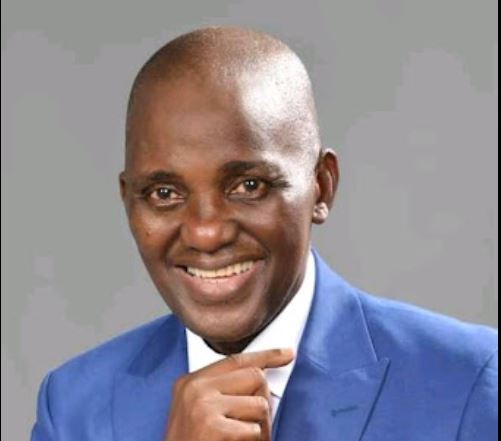
A chieftain of National Democratic Coalition (NADECO) and prominent figure in the post-election annulment of 1993, Abimbola Aboderin, speaks to Olusegun Olanrewaju on some controversial matters in his recently-launched book, ‘Democracy and the Untold Story of June 12’, among others issues.
In your book, you strongly canvassed that Nigeria badly needs submarines. Do you stand by that?
Oh yes. Nigeria badly needs subs, largely because of oil thefts and sea banditry, like hijackings. There is a need for coastal monitoring.
Or coastal defence, as some doctrine would have it. There is no submarine now. If we do know our military establishment well, we know that we do need to upgrade our security architecture. South Africa has submarines, Egypt has, but Nigeria, the giant of Africa, does not.
A big, populist country does not have good coastal and air radar defence; it is bad. And, historically, the cost of procuring submarines has always been enormous. Nigeria messed up things. I took our top (military) officers to Germany, Argentina, and others, for demonstrations on state-of-the-art security wares, but we didn’t get anywhere. Name them, generals, admirals, air marshals- Murtala Nyako, Arionola, Allison-Madueke, Ibrahim Alfa, and so on.
You also stated the impact of military coups on modernisation attempts through contracts…
I was into big projects, more than $4 billion, greater than even others like Chief MKO Abiola of blessed memory then.
There were 13 forces in Germany; we studied everything –radars, they had three radars to reference. Everyone needs to key into the security transformation of Nigeria. In the south, there is a need to intercept vessels belonging to oil thieves and the like, not only through chasing by patrol boats.
What is your take on the insecurity in Nigeria today?
If the right measures had been in place, including the purchase of submarines, Nigeria would have done better. In America where I schooled, I was the only black person in our set. They came from everywhere, Singapore, et cetera.
I was the black person who showed them that we in Nigeria are the power of the African continent. At inter-racial meetings, we mixed a lot. As a black, I had to show the world that we could do it.
You were a chieftain of NADECO, which relentlessly battled the military. What is your experience today? Do you still think that NADECO, as a pro-democracy force, is still relevant in politics?
Look at the scenario whereby the best election ever held in the country, the fairest in the country’s chequered history was annulled by whatever forces were acting to truncate the election. People voted freely – from the north, south, east, and west, et cetera. But that has passed.
We showed that. Today, the conditions are no longer existing for NADECO to be relevant. The military has gone, from power, that is. We don’t, strictly speaking, have the conditions for NADECO again. NADECO did a good job for the annulled election, but it’s a different ball game now. Now, good governance is the challenge.
People are suffering; good people too. There is so much corruption in Nigeria; everybody just wants to take the money and go away, and stash it abroad. You can’t leave 200 million people without taking care of them. God is watching us. We have to prove that blacks can manage resources and build a nation.
Back to the security issue, especially on procurement of submarines, how many do you think Nigeria requires now?
It takes a long time to build a submarine. In the 80s, it was cheaper to build one, but they were always cancelling contracts because of military coups and rules. Because of that, we were not able to achieve much in terms of modernising the military, especially in the regular forces – Army, Navy, and Air Force.
It was only in the police we were able to make some headway. At the time, way back, they were selling a submarine for some $150 million each. And the Navy needed about five at the time.
I don’t know about today, because criminality has gone exponential. But even then, the contracts we secured to the police were to supply parts, like tyres, for police vehicles, as well as canisters for the armoury. So much was planned for them, but all those were little successes. All equipment, ships, maintenance contracts were always being broken.
What is your view on the balkanisation of the country, particularly through secession?
Secession? No. In a way, we are better off united, everybody. Let’s work together as a country. We should stop working against each other. The civil war was terrible. I saw it. We should live beyond material things.
The Americans fought a bitter civil war, but they are now together, and working together. We don’t personally need the billions. The more money you can take, that is the more priority of many. Presently, there is no manufacturing, but there are private jets everywhere. Show love to your neighbours.