

By David Lawani, Abuja
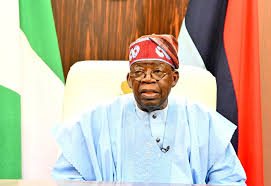
The 2027 presidential contest has opened with President Bola Tinubu and the opposition trading blame over Nigeria’s economic hardship, as the President defended his administration’s reforms while his challengers accused him of failing to address the difficulties confronting millions of Nigerians.
The dispute followed Saturday’s formal flag-off of the All Progressives Congress (APC) presidential campaign in Kaduna, where Tinubu sought a second term and made the economy a central part of his appeal to voters.
Addressing supporters at the Ranchers Bees Stadium, the President dismissed opposition criticism over hunger and poverty, arguing that the problems predated his administration and were the consequence of years of mismanagement.
“I hear my opponents talking about hunger and poverty. Who created it? They did. They created the hunger; they created the poverty. We are trying to eradicate it,” Tinubu said.
He defended some of the most controversial measures of his administration, particularly the removal of the petrol subsidy and changes to the foreign exchange regime, arguing that the reforms were necessary to eliminate corruption and place the economy on a more sustainable footing.
“Fuel subsidy is in our past: no more corruption, no more falsification of invoices, no more lies, no more smuggling of fuel,” the President said.
Tinubu also pointed to economic recovery, infrastructure development and increased opportunities as evidence that his administration’s policies were beginning to produce results.
But the opposition quickly challenged the President’s account.
Former Vice President Atiku Abubakar, the presidential candidate of the African Democratic Congress (ADC), accused Tinubu of attempting to shift responsibility for the country’s economic difficulties to his predecessors rather than account for developments under his administration.
Atiku described the President’s claim that the opposition created hunger and poverty as evidence of what he called political amnesia, arguing that Nigerians were already experiencing the impact of high living costs and declining purchasing power.
The ADC campaign also rejected the attempt to dismiss opposition criticism of the economy, maintaining that the hardship being experienced by households could not simply be attributed to previous administrations.
The political dispute comes against the backdrop of an economy showing mixed signals.
Nigeria’s headline inflation eased to 14.63 per cent year-on-year in September from 15.39 per cent in August, according to figures from the National Bureau of Statistics cited by Reuters.
However, food inflation remained considerably higher at 19.59 per cent, underscoring the continuing pressure on household food budgets.
The cost of petrol also remains significantly above pre-subsidy-removal levels. Reuters reported that petrol sold for about N1,400 per litre in Lagos and Abuja in September and as much as N1,500 in some parts of northern Nigeria.
For the Tinubu administration, however, the reforms have begun to produce measurable fiscal and macroeconomic gains.
Finance Minister Taiwo Oyedele said the removal of the petrol subsidy and reforms to the foreign exchange market had improved public finances, strengthened foreign reserves and helped attract investment.
He also said about 10 million households were receiving government cash transfers as part of measures designed to cushion the effects of the reforms.
The President’s campaign has also placed infrastructure at the centre of its argument for continuity.
At the Kaduna event, Tinubu inaugurated the 81-kilometre Kaduna-Abuja section of the Abuja-Kaduna-Zaria-Kano dual carriageway, presenting the project as part of the administration’s wider infrastructure programme.
The Presidency has similarly maintained that stronger federal revenues and increased allocations to states have enabled governments at different levels to pay salaries and embark on infrastructure and development projects.
The opposition, however, argues that improvements in macroeconomic indicators will have limited political value if Nigerians continue to face high food, transportation, energy and housing costs.


