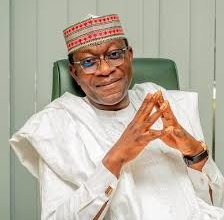
UCTH can become South-South’s healthcare reference point— Enang, Professor of Medicine

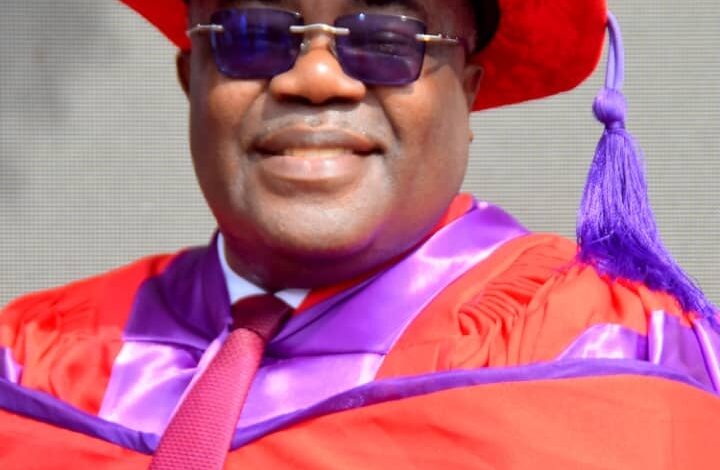
A Professor of Medicine at the University of Calabar and Consultant Endocrinologist at the University of Calabar Teaching Hospital (UCTH), Ofem Enang, speaks with THISNIGERIA on the challenges confronting Nigeria’s teaching hospitals and the reforms required to reposition them for improved healthcare delivery. Enang, Cross River State’s first PhD holder in Endocrinology, Diabetes and Metabolism, also discusses the management of chronic diseases and outlines his vision for UCTH should he emerge as its Chief Medical Director
As Cross River State’s first PhD holder in Endocrinology, Diabetes and Metabolism, how would you assess the growing burden of diabetes and other endocrine disorders in Nigeria, and why should government treat them as a major public health priority?
The growing burden of diabetes and other endocrine disorders in Nigeria is what I would describe as part of the epidemiological transition of diseases. My attainment of a PhD in Endocrinology and Diabetes has both academic and clinical implications for Cross River State. Diabetes is a disease that affects all spectra of society, and its major risk factors are obesity, physical inactivity, unhealthy diets and rapid urbanisation. The available figures should concern policymakers. The International Diabetes Federation estimated that about 3 million Nigerian adults were living with diabetes in 2024, while a 2024 systematic review of Nigerian studies estimated a pooled prevalence of approximately 7 per cent. Significantly for us in this part of the country, that review found the South-South geopolitical zone to have the highest prevalence among Nigeria’s zones. Many people also live with type 2 diabetes without knowing it, and that is a hidden burden. They may only present to hospital after complications have developed — kidney failure, stroke, heart disease, loss of vision, diabetic foot disease or gangrene leading to amputation. These complications are more expensive to manage than detecting diabetes early and keeping blood glucose, blood pressure and other risk factors under control. The World Health Organisation has emphasised that diabetes is a major cause of blindness, kidney failure, cardiovascular disease and lower-limb amputation, with treatment gaps particularly pronounced in low- and middle-income countries. But endocrinology goes beyond diabetes. We must also pay greater attention to thyroid disorders, obesity and metabolic diseases. There are disorders of the pituitary and adrenal glands, reproductive endocrine conditions and other hormonal abnormalities. Some of these diseases are underdiagnosed because symptoms can initially be subtle, but because most places lack specialist endocrine services and appropriate laboratory investigations, we are unable to effectively offer our expert services. The government should therefore treat diabetes and endocrine disorders as major public health priorities for several reasons. First, prevention is possible and economically sensible. Second, early diagnosis saves lives and reduces costs. Access to treatment must improve. Medicines like insulin are not optional commodities for people living with diabetes; they are life-saving treatments. Government policy must therefore address the affordability and availability of essential medicines, glucose-monitoring devices, diagnostic tests and specialist care. Nigeria needs stronger surveillance and research. We cannot plan effectively without state-by-state and national data showing who is affected, where the burden is greatest, the complications being experienced and the outcomes of treatment. We must recognise the economic consequences. When someone develops complications from diabetes, the effects extend beyond the individual. Families lose income, healthcare expenditure rises, productivity falls, and already stretched facilities carry an even greater burden. My appeal is that the government should move from viewing diabetes and endocrine disorders as teaching hospital problems to treating them as community-based health issues. We need prevention beginning in schools and communities, healthier food environments, regular screening, stronger primary healthcare, affordable medicines and diagnostics, and properly equipped hospitals with better referral systems, public education and greater investment in endocrinology training and research. If we invest in prevention and early detection today, we can avoid paying a far greater human and economic price tomorrow. Diabetes is largely a silent disease until its complications become very loud. Our public health response must begin before that stage.
Nigeria’s healthcare system still struggles with late diagnosis and the high cost of managing chronic diseases. What fundamental gaps must be addressed to improve prevention, early detection and access to specialist care?
The problem is not simply that Nigeria lacks hospitals or specialists; it is that the health system is still too heavily oriented towards treating advanced diseases rather than preventing diseases, detecting them early and managing them continuously. In addressing this issue, we must start by strengthening primary healthcare. Diabetes, hypertension, obesity and many endocrine disorders should not wait until a patient reaches a teaching hospital before they are recognised. PHCs should routinely assess blood pressure, blood glucose, body weight and other cardiovascular and metabolic risk factors, especially among those at increased risk. We need to close the diagnostic gap. We need to provide basic screening equipment at peripheral centres, and we need to develop a dependable referral system. We must continue to train and retrain our personnel. There must be a minimum package of essential diagnostic services at primary and secondary levels. Prevention has to go beyond occasional awareness campaigns. We need sustained public health programmes addressing unhealthy diets, physical inactivity, obesity, tobacco use and other risk factors. Prevention should begin in schools, workplaces and communities. We must make chronic disease treatment affordable and continuous. Essential medicines and devices must be affordable and available. We must also decentralise specialist care. We cannot have a situation where patients from rural communities have to travel several kilometres to access specialist care. Specialists should take care of rural communities through government-supported interventions. The government must invest in the health workforce. We must train other health workers — nurses, community health officers and pharmacists — within their areas of competence to complement the role of specialists. Health financing has to change. We need stronger health insurance coverage. The National Health Insurance Authority must be repositioned to deliver on its mandate. Ultimately, we need better data and accountability. Accurate data is a basic requirement for effective planning. How many Nigerians are living with diabetes, hypertension and other chronic illnesses? We must have the data to plan.
Having practised, researched and trained medical professionals in this specialised field, what does Nigeria need to do differently to build a stronger pipeline of specialists and reduce dependence on medical treatment abroad?
Nigeria must stop treating specialist manpower development as an incidental outcome of the health system and begin treating it as a deliberate national investment. Nigeria has talented doctors, some of whom have graduated from postgraduate medical colleges. That pipeline from medical school through residency training to specialist qualification is still too narrow, unevenly distributed and vulnerable to brain drain. We need to expand the institutional foundations that train these specialists, with stronger financing and better retention. We need to substantially expand accredited specialist training positions. Many young doctors are interested in areas such as endocrinology, cardiology, nephrology and other subspecialties. The government should deliberately increase funded residency and fellowship positions and help more federal and state teaching hospitals to attain accreditation standards for postgraduate training. We must develop centres of excellence within Nigeria. It is difficult to reduce medical tourism if our specialists do not have access to diagnostic technology, imaging and therapeutic facilities. Nigeria reportedly loses a humongous amount to medical tourism. We must invest in world-class specialist services at home. Nigeria must invest more in subspecialty training and clinical research. We need structured fellowships, protected research time, competitive research grants and strong links between universities, teaching hospitals and research institutions. Nigerian specialists should be generating evidence from Nigerian patients and contributing to international knowledge rather than relying almost entirely on evidence generated from other populations. We must tackle retention. Poor remuneration is a major problem. We must pay commensurate wages for specialist skills comparable to those in other parts of the world. We must decentralise specialist training. Every state should have a strong secondary healthcare system with specialists and a dependable referral system. We also need multidisciplinary specialist teams, so we must train other health workers besides doctors.
You have held several leadership positions within the medical profession. What lessons from those experiences have shaped your understanding of healthcare administration and institutional leadership?
My various leadership responsibilities within the medical profession have taught me that healthcare leadership is fundamentally about people, systems and accountability. Clinical expertise is important, but leading a health institution requires a broader understanding of how people, resources, policies and processes come together to produce patient outcomes. One of the most important lessons I have learned is that you cannot build a strong institution around one individual. Institutions become sustainable when you develop people, delegate responsibility, create systems, and deliberately prepare the next generation of leaders. Secondly, leadership is about listening and building consensus. Effective leadership requires the ability to listen, communicate clearly and bring people around a shared objective. In leadership, good intentions are not enough; institutions require systems. A healthcare leader must be concerned about governance, financial discipline, quality assurance, data, procurement, human resource management and accountability. I have also learned that there is a need to balance immediate problems with long-term institutional development. There is also a need for integrity and transparency. Healthcare leadership involves managing resources that ultimately belong to the public and patients. Trust is therefore one of an institution’s most valuable assets. The people must trust the leadership. Perhaps, most importantly, my experience has taught me that leadership should be measured by impact, not position. The question should always be about what improvement one has brought to the system and not how many leadership titles one has acquired. That philosophy has shaped my understanding of healthcare administration. I believe that the healthcare leader of today must be both a clinician and a systems thinker — someone who understands the reality of patient care but can also work with government, administrators, academics and other professionals to build institutions that function effectively. My leadership experiences have therefore reinforced a simple principle: the best leaders do not merely occupy institutions; they leave those institutions stronger than they found them.
You are seeking to become Chief Medical Director of the University of Calabar Teaching Hospital. Why do you believe this is the right time for you to take on that responsibility, and what is your defining vision for UCTH?
I believe this is the right time for me to take on the responsibility of Chief Medical Director of the University of Calabar Teaching Hospital because I have reached a point in my professional career where my experience in clinical medicine, endocrinology and diabetes, research, postgraduate training and professional leadership can be brought together in the service of an institution that is strategically important to the South-South region. Over the years, I have gained experience not only in caring for patients, but also in training healthcare professionals, conducting research and participating in leadership within the medical profession. Those experiences have given me an appreciation of what it takes to build teams, manage competing priorities, develop people and, most importantly, translate vision into institutional performance. So, for me, this is not merely about seeking another leadership position. It is about accepting responsibility at a stage when I believe I have acquired the experience, perspective and maturity required to help take UCTH to its next level. My defining vision for UCTH is to build a patient-centred, academically excellent, technologically enabled and financially sustainable teaching hospital that becomes the reference point for high-quality healthcare in the South-South and beyond. I see that vision resting on several pillars: excellence in patient care; human capital development; research and innovation; technology and digital transformation; institutional accountability and financial sustainability; and stronger integration with primary and secondary healthcare systems.
Teaching hospitals across Nigeria face recurring challenges, including funding constraints, brain drain, ageing infrastructure and industrial disputes. If appointed CMD, what would be your immediate priorities, and how would you balance the interests of patients, health workers, students and government?
Ultimately, I want to build on the enormous success of the outgoing Chief Medical Director, Prof. Ikpeme A. Ikpeme, using the 4R mantra as a benchmark. I want UCTH to become an institution where patients want to come, professionals want to work, trainees want to learn, researchers want to collaborate, and the community can trust. I want the hospital to be a place where a patient does not have to travel abroad to receive care that can be safely and effectively provided here. If we develop our people, invest wisely in infrastructure and technology, strengthen our systems and embrace innovation, UCTH can provide increasingly sophisticated services locally and contribute to reducing medical tourism. I may not have all the answers, but I believe I am ready for that responsibility because I have the experience to build the right team, the humility to listen, the discipline to execute and the conviction that UCTH can achieve considerably more, given the head start provided by our predecessor.
What would you want your tenure to be remembered for if given the opportunity to lead UCTH, and what specific changes should patients and staff expect within your first few years in office?
If appointed Chief Medical Director, my immediate priority will be to stabilise the institution, build consensus and provide a clear strategic direction for the University of Calabar Teaching Hospital (UCTH). I will begin with a rapid but comprehensive assessment of the hospital’s infrastructure, manpower, clinical services, training programmes, industrial relations, staff welfare and major operational bottlenecks. My administration will be guided by five key priorities: patients, people, infrastructure, financial sustainability and institutional governance. First, the patient must remain at the centre of everything we do. I will prioritise emergency and critical care services, access to essential drugs and consumables, diagnostic services, patient safety and the reduction of unnecessary waiting times. Patients deserve safe, affordable, timely and compassionate care, and the hospital must continually improve its systems to meet those expectations. The welfare and working environment of healthcare workers will also receive significant attention. The challenge of brain drain cannot be addressed simply by asking professionals to continue making sacrifices indefinitely. Within the limits of the hospital’s mandate and available resources, we must confront some of the factors driving health workers away, including poor working conditions, inadequate equipment, excessive workload, limited career development opportunities and inadequate welfare support. Where feasible, attention will be given to accommodation, transportation, meals and other initiatives that improve staff welfare, alongside systems that recognise commitment and outstanding performance. I will place particular emphasis on resident doctors and other trainees because they constitute a critical component of the healthcare workforce. They require a structured training environment, adequate supervision, reasonable working conditions, access to essential equipment and transparent mechanisms for addressing grievances. A teaching hospital that continually exhausts its resident doctors undermines not only its current workforce but also its future capacity. Resident doctors deserve quality training, effective supervision, appropriate welfare and a credible career pathway. On infrastructure, I believe there must be an honest assessment and clear prioritisation. I will consult with my predecessor and relevant stakeholders to identify critical projects nearing completion and ensure they are completed before new projects are unnecessarily initiated. Priority areas will include power supply, water, medical oxygen, operating theatres, intensive care facilities, laboratories, imaging services, wards and other essential equipment. These interventions will be supported by a phased and realistic capital development plan. Financial sustainability will be another major focus. Funding constraints are real, but prudent administration can ensure that available resources are deployed more effectively. I will strengthen financial management through transparent budgeting, expenditure tracking, procurement discipline, maintenance planning and measurable departmental targets. At the same time, I will pursue every legitimate funding opportunity available to the institution, including government allocations, health insurance reimbursements, research grants, strategic partnerships and philanthropy. However, financial considerations must never override patient safety or professional ethics. Industrial harmony will also be a leadership priority. Industrial disputes rarely begin on the day workers embark on a strike. In many cases, they result from unresolved grievances, poor communication, unmet expectations and a breakdown of trust. I will therefore establish regular engagement with relevant unions and professional bodies and create mechanisms for the early identification and resolution of disputes. Health workers deserve dignity, safety, fair treatment and an environment in which they can practise effectively. Government, on the other hand, deserves accountability, prudent management of public resources and measurable results from public institutions. My responsibility as Chief Medical Director will be to ensure that these interests are not unnecessarily presented as competing priorities. In many cases, improving one strengthens the other. Where genuine conflicts arise, I will rely on evidence, dialogue, transparency and the mandate of the institution rather than personal preference. Difficult decisions will be communicated openly, with clear explanations of the rationale behind them. My leadership philosophy can therefore be summarised simply: protect the patient, respect the professional, develop the trainee, account to the government and build an institution capable of functioning successfully beyond the tenure of any individual Chief Medical Director.