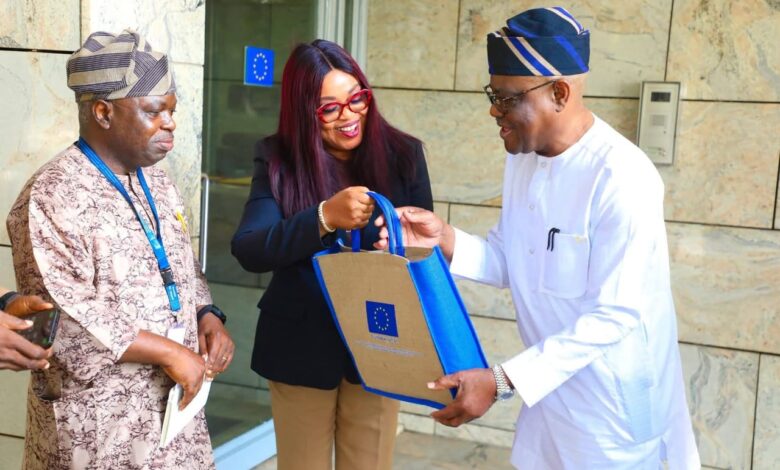
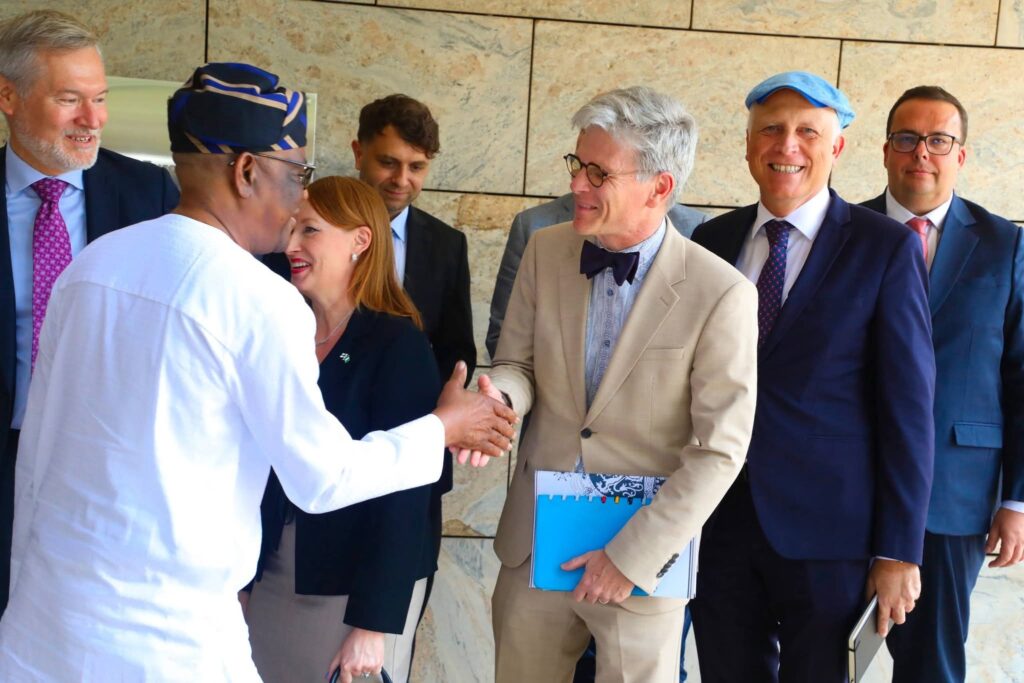
Minister of the Federal Capital Territory (FCT), Nyesom Wike, has called on European Union (EU) member states to deepen investment cooperation, expand cultural exchanges, and strengthen partnerships with the Federal Capital Territory Administration (FCTA) to drive development in Abuja.
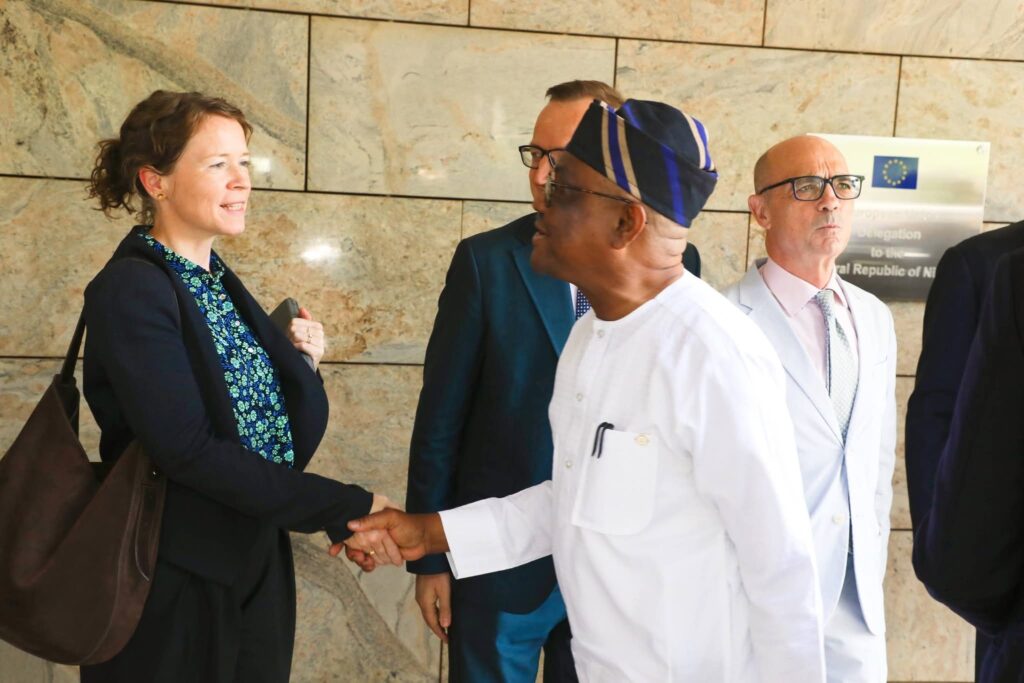
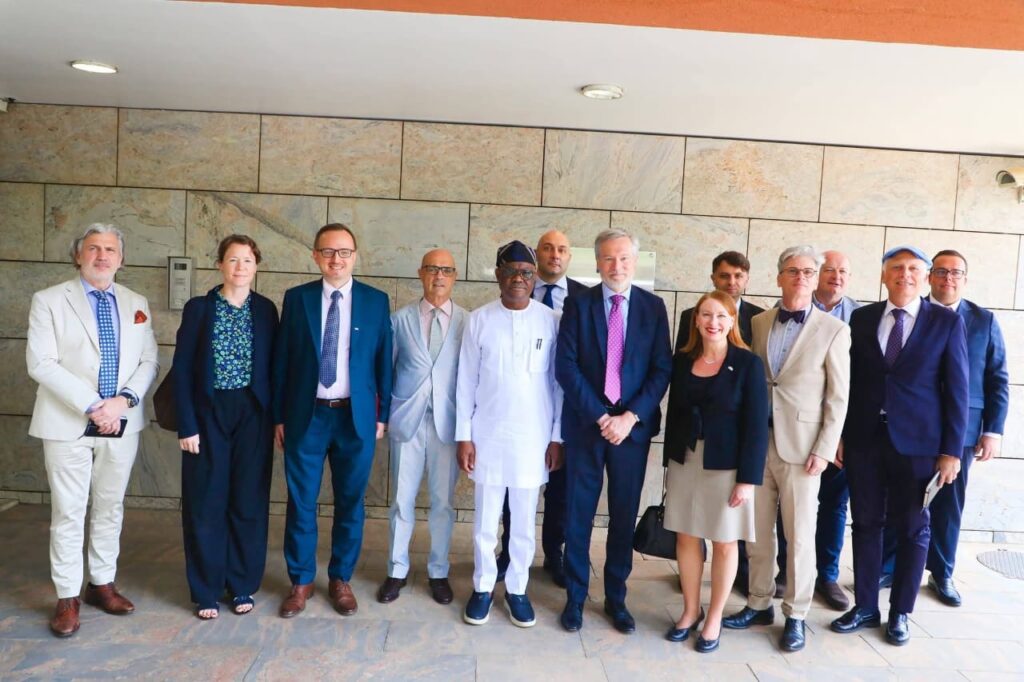
Wike made the appeal on Tuesday while addressing Heads of Mission at the European Union Delegation to Nigeria House in Abuja, where he reaffirmed the FCT’s commitment to sustained collaboration with European partners in areas of mutual interest.
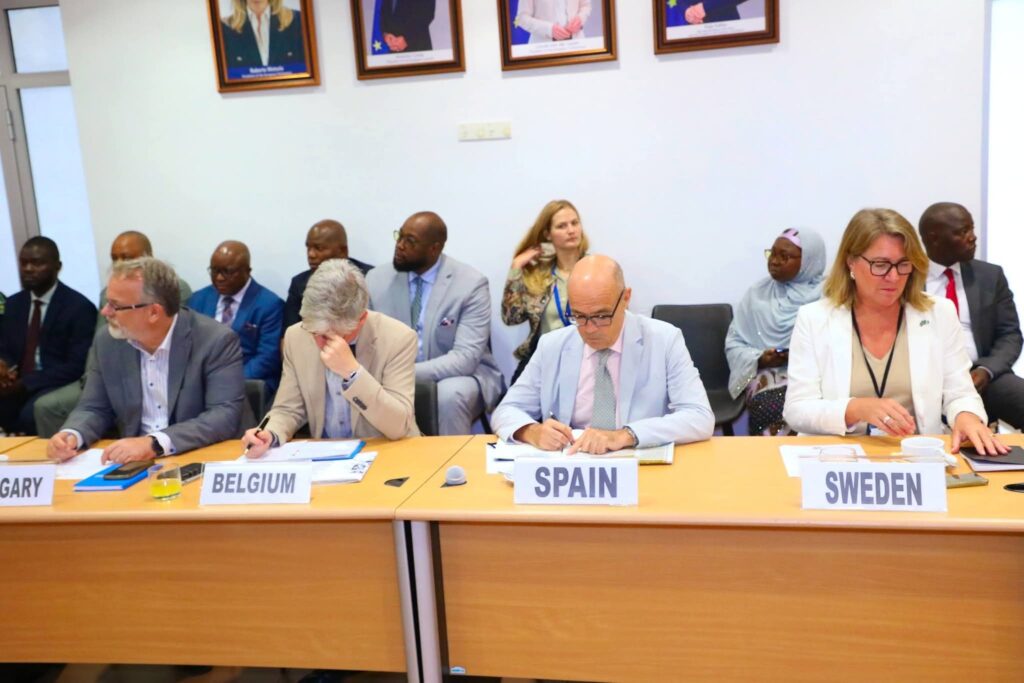
The meeting, chaired by the EU Ambassador to Nigeria and ECOWAS, Gautier Mignot, brought together envoys from several European countries, reflecting the bloc’s continued engagement with Nigeria on trade, governance, and development.
Describing the EU as Nigeria’s leading trade and investment partner, Mignot underscored the importance of closer cooperation, setting the stage for discussions on economic opportunities and governance reforms in the FCT.
In his presentation, Wike outlined key priorities of the FCTA, including infrastructure expansion, security enhancement, education, healthcare, social welfare, and land administration reforms. He highlighted Abuja’s growing reputation as a business-friendly capital, pointing to opportunities in real estate, tourism, agriculture, solid minerals, and waste management.
The minister said the administration is investing heavily in infrastructure to stimulate economic growth and improve living standards, citing ongoing projects such as road expansion, public transport upgrades, and improved water supply.
He also noted efforts to strengthen security through the construction of new divisional police headquarters across the six area councils.
On governance and Nigeria’s political climate, Wike said reforms under President Bola Ahmed Tinubu are aimed at strengthening institutions and promoting credible electoral processes.
He referenced provisions for electronic transmission of election results, while allowing manual alternatives where necessary due to local challenges.
Wike argued that Nigeria’s democracy is gradually maturing, with increased reliance on legal and constitutional mechanisms to resolve disputes. He urged political actors to view opposition as a constructive force rather than a source of instability.
The minister also defended the policy direction of the current administration, noting that economic reforms such as fuel subsidy removal, foreign exchange unification, and tax restructuring are designed to stabilise the economy and improve public finances. He added that social interventions, including conditional cash transfers and student loan schemes, are being implemented to cushion the impact on vulnerable groups.
Addressing security concerns, Wike acknowledged ongoing challenges, including insurgency, banditry, and communal conflicts, some of which he linked to instability in the Sahel region. He, however, assured that the government is intensifying efforts through improved intelligence, inter-agency coordination, and technology-driven security strategies.
He reiterated the FCTA’s openness to international partnerships, expressing confidence that deeper engagement with EU countries would accelerate Abuja’s transformation into a modern, inclusive, and economically vibrant capital city.