By Nathaniel Zacchaeus, Abuja
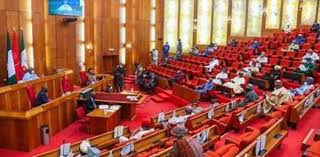
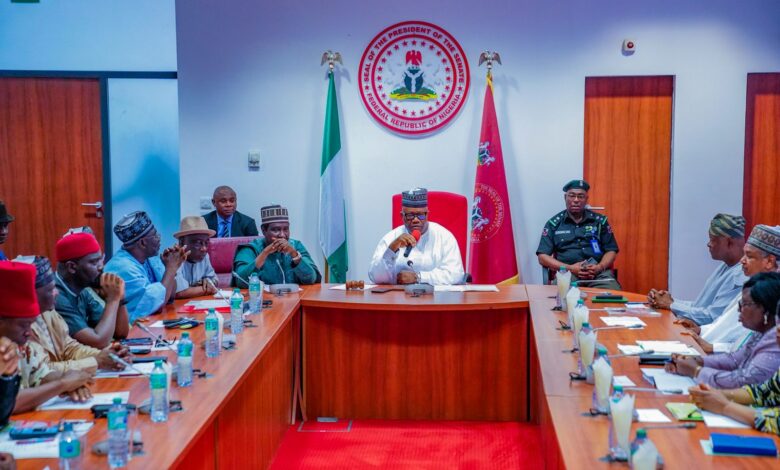
The Senate passed the four tax reform bills for a second reading at the plenary yesterday.
There were, however, suggestions that the fiscal legislation should be withdrawn for more comprehensive consultations.
The bills are the Nigeria Tax Bill, the Nigeria Tax Administration Bill, the Nigeria Revenue Service Establishment Bill, and the Joint Revenue Board Establishment Bill.
Federal lawmakers held a one-hour closed session, during which they agreed to debate the bills’ general principles.
The Leader of the Senate, Opeyemi Bamidele, read the lead debate when the close session ended.
He said the four legislative proposals would increase Value Added Tax (VAT) distributable to the subnational governments to 55 percent while reducing the federal government’s share to 10 percent.
Bamidele said the new legislative regimes also proposed zero VAT on exports and essential consumptions by the masses and grant of input VAT credit on assets and services in addition to goods consumed by businesses to lower the cost of production.
He outlined the far-reaching proposals in the Tax Reform Bills, which, according to him, aim to simplify the tax landscape, reduce the burden on small businesses, and streamline tax collection.
*Exempt employees earning below N800k PAYE
Regarding tax exemptions, Bamidele pointed out that those whose salaries are not more than the minimum wage from Pay As You Earn (PAYE) deductions would be exempt from the tax regime.
He also said small businesses with an annual turnover of N50m or less “are equally exempted from payment of taxes,” a critical pro-business initiative encouraging job creation, deepening the ease of doing business, and incentivizing more investments.
*Reduce company income tax from 30% to 25%
Similarly, the Senate leader explained that a proposed huge reduction in company income tax from 30 percent to 25 percent would last at least two years.
He said, “As part of a deliberate attempt to curtail the incidence of double taxation and multiplicity of taxes and levies, multiple taxes hitherto paid by companies under various tax heads, namely 2.5 percent education tax, and 0.25 percent NASENI tax, have been harmonized into a development level of 2 percent, which by 2030 will be applied to fund the newly established student loan scheme, which will benefit many Nigerian youths.
“Unlike what is obtainable under the existing tax regime whereby the Federal Government takes the lion’s share of VAT revenues, it is proposed that the sharing formula should allow the State Government to share 55 percent of VAT revenue from the current 15 percent to 10 percent sharing formula.
“However, local government’s share of VAT revenue remains unaffected. Relatedly, basic items consumed by Nigerian households, such as food items, medical services and pharmaceuticals, educational fees, electricity, etc., are exempted from VAT.
“Again, as part of efforts to ease the administration of income taxes and levies across the Federation, there is a reasonable effort made to consolidate core tax statutes and related tax legislations,” Bamidele explained.
Contrary to misrepresentations in the public domain regarding the intendment of the Bills under consideration, Bamidele explained that the bills contained innovative and people-oriented proposals as part of the government’s deliberate fiscal and tax reform measures.
He said they would cushion the effect on Nigerian citizens of ongoing broader economic policies such as removing subsidies on petroleum products and renewed efforts to implement cost-reflective electricity tariffs in the power sector.
In his contribution, former Senate Chief Whip Senator Ali Ndume (Borno South) claimed that his problem was timing and derivation.
He added that the Constitution of the Federal Republic of Nigeria, 1999 (as amended) must be amended before the Tax Reform Bills take effect, so he calls for their immediate withdrawal.
Ndume observed, “I am not against the reform. My problem is timing, and the issue of derivation makes the reform contagious. The 1999 Constitution has to be amended before the bills can be effective.”
However, the Senate Chief Whip, Senator Mohammed Munguno (Borno North), strongly objected to Ndume’s submissions and asked the Senate to disregard them and pass the bills for a second reading.
Munguno urged the Senate to pass the bill into second reading, advocating that all areas of concern would be addressed at the public hearing stage.
After the debate, which featured the Chairman of the Senate Committee on Finance, Senator Sani Musa, and the Chairman of the Senate Committee on Ecology, Senator Seriake Dickson, the Senate unanimously passed the bills into second reading following Munguno’s final position.
*Panel to committee to conduct public hearing
In his remarks, the Senate President, Senator Godswill Akpabio, referred the bill to the Senate Committee on Finance and advised the Committee to invite all stakeholders to the public hearing to address all areas of concern.
He also asked the Senator Sani Musa-led panel to report back to the Senate in six weeks.
*Invitation of experts by NASS in order- Akpabio
Meanwhile, the President of the Senate has said that the National Assembly did the right thing by inviting tax experts into the chambers to brief lawmakers on the nitty-gritty of the proposed tax reform bill.
He also stated that he would have seen the need for the bill to be supported after listening to the professionals, lawmakers, and even members of the public who watched the experts’ submissions.
Akpabio spoke while receiving, in courtesy, the leadership of the Association of Nigeria Delta Monarchs of Nigeria (ANDMON), led by His Royal Majesty, Captain Okurakpot, in his office on Wednesday.
A statement by the Special Assistant to the President of the Senate on Media, Mr Jackson Udom, quoted Akpabio as saying, “We had some contentious bills that the public seem not to understand. We felt we couldn’t enter them unless we correctly educated the people. I want to thank the Deputy President of the Senate, Jibrin Barau, who presided over the hearing from experts today on the floor of the Senate.
“I also thank the Speaker of the House of Representatives, Tajudeen Abass, for doing the same last week by inviting experts to brief them on the tax reforms and the way forward on tax administration in the country. After today’s session, those who had misgivings about the bills will support it.”
Akpabio said, “I thank our royal fathers for coming here to see what we are doing to make Nigeria a better place for all of us. I also thank you for using your positions and influence to maintain peace in the Niger Delta region, which has equally led to an increase in oil production.
“Before now, our inability to meet OPEC quota was largely due to militancy in the area, which also led to oil-producing companies leaving the region after making many profits. This should not be allowed to continue again.”