By Francis Ajuonuma, Anthony Otaru, David Lawani, and Ben Adoga
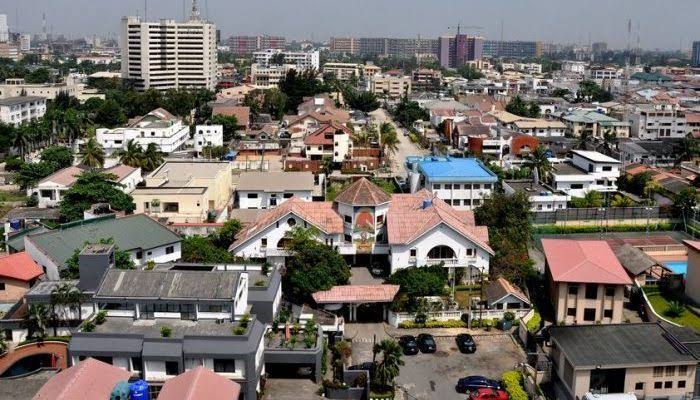
Accommodation has morphed into an endurance test for Nigerians in Lagos, Abuja and several other cities, with average rents leaping more than 60 per cent in the first five months of 2025.
From the Itire of Surulere in Lagos State to the Federal Capital Territory’s Gudu, prospective tenants must now budget for a triple bill—rent, agent fee and “agreement” fee—that routinely lifts a one-room self-contained unit above ₦1m, an impossible sum for workers earning below ₦100,000 a month.
In Itire, ThisNigeria learnt that a new one-room “self-con” now costs ₦1m: ₦500,000 in rent plus the same amount again in combined fees.
A single ‘face-me-I-face-you’ room, traditionally low-end housing, no longer costs less than ₦ N500,000 in the same area, up from about N350,000 about a year ago.
Neighbouring Aguda in Surulere paints a similar picture. ThisNigeria confirmed that a room-and-parlour self-con there fetches between ₦1.5m and ₦2m, while Igando—once considered Lagos’ budget fringe—now charges ₦800,000 for a comparable slot in a shared-corridor block.
Two-bedroom flats in central Surulere climb to ₦5m, and the same inflation ripples down the Badagry Expressway.
In Okokomaiko, landlords want ₦700,000 for a room-and-parlour; one bus stop away in Agric, a modest two-bedroom commands ₦1.2m.
Island life offers no reprieve. ThisNigeria gathered that a room-and-parlour in an ageing Lagos Island block now costs ₦2m upfront for two years, whereas a newer build in Igbosere sets tenants back ₦1.6m annually.
In the Egbeda axis of Alimosho, a three-bedroom apartment in a newly built house costs between N3m and N3.5m, while the same apartment in an existing structure has skyrocketed to between N1.2m and N2.5m, as against N800,000 and N1.2m in 2023.
“My brother, renting a house in Lagos is not easy. If you don’t have up to ₦1m for one room, forget it,” lamented Stephen Emere of Aguda, who now contemplates relocating to a makeshift wooden pako shack.
Bartholomew Amadi in Okokomaiko is already bracing for a spike: he paid ₦700,000 two years ago but now faces ₦1.5m in rent alone. “Only God can save us; I’m begging the Lagos State Government to intervene,” he told ThisNigeria.
Another tenant, Batholomew Amadi, who resides in the Okokomaiko area of Lagos, told ThisNigeria that with what is happening in Lagos, per house rent, tenants are at the mercy of Landlords unless the government steps in.
He continued, “All my focus now is on how to raise money for my room and parlour apartment in Okoko. When I moved in there two years ago, I paid N700,000 (rent -N400,000, agent fee -N150,000, and agreement fee -N150,000, which attracted N300,000). However, information from an agent indicates that the house owner is considering increasing the rent to N600,000 a year for old tenants, which is no small money. I don’t know how to go about it.”
*State tenancy laws gather dust, landlords cash in on high costs of building materials
Agents argue they merely pass on soaring input costs. “Building materials have doubled with the weak naira, and we all shop in the same market,” said Ilasamaja agent Bode Adedire.
Tenants, however, fault government inertia. They claim Lagos’ Tenancy Law—meant to curb arbitrary hikes—gathers dust while landlords “smile to the bank.”
Mr Celestine Ogbona, a resident of Egbeda, lamented that his three-bedroom flat rent, in an old building that has been in use for over 25 years, was jerked from N800,000 to N1.4m without any maintenance done on the structure.
“How do you explain an increment of about 60 per cent without structural renovation? The landlords are just taking advantage of the tenants to escalate the cost of building materials. I can understand that of a new building, but what is the rationale behind the increase in an old structure?” Ogbona queried.
Barakat Bakare, the Special Adviser on Housing to the Lagos State Governor, counters that Lagos will no longer fold its arms and watch residents exploited.”
At the 2025 ministerial briefing, the state Commissioner for Housing, Moruf Akinderu-Fatai, unveiled plans for monthly and quarterly rent options, expanding Lagos’ rent-to-own scheme. This scheme lets tenants spread payments over ten years after a five per cent deposit.
“Smaller instalments will give people breathing space,” Akinderu-Fatai said, noting ongoing talks with landlords on tracking, enforcement and default safeguards.
Abuja mirrors Lagos’s turmoil. ThisNigeria gathered that in Gudu, a two-bedroom flat once pegged at ₦2m now costs as much as ₦3m, swelling court dockets with eviction disputes.
“Some landlords have lost their senses because of money,” fumed Omobude Olowikere, who has watched neighbours bundled out for missing inflated deadlines.
In Suleja’s bustling market district, shop tenant Veronica Joseph said her landlady now demands rent top-ups mid-lease: “She simply turns up, says she needs money and expects us to pay in advance.”
Hikes follow the same upward curve across Abuja’s satellite towns—Kubwa, Zuba, and Lugbe. Mustapha Siabu, a Kubwa landlord, also insists he is a victim: “Tenement rates and cement prices are killing us; many landlords live on rent to survive.”
Economic analysts link the squeeze to Nigeria’s chronic housing deficit. Pastor-investor Matthew Ashimolowo cites a World Bank estimate that the country must build 700,000 units annually for 20 years, requiring ₦59trn in capital.
A lawyer and pastor, Paul Omoluabi, said that forex volatility and insecurity push demand into “safer” districts, inflating prices.
“The recent surge in house rents across Nigeria reflects the country’s economic reality. Landlords have invested heavily in building properties to generate profits, often with loans from financial institutions. It would be unrealistic for the government to expect landlords to absorb these costs without addressing the underlying economic issues.
“The unstable economy has far-reaching effects on all sectors, and any policy targeting landlords alone may not provide a lasting solution. To stabilise the housing market, the government needs to address the root causes of the problem, including the fluctuating exchange rate and insecurity.
“The depreciation of the Naira against foreign currencies and the prevalence of insecurity in certain areas have contributed to the increased demand for accommodation in safer locations, driving up rents. A holistic approach that considers all stakeholders is necessary to ensure fair play.
“Both tenants’ incomes and landlords’ business sustainability need to be considered. There is no straightforward solution to this complex issue. Still, a balanced policy addressing the economic fundamentals and promoting stability could help alleviate the pressure on landlords and tenants.
“Any policy that targets landlords alone will flop; we must address exchange rates and building-input costs,” he said.
Public servant Shembe Yumba Uwesi, who pays ₦3m for a two-bedroom apartment in the Central Business District of Abuja, urges realism.
He said, “Everybody is a businessman. Prices will stay high until the government builds mass housing to compete with the private sector.”
For Naomi Abu, an Asokoro Extension resident, even a village-like setting costs a premium: studio flats start at ₦550,000, but anything “standard” now ranges from ₦800,000 to ₦1m.
“Crazy, yet the government can’t cap a private asset,” she argued.
Property owner Mrs Adams Johnson in Lugbe insists landlords are unfairly demonised: “Cement was cheaper five years ago; tiles cost triple today. Why single out landlords if food vendors and telecom firms hike prices?”
She also notes labour inflation, “Roofing sheets have hit ₦75,000 a bundle and artisans charge ten times what they used to. Maintenance alone forces many owners to adjust rent just to break even.”
While Lagos explores instalment options, Abuja eyes stricter mediation panels to ease litigation backlogs, and some northern states debate adopting Kaduna’s 2024 Tenancy Law, which caps advance rent at three months for low-income housing.
Until fresh housing stock meets Nigeria’s ballooning urban demand, tenants like Emere, Amadi and Abu will keep juggling rent and reality—paying, pleading or packing up—while the rent race in Nigeria’s two biggest cities remains less about moving up than staying indoors.