By Nathaniel Zaccheaus, Abuja
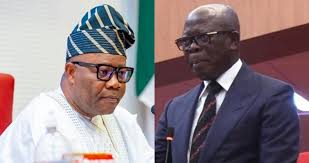
The Senate was thrown into turmoil on Wednesday after a heated confrontation between Senate President Godswill Akpabio and Senator Adams Oshiomhole over controversial amendments to the Senate Standing Orders, widely interpreted as a move to shape the leadership succession battle ahead of 2027.
The clash erupted during plenary as lawmakers considered the Votes and Proceedings from Tuesday’s sitting, during which the upper chamber approved far-reaching amendments restricting eligibility for presiding and principal offices to senators who have served at least two consecutive terms immediately preceding nomination.
Trouble started when Oshiomhole repeatedly raised a “point of order” in protest against the amendments, insisting he had procedural objections to the changes.
Akpabio, however, declined to recognise him, citing provisions of the Senate Standing Orders which prohibit interruptions during consideration of Votes and Proceedings.
The refusal triggered a tense exchange that briefly disrupted plenary and exposed simmering divisions within the ruling All Progressives Congress over control of the next National Assembly leadership.
*Senate President: I’ll send you out if you’re unruly
A visibly angry Akpabio warned the former Edo governor against what he described as disorderly conduct on the Senate floor.
“Senator Oshiomhole, if you become unruly, we will use the rules to take you out of the Senate,” Akpabio said during the confrontation.
*Ex-Edo gov: You can only rule with our collective consent
But Oshiomhole fired back, insisting that the Senate President could not operate as though lawmakers had surrendered their collective authority.
“You can only rule with our collective consent,” Oshiomhole was heard saying as the exchange intensified inside the chamber.
Efforts by Chief Whip, Tahir Monguno, and other senators to calm tempers failed initially, as Oshiomhole continued to press his objections despite repeated warnings from the chair.
At one point, Akpabio invoked Order 20 of the Senate rules, stressing that the Senate President had powers to maintain order and interpret parliamentary procedures.
“The Senate President is empowered to maintain order and give rulings on constitutional matters and points of order when raised,” Akpabio said.
“Most importantly, he has the authority to interpret the rules. Therefore, Senator Oshiomhole, I can use this rule to take you out of the chamber if you are not ready to comport yourself with Senate rules and procedures.”
The dramatic face-off came barely 24 hours after the Senate amended Orders 4 and 5 of its Standing Rules following a marathon closed-door session lasting nearly three hours.
Under the revised rules, only senators who have spent at least eight consecutive years in the chamber, including service in the immediate past Assembly, can contest for the offices of Senate President and Deputy Senate President.
The amendment also extends similar restrictions to principal offices, such as the Senate Leader, Chief Whip, and Minority Leader.
The changes are already generating intense political debate within and outside the National Assembly, with critics accusing the current leadership of attempting to entrench a closed circle of loyalists ahead of the 2027 transition.
Political observers believe the amendment could significantly alter the race for leadership of the 11th Senate by excluding first-term senators, incoming lawmakers and former senators planning a return to the chamber.
Among those reportedly affected are Hope Uzodinma and former Delta State governor Ifeanyi Okowa, both rumoured to be considering Senate bids in 2027.
Ironically, the amendment may also complicate Oshiomhole’s future Senate presidency ambitions, who is currently serving his first term in the upper chamber.
Defending the amendment earlier, Deputy Senate Leader, Oyelola Ashiru, who presented the motion on behalf of Senate Leader, Opeyemi Bamidele, argued that the changes were intended to strengthen institutional stability, legislative continuity, and procedural efficiency.
Supporters of the amendment insist that leadership positions in the Senate should be reserved for lawmakers with deep parliamentary experience and institutional memory.
But opponents argue that the move undermines inclusiveness and democratic competition within the legislature.
“Competence, not tenure, should determine leadership,” Oshiomhole reportedly argued during Tuesday’s debate on the amendment.
*Row exposes cracks within APC as tension rises over controversial rule
The controversy has also revived memories of previous leadership battles in the National Assembly, where intense rivalries within the ruling party often spilt onto the chamber floor.
Although plenary eventually resumed after Wednesday’s disruption, the confrontation highlighted growing tension within the Senate. It signalled that the struggle for control of the next National Assembly may already be underway.
With the 2027 elections still two years away, the latest row has exposed widening cracks within the APC caucus and intensified speculation over who succeeds Akpabio at the end of the current Assembly.