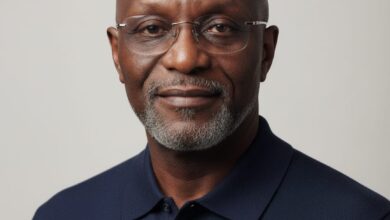
By Rekpene Bassey
A peculiar phenomenon is gaining deeper ground in the Nigerian political realm. The lines between truth and falsehood, corruption and transparency, conviction, and convenience are seemingly blurred.
Senator Chris Ngige, a former governor of Anambra State and minister under President Muhammadu Buhari, made a bold statement recently at the funeral ceremony of the late Senator Ifeanyi Ubah. He admitted that politics in Nigeria is the business of mad people and advised the late Senator against it.
This piece attempts to dissect the culture of doublespeak and the shameless lack of political ideology that has pervaded the political space. It serves as a reminder or a check on our political elite as preliminary political maneuvering commences next year in preparation for the next general election in the country. Bertrand Russell’s iconic essay,
“Why I Am Not a Christian” is a fitting inspiration for this critique. Just like Russell, the British Nobel laureate, logician, philosopher, and social critic, challenged the dogmatic underpinnings of Christianity; we must interrogate the moral and philosophical foundations of the Nigerian political elite and our brand of politics.
George Orwell coined the term doublespeak, which refers to the deliberate use of ambiguous language to conceal the truth or promote a hidden agenda. This phenomenon is rampant in Nigerian politics, with politicians frequently espousing contradictory views, speaking from both sides of their mouths, and effortlessly gliding from one party to another, depending on their selfish interests or circumstances.
The absence of a coherent political philosophy compounds this lack of ideological clarity. Nigerian politicians often prioritize short-term gains and personal interests over long-term vision and the greater good. This dearth of ideological commitment has led to politics of opportunism, where alliances are forged and broken with alarming frequency primarily for pecuniary interests.
The consequences of this ideological bankruptcy are messy and far-reaching. Without a clear moral compass, Nigerian politicians are prone to corruption, nepotism, and abuse of power. The citizenry, in turn, becomes disillusioned and disenfranchised, leading to widespread apathy and disengagement from the political process. Unfortunately, government institutions like the Independent National Electoral Commission (INEC) and the National Assembly, which ought to reorder the situation, are complicit in the messy morass.
It could get worse.
This makes the future of our political and democratic development look bleak, necessitating a review of our political system and processes to strengthen the political landscape. So far, only a few political elites see anything wrong with this development.
Among them was the late President Umaru Yar’Adua. From the onset of his presidency in May 2007, he vowed to cleanse the Nigerian political stable. Unfortunately, he didn’t live long enough to actualize that determination.
Going forward, we must demand more from our politicians – clarity of vision, consistency of principle, and a commitment to the greater good of our country and her good people. Until this unfolds, we cannot build a strong, equitable, and prosperous society for tomorrow’s Nigerians.
The philosopher Socrates famously asserted that an unexamined life is not worth living. This wisdom extends to the political sphere, where unexamined policies and unprincipled leadership threaten the very fabric of our nation.
In his work “The Republic,” Plato envisioned a society governed by philosopher-kings who possess both wisdom and virtue. In contrast, the current Nigerian politicians often exhibit neither, leading to a moral vacuum where personal gain trumps public service. The resultant political decay echoes Aristotle’s warning in “Politics” that a society cannot thrive if its leaders are morally bankrupt.
This erosion of ethical standards has roots in the Machiavellian principle that the ends justify the means. Niccolò Machiavelli’s “The Prince” has often been misinterpreted as a guide for unscrupulous political conduct. However, true political sagacity requires balancing pragmatic governance with ethical considerations, a balance woefully absent in Nigerian politics.
Confucius’s writings stress the importance of righteousness and moral rectitude in leadership. His teachings underscore that a leader’s virtue is fundamental to societal harmony and prosperity. Nigerian politicians have ignored mainly such timeless principles in their relentless pursuit of power and wealth.
Moreover, the Indian political philosopher Chanakya, in his treatise “Arthashastra,” emphasized the role of ethics in statecraft. He argued that a ruler’s foremost duty is to ensure the people’s welfare, a sentiment glaringly missing in the actions of many Nigerian politicians. The contrast between ideal governance and the prevailing political culture in Nigeria is stark. As Nigerian citizens, we must channel the spirit of Renaissance thinkers who championed the rebirth of ethical and philosophical inquiry. Figures like Erasmus and Thomas More critiqued the moral failings of their times and advocated for a society guided by virtue and reason.
Thomas More’s “Utopia” presents a vision of a society grounded in justice and collective well-being, a stark antithesis to the current Nigerian political landscape. We must also draw inspiration from the Enlightenment era, where philosophers like John Locke and Jean-Jacques Rousseau emphasized the social contract and the responsibility of leaders to their constituents. Their ideas laid the groundwork for modern democratic governance, principles that Nigerian politicians must urgently revisit and internalize.
In the spirit of the Enlightenment, Immanuel Kant’s imperative that individuals and leaders act according to principles that can be universally applied stands as a moral beacon. Kantian ethics, with its emphasis on duty and the categorical imperative, offers a philosophical framework for ethical leadership that is sorely needed in Nigerian politics.
Furthermore, Jean-Paul Sartre’s existentialist philosophy, focusing on personal responsibility and authenticity, challenges Nigerian politicians to confront the consequences of their actions and act with integrity.
The empirical evidence of this decay is stark. Transparency International’s Corruption Perceptions Index consistently ranks Nigeria among the most corrupt countries in the world. In 2023, Nigeria ranked 154th out of 180 countries, a damning reflection of the endemic corruption that plagues our political system.
This corruption is not merely a perception but a reality evidenced by numerous high-profile cases. For example, the trial of former Petroleum Minister Diezani Alison-Madueke, accused of embezzling billions of dollars, highlights the extent of the rot within the political elite.
Additionally, a study by the African Development Bank estimated that Nigeria loses about $10 billion annually to corruption. This staggering figure underscores the economic impact of political malfeasance, contributing to the country’s underdevelopment despite its abundant natural resources.
The World Bank also highlights that over 40% of Nigerians live below the poverty line, a direct consequence of the mismanagement and misappropriation of public funds.
The frequent defections among politicians further evidence the lack of ideological commitment. According to data from the Centre for Democracy and Development, over 50 high-profile defections occurred between 2018 and 2019 alone.
This figure has multiplied since then. Politicians switch parties not out of ideological alignment but for personal gain and strategic advantage, betraying a profound lack of principles.
Institutions like INEC’s complicity in perpetuating this dysfunction are also well-documented. Reports from international observers, including the European Union, have consistently pointed out irregularities in Nigeria’s electoral processes, ranging from voter suppression to ballot box snatching and result manipulation. These practices undermine the very foundation of democracy and erode public trust in the electoral system.
Finally, it suffices to note that the task before us is monumental but not insurmountable. Drawing from the rich tapestry of historical experience and backed by empirical evidence, we must strive to create a political system that embodies the highest ideals of justice, safety, security, and the common good.
Only then can we hope to transcend the current malaise and build a brighter future for all Nigerians. The insights and empirical data show the urgent need for reform in Nigerian politics. As citizens, the onus is on us to demand better and hold our leaders accountable to the principles that will ensure a just and prosperous society.
*Rekpene Bassey is the President of the African Council on Narcotics (ACON) and an expert in Security and Drug Prevention.