By Cross Udo, Abuja
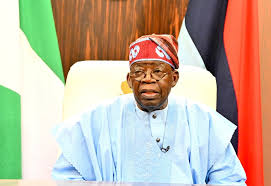
President Bola Tinubu on Thursday unveiled a $3 billion package of social protection and human capital development programmes, in what amounts to the administration’s most ambitious attempt yet to cushion the social impact of ongoing economic reforms and rising living costs.
The intervention package, largely backed by the World Bank, targets poor and vulnerable households through investments in healthcare, education, livelihood support, food security, support for internally displaced persons, and community resilience.
The programmes were unveiled at the Presidential Villa, Abuja, amid persistent concerns over inflation, rising food prices and declining purchasing power following the removal of the fuel subsidy and exchange rate reforms introduced by the administration.
Tinubu acknowledged that economic reforms would ultimately be judged not by fiscal indicators or growth projections but by their impact on ordinary Nigerians.
“The success of our reforms will not be measured merely by economic statistics but by whether they improve the lives of ordinary Nigerians.”
The President argued that the country’s improving macroeconomic indicators must now translate into visible improvements in living conditions across communities.
“Positive results are emerging from our reforms. Robust growth is returning, and confidence is rising, but that progress must be felt in every household, not just in national statistics.”
Tinubu said the administration was determined to ensure that the benefits of economic recovery extend beyond financial markets and government balance sheets.
“We are building a Nigeria where extreme poverty is banished, where every child has access to quality education and healthcare, and where every community can withstand adversity and recover faster and stronger.”
At the centre of the intervention package is the Nigeria Community Action for Resilience and Economic Stimulus programme, popularly known as NG-CARES.
The programme secured additional financing of approximately $1.25 billion and will provide support for smallholder farmers, vulnerable households and micro, small and medium enterprises struggling under current economic pressures.
The government officials said the initiative would strengthen food production, improve livelihoods and expand economic opportunities in rural communities.
Another component is the $300 million Solutions for the Internally Displaced and Host Communities Programme, known as SOLID.
The programme is designed to move conflict-affected communities beyond humanitarian relief towards long-term economic recovery and development.
It will fund infrastructure projects, livelihood support, healthcare services and economic opportunities in communities hosting displaced persons across the country.
Tinubu described the initiative as a deliberate attempt to bridge emergency interventions and sustainable development.
“This is how we reveal not just hopes, but hope.”
The largest intervention under the package is the Human Capital Opportunities for Prosperity and Equity programme, widely referred to as HOPE.
Valued at $1.5 billion, the programme combines governance reforms, healthcare investments and education support under a single implementation framework.
Through HOPE-GOV, the government plans to strengthen accountability and public financial management at sub-national levels.
HOPE-PHC targets improvements in primary healthcare delivery, while HOPE-EDU focuses on foundational education outcomes in public schools.
“These are not just programmes; they are promises kept.”
The President said the interventions represent the practical fulfilment of commitments made at the beginning of the administration.
“We came into office pledging to reform our economy, secure the nation and invest in our people. Today, we are acting on that pledge by protecting the vulnerable, empowering communities and building the human capital that will carry Nigeria forward.”
Tinubu disclosed that expanded cash transfer programmes had already reached 15 million vulnerable households nationwide.
According to him, those interventions have lifted an estimated 7.5 million Nigerians out of poverty.
“These are not abstract figures. They are the foundation for the next phase of our national development.”
Represented by the Minister of Finance and Coordinating Minister of the Economy, Wale Edun, the President said the programmes were central to Nigeria’s ambition of becoming a $1 trillion economy by 2030.
He argued that sustainable economic growth cannot occur without deliberate investments in people and communities.
“Real prosperity means no Nigerian is left behind on our journey to a $1 trillion economy by 2030.”
Earlier, the Minister of Budget and Economic Planning, Senator Abubakar Atiku Bagudu, said the interventions were designed specifically to ensure that the gains of recent reforms reach ordinary citizens.
Bagudu acknowledged that the administration’s reforms had imposed difficult adjustments on households but argued that they had restored fiscal stability and investor confidence.
“Our reforms have succeeded in stabilising the macro-economy and restoring confidence among investors, but we must be deliberate in ensuring that every Nigerian is included.”
He explained that the programmes were approved under a National Economic Council framework involving the federal, state and local governments.
According to him, their effectiveness lies in the way they reinforce one another.
“Together, they form an integrated framework for tackling poverty and vulnerability while creating opportunities for sustainable development.”
Minister of Health and Social Welfare, Professor Muhammad Ali Pate, said the administration had already revitalised more than 3,000 primary healthcare centres nationwide, with another 1,000 facilities nearing completion.
He disclosed that quarterly visits to primary healthcare centres rose from fewer than 10 million in 2023 to approximately 45.5 million currently.
Pate also revealed that more than 43,000 pregnant women and newborns had benefited from the national emergency medical transport system, while about 78,000 frontline health workers had undergone retraining.
“Infrastructure and economic growth are important, but investing in health, education and wellbeing remains the foundation for sustainable prosperity.”
The Minister of Education, Dr Tunji Alausa, announced the $552 million HOPE for Quality Basic Education Programme.
According to him, the initiative will directly impact about 30 million pupils, 500,000 teachers and nearly 65,000 public primary schools across the country.
He said the programme would strengthen literacy and numeracy while deploying digital technology to improve accountability and education management.
World Bank Country Director for Nigeria, Dr Matthew Verghis, described political commitment as one of the most critical ingredients for successful reforms globally.
He said the institution remained committed to supporting Nigeria’s efforts to strengthen institutions and expand access to essential services.
“The presentations by the ministers have demonstrated that these programmes are already delivering remarkable results at scale.”
The Nigeria Governors’ Forum also pledged the support of all 36 state governments for the implementation of the programmes.
Speaking through Ondo State Governor Lucky Aiyedatiwa on behalf of Chairman AbdulRahman AbdulRazaq, the forum said the initiatives would deepen investments in healthcare, education and social protection.
“We are building the institutional foundation for stronger public financial management, improved service delivery and greater resilience across our states.”
The National Assembly equally assured the administration of legislative support and oversight for the programmes.
Representing Senate President Godswill Akpabio, Chairman of the Senate Committee on Finance, Senator Sani Musa, said the true test of governance lies in protecting society’s most vulnerable citizens.
“The abundance of its wealth does not measure a nation’s greatness, but the extent to which it uplifts the lives of its most vulnerable.”
The launch represents one of the largest social investment interventions since the Tinubu administration embarked on market reforms in 2023.