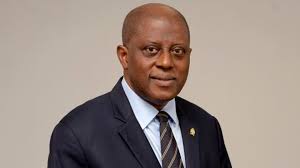
By Bisi Adegbuyi
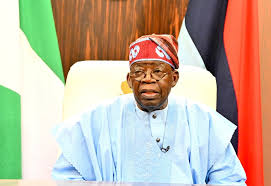
In a recent reflection, I argued that President Bola Ahmed Tinubu deserves a second term because Nigeria has entered the decisive middle phase of a reform cycle in which early pain becomes the pathway to national GAIN.
History shows that reforms succeed only when correction evolves into construction.
China, India, Indonesia, and Ghana each demonstrated that continuity transforms adjustment into institutional strength.
Nigeria now stands at that same threshold. The first term stabilised the direction.
The second term must build systems. That next phase may be understood as Digital Federalism.
The Hegel–Awolowo–Adegbuyi Triad. Digital Federalism represents an evolution of governance thought. Hegel explained societal progress through dialectical evolution.
Chief Obafemi Awolowo translated federalism into developmental governance rooted in regional productivity and social investment.
Nigeria’s present reality demands a technological synthesis.
Drawing from public service experience and a lifelong commitment to leveraging technology as a potent tool for socio-economic development and national transformation, Adegbuyi’s contribution advances federalism into operational digital form.
This triad reflects a continuum: philosophy, developmental governance, and technological operationalisation.
Digital Federalism becomes the synthesis stage — federalism transformed into living infrastructure.
Nigeria’s Reform Timeline: Nigeria’s transition can be understood in five stages: Distortion Era: subsidy dependence, fragmented systems, weak data visibility.
Structural Correction: first-term reforms addressing imbalances. Stabilisation: current adjustment toward predictability.
Digital Federalism: system-building phase. Productivity & Prosperity: outcome stage.
Nigeria now stands between stabilisation and system construction.
ABISO-LOGIN: Local Government as the Governance Backbone
Nigeria’s governance geometry includes 176,000+ community clusters. 8,809 wards; 774 LGAs; 36 states; 12 River Basin Authorities; six geopolitical zones and one federation.
ABISO-LOGIN anchors identity to address at the Local Government level through a federated SmartGrid7 architecture.
This enables verifiable household enumeration, grassroots fiscal transparency, inclusive service delivery, and the elimination of single points of failure.
Local Governments become operational trust nodes rather than administrative appendages.
DILAMS: Digital Land Reform; Land remains Nigeria’s most underutilised economic asset.
DILAMS (Digital Land Management System) introduces a georeferenced parcel registry, address-anchored titles, digital verification, and mortgage-ready land intelligence.
Land shifts from dispute to capital. Address-Based Population & Housing Census. Nigeria’s future census must be: address-anchored, geo-stamped, digitally auditable.
SmartGrid7 enables mapping habitation rather than estimating population — improving planning, fairness in allocation, and intervention accuracy.
Reinventing the 12 River Basin Development Authorities. Integrated into the SmartGrid7 layer structure, RBDAs become: agricultural intelligence hubs, irrigation monitoring systems, floodplain analytics centres, and food security command grids.
A Personal Commitment Through TGiF. Having had the privilege of serving Nigeria as Postmaster General and CEO of NIPOST, I recognise the importance of institutional continuity.
Through The Grandview Innovative Initiatives Foundation (TGiF), I commit to making available DG-VS-SiS-774 — Digital Grandview Vast Suites of Sovereign Innovative Solutions across the 774 LGAs — as a structured contribution toward Nigeria’s governance modernisation.
This reflects a commitment to give back to the nation through innovation aligned with the public good.
The Second-Term Legacy Opportunity. Every presidency is defined by the systems it leaves behind. Reforms adjust policy. Systems transform nations.
If Nigeria completes the transition to Digital Federalism, this period may be remembered not merely as an economic adjustment but as the moment Nigeria established the infrastructure for inclusive growth.
History measures success not in years, but in systems. Nigeria’s opportunity now is to complete the transition.
*Barrister Bisi Adegbuyi, former Postmaster General of Nigeria & CEO, NIPOST