By David Lawani, Abuja
For decades, Nigeria has fought terrorists, bandits and kidnappers largely after they had struck. Yet while security agencies pursued them on highways, in towns and villages, the country’s vast forests remained largely ungoverned, providing criminal gangs with secure sanctuaries to regroup, rearm and launch fresh attacks.
From the notorious Sambisa Forest in the North-East to the dense forests of the North-West, North-Central, South-West and parts of the South-South, criminal groups have transformed these once-valuable ecological assets into operational headquarters for terrorism, banditry and kidnapping.
Within these forests, they have established camps, stockpiled sophisticated weapons, trained recruits and held abducted victims while negotiating multimillion-naira ransoms.
Thousands of farmers have fled their lands, rural communities have been deserted, and food production has suffered as insecurity tightened its grip on Nigeria’s countryside.
It is against this backdrop that President Bola Ahmed Tinubu’s Forest Guards initiative faces what may be its greatest test, whether the Nigerian state can reclaim territories where criminal organisations have exercised near-total control for years.
The initiative, coordinated by the Office of the National Security Adviser (ONSA) in collaboration with state governments, aims to recruit, train and arm thousands of forest guards to secure Nigeria’s 1,129 forest reserves and deny criminal groups the safe havens that have sustained their operations.
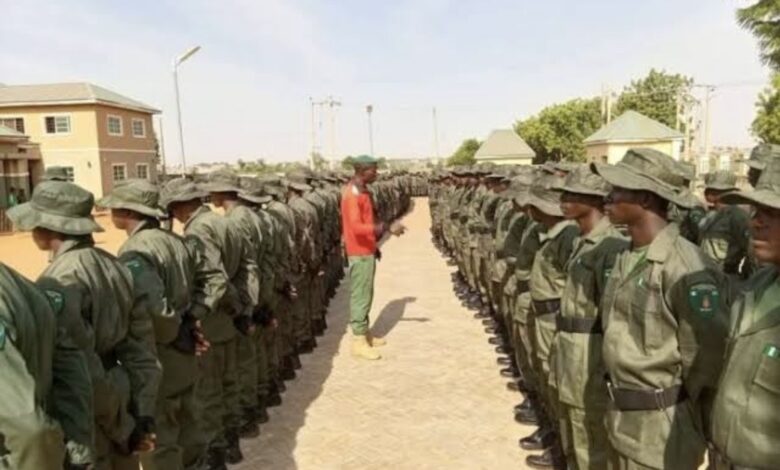
The programme has already moved beyond policy. The Federal Government has approved the recruitment of 1,000 forest guards each for Katsina and Oyo states, while Edo State has begun operations with an initial batch of 500 personnel commissioned by the National Security Adviser, Mallam Nuhu Ribadu. Other states are expected to join as implementation gathers pace.
The message is unmistakable: rather than waiting for attacks to occur, government intends to take the battle directly to the forests where many of Nigeria’s deadliest criminals hide.
Security experts say the initiative addresses one of the weakest links in Nigeria’s security architecture.
For years, military offensives have often forced terrorists and bandits to retreat temporarily into forests, only for them to regroup, recruit more fighters and resume attacks weeks later.
The result has been a vicious cycle of violence that has devastated rural economies and eroded public confidence in government.
The Forest Guards initiative seeks to break that cycle by maintaining a permanent security presence inside forests instead of merely responding after attacks have occurred.
A retired Deputy Director of the Department of State Services (DSS), Sir Abel Aliemeke, believes the initiative could fundamentally alter Nigeria’s security landscape if properly implemented.
According to him, forests such as Sambisa and numerous reserves across the North-West and North-Central have become ideal operational bases because of their difficult terrain, poor road networks and limited government presence.
“Dedicated forest guards can maintain continuous patrols, establish observation posts and conduct intelligence-driven operations tailored to forest environments. Sustained patrols alone will disrupt criminal camps, reduce attacks on neighbouring communities and significantly improve early warning capabilities,” Aliemeke said.
He argues that denying criminals safe operating bases is one of the most effective ways of weakening their capacity to launch attacks.
Analysts, however, warn that manpower alone will not determine success.
Forest guards will require sophisticated surveillance technology, including drones, satellite imagery, GPS tracking devices and secure communication systems capable of providing real-time intelligence.
Equally important will be seamless coordination with the Armed Forces, Police, DSS, Nigeria Security and Civil Defence Corps (NSCDC), local vigilantes and intelligence agencies.
Without intelligence-led operations, experts caution, even thousands of forest guards may struggle against highly mobile criminal networks that know the terrain intimately.
Another major strength of the initiative lies in community participation.
Hunters, vigilantes and local youths possess intimate knowledge of forest routes, hidden trails and suspicious movements that outsiders often overlook.
Their involvement could dramatically improve intelligence gathering while strengthening trust between security agencies and rural communities.
As one security analyst observed, “Nobody understands the forests better than the communities that have lived beside them for generations. Their knowledge could become the greatest force multiplier for the Forest Guards.”
The benefits extend beyond combating insecurity. Illegal logging, illegal mining and wildlife poaching have become significant sources of revenue for organised criminal groups while simultaneously degrading Nigeria’s natural resources.
Reclaiming forests would disrupt these illicit activities, encourage displaced farmers to return to their farmlands, improve agricultural production and restore economic activities in rural communities.
Forest security, therefore, is directly linked to food security, environmental protection and national economic recovery.
Security experts also believe the proposed Border Corps could reinforce the Forest Guards initiative.
Nigeria’s porous borders continue to facilitate the movement of illegal arms, foreign fighters and transnational criminal networks into forest corridors.
Working together, both institutions could significantly reduce infiltration while tightening surveillance across vulnerable border communities.
Despite broad support, analysts insist that recruitment alone will not solve Nigeria’s security challenges.
Forest guards must receive specialised training, modern weapons, effective communication equipment, attractive welfare packages and continuous operational support.
Legal practitioner and United Kingdom-based pastor, Paul Omoluabi, believes the initiative comes at a critical moment but warns that government must avoid repeating mistakes that have weakened previous security interventions.
“Approving forest guards demonstrates government’s resolve to reclaim ungoverned spaces. However, success will depend on strong legislation, professional training, modern equipment, adequate funding and effective oversight. Without those foundations, the initiative may not achieve its full potential,” Omoluabi said.
He further argues that recruitment should reflect local realities rather than adopting a uniform national template.
“The security realities in Katsina differ significantly from those in Edo or Oyo. Traditional rulers should participate actively in recruitment because they understand their communities and can identify credible local personnel. Forest guards must also work closely with the military, police, DSS and existing community security structures,” he added.
No single initiative will eliminate terrorism, kidnapping and banditry overnight.
Nigeria’s insecurity remains fuelled by multiple factors, including poverty, unemployment, porous borders, illegal arms trafficking and organised criminal enterprises.
Yet reclaiming forests from criminal occupation removes one of the greatest strategic advantages these groups have enjoyed for years.
For countless Nigerians who have abandoned their farms, lost loved ones to kidnappers or travelled highways in fear, the Forest Guards initiative represents something more profound than another government policy.
It is a test of whether the Nigerian state can once again establish authority over territories that have become symbols of lawlessness.