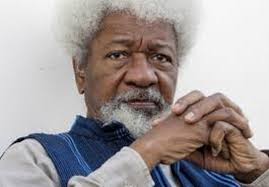
Nobel Laureate, Prof Wole Soyinka, on Tuesday disclosed that the United States government has revoked his visa.
The development has sparked outrage and concern among academics, human rights advocates, and diplomats who describe the move as both puzzling and potentially symbolic.
Soyinka said he received formal notification from the US Consulate General in Lagos via a letter dated October 23, 2025, informing him that his non-immigrant visa had been cancelled under provisions of US State Department regulations.
The letter, which cited “additional information” as the basis for the revocation, gave no further explanation.
Visibly surprised by the decision, the Nobel Laureate told journalists that he had never been convicted of any offence nor violated any American or international law.
“I have no visa; I am banned, obviously, from the United States. And if you want to see me, you know where to find me,” he said, explaining that the briefing was necessary to notify organisers of upcoming events in the US that he could no longer attend.
The 1986 Literature Laureate, who has spent decades lecturing and speaking at global universities, expressed bewilderment at the development but maintained that he harbours “no bitterness, only curiosity.”
He said he remains committed to his work and would continue international engagements virtually “until the fog is cleared.”
Diplomatic watchers say the revocation may be connected to recent changes in the US visa policy toward Nigerian nationals.
In July 2025, Washington quietly reduced non-immigrant visas issued in Nigeria to single-entry, three-month durations, ending the five-year multiple-entry regime previously in place.
*Scholars, rights activists fault move, question transparency and diplomatic sensitivity
While American authorities have yet to provide a detailed justification for Soyinka’s case, some foreign-policy analysts suggest a bureaucratic review may have triggered the revocation, while others believe it reflects growing scrutiny of high-profile figures amid new US security protocols.
The decision has provoked a wave of criticism at home and abroad. Human-rights activist Omoyele Sowore described the action as “deeply disappointing,” arguing that it portrays the US as increasingly intolerant toward dissenting or independent voices.
He noted that such treatment of a figure of Soyinka’s global standing “sends the wrong message about America’s openness and respect for intellectual freedom.”
Similarly, academic commentators in Lagos and Washington have expressed alarm that the move could undermine the longstanding cultural and educational exchanges between Nigeria and the United States. One senior university lecturer, who asked not to be named, said the “lack of transparency erodes trust and contradicts the very democratic ideals that Soyinka himself has defended globally.”
On social media, reactions have ranged from disbelief to outrage. Many Nigerians described the decision as “embarrassing” and called on the US Embassy to issue a public explanation.
Others speculated that Soyinka’s frequent criticism of political excesses worldwide may have unsettled some circles in Washington.
Observers say the incident may strain intellectual and diplomatic relations between the two countries, especially given Soyinka’s symbolic status as one of Africa’s foremost voices for justice and free expression.
Until the US Consulate or Department of State offers a detailed clarification, the development remains cloaked in uncertainty—raising questions about fairness, respect for global cultural icons, and the integrity of international academic collaboration.
“I remain grounded, not by choice but by circumstance,” Soyinka said. “But I’ll continue to speak and write as freely as ever.”