By Adeyemi Adeleye and Adekunle Williams
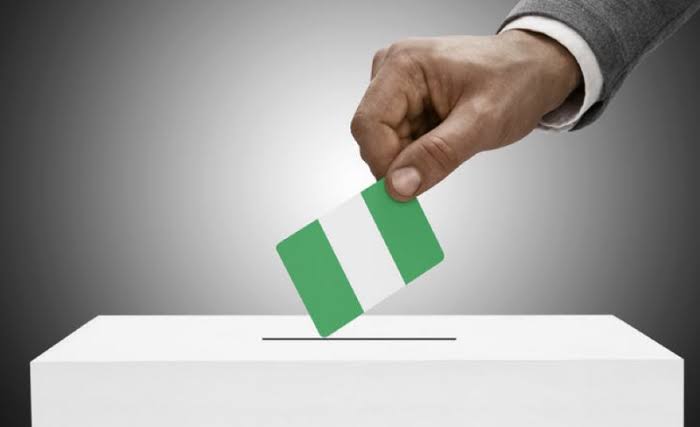
Political stakeholders and activists have expressed concern over the recurring low voter participation in elections, saying the problem threatens the integrity of elections and democracy.
Some stakeholders spoke with political correspondents from the News Agency of Nigeria (NAN) on Sunday in Lagos.
NAN reports that in 26 years of democratic rule, Nigeria has conducted seven general elections, as well as numerous off-season elections, most of which have been marred by voter apathy and a lack of transparency.
Speaking on the issue, Mr Rotimi Oyekanmi, Chief Press Secretary to the INEC Chairman, Prof. Mahmood Yakubu, attributed voter apathy to several factors.
According to him, until steps are taken to address those factors, low voter turnout will continue to characterise elections in the country.
He stated that a significant cause of voter apathy was the law restricting people from voting in polling units where they had not registered, suggesting that the law should be reviewed to allow people to vote anywhere they find themselves during elections.
“One of the significant causes of voter apathy is the law that restricts voters. The law states that you can only vote at the polling unit where you registered.
“This means that if a voter registered in Edo and finds himself in Borno on the day of the election, he cannot vote.
“He cannot vote, not because he does not want to vote, but because of the requirement of the law. Many Nigerians whose employers have transferred them to other places within or outside the country, or those who have relocated to other places, cannot vote in their new environment due to this law. This is a problem,” he said.
According to him, another reason for voter apathy is the disappointing performance of some political office holders in office.
He stated that the electorate was often discouraged from voting due to leaders’ failed promises.
“Some politicians make specific promises when canvassing for votes. People believe them, only to become disappointed when such promises are not kept,” Oyekanmi said.
He also highlighted electoral violence as a factor discouraging voter participation.
“Nobody wants to die because of an election. Therefore, in locations where violence traditionally occurs during elections, people are more likely to stay away from the polling units.
“Misinformation and disinformation about the credibility of elections and INEC also play a part. In this part of the world, politicians do not accept the possibility of losing an election.
“When they win, they praise the electoral umpire. However, when they fail, they often blame INEC. They accuse the Commission of rigging the election in favour of other candidates, and their supporters believe it.
“This also affects the perception of some voters regarding INEC and could discourage them from voting in future elections due to this incorrect perception,” he said.
Similarly, Alex Omotehinse, National President of the Centre for Human and Socio-economic Rights (CHSR), a civil society organisation, blamed voter apathy on voter intimidation, election results manipulation, and a lack of electoral transparency, among other factors.
He said there was a need to build voter trust in the process by addressing these factors.
“We need to build trust. Nigerians are losing trust in the process as they believe their votes do not count. If we want to address apathy, then we must tackle the factors that cause it,” he said.
Also speaking, Mr Collins Ugwu, Director of Communication, Aka Ikenga, a socio-cultural organisation, said the INEC should address violence and intimidation during the election through improved security measures.
Ugwu stated that there was a need for the effective implementation of the electoral law to build voter confidence in elections.
He said, “Let our laws operate. If the present electoral system is followed to the letter, it can guarantee better elections and higher voter participation. INEC should be allowed to operate independently, and politicians should be law-abiding.
“Then, supporters of politicians should not be allowed to scandalise the whole electoral process and orchestrate lawlessness, making people feel that people at the top have given them the liberty,” he said.
He also called for greater transparency in election administration through open access to information, public audits of election results and clear guidelines on election conduct to address apathy.