By Cross Udo, Abuja
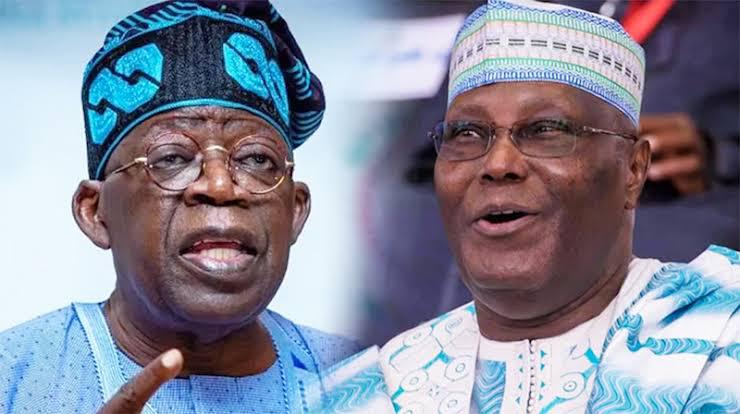
A fierce battle over Nigeria’s economic direction broke out on Sunday as the Presidency and former Vice President Atiku Abubakar traded opposing claims over President Bola Tinubu’s reform agenda, with both sides deploying competing economic data to support their positions on public debt, inflation, subsidy removal, taxation and the overall state of the economy.
While the Presidency insisted that the administration’s difficult economic reforms were beginning to yield measurable gains in growth, fiscal stability and public revenues, Atiku maintained that ordinary Nigerians continued to face worsening hardship, rising borrowing, soaring inflation and declining purchasing power despite official assurances of economic recovery.
The Presidency’s rebuttal was contained in a detailed statement titled “Facts, Not Fear: A Point-by-Point Response to Atiku Abubakar on Nigeria’s Reform Journey,” issued by the Special Adviser to the President on Information and Strategy, Bayo Onanuga, on behalf of President Tinubu.
Atiku’s position was conveyed in a separate statement signed by his Senior Special Assistant on Public Communication, Phrank Shaibu.
The exchange marks one of the strongest public confrontations yet between the ruling administration and the opposition over the impact of Tinubu’s economic reforms, with both camps seeking to shape public perception ahead of the 2027 general election.
*FG says GDP up 49%, debt burden remains sustainable
Responding to Atiku’s allegations of fiscal recklessness, the Presidency accused the former Vice President of relying on outdated economic data from 2024 while ignoring what it described as significant improvements recorded since the reforms took effect.
According to Onanuga, assessing the economy solely on the difficult adjustment period that followed the removal of fuel subsidy and exchange-rate reforms presents a distorted picture of current realities.
“A debate anchored in 2024 cannot explain Nigeria in 2026. Economies are dynamic. Reforms are processes, not events.”
The Presidency said Nigeria’s dollar-denominated Gross Domestic Product (GDP), which declined to about $253 billion immediately after the exchange-rate adjustment, has since recovered to approximately $377 billion, representing an increase of about 49 per cent.
It added that the country’s naira GDP also expanded significantly from about ₦314 trillion in 2024 to roughly ₦530 trillion, reflecting higher economic activity and broader macroeconomic recovery.
On the controversy over government borrowing, the Presidency argued that debt should be assessed relative to economic capacity rather than in absolute terms.
It maintained that Nigeria’s debt profile remains moderate by international standards and insisted that borrowed funds are being channelled into productive infrastructure rather than recurrent expenditure.
“Nigeria’s debt-to-GDP ratio remains relatively modest at barely 40 per cent, while the debt service-to-revenue ratio has declined from nearly 100 per cent in December 2022 to less than 60 per cent today.”
The Presidency further defended the removal of fuel subsidy, describing it as one of the administration’s boldest economic decisions and arguing that the policy had significantly improved allocations to states and local governments.
According to Onanuga, increased revenues have enabled sub-national governments to invest more in roads, healthcare, education, salaries, pensions and other social programmes.
It added that the policy had effectively shifted greater development responsibilities to states in line with the principles of fiscal federalism.
The administration also dismissed allegations that it had imposed heavier tax burdens on Nigerians, insisting that the ongoing tax reforms were designed to reduce pressure on low-income earners and small businesses while ensuring wealthier individuals and profitable companies contribute more to public revenue.
The Presidency equally defended its record in healthcare, education and infrastructure, citing the rehabilitation of more than 3,000 Primary Healthcare Centres, retraining of over 78,000 frontline health workers, expansion of cancer treatment centres, and the rollout of the Nigerian Education Loan Fund (NELFUND), through which over 1.64 million students have reportedly benefited.
It also rejected Atiku’s allegation that the Federal Government realised an undeclared ₦7.98 trillion oil windfall, insisting that the claim ignored production shortfalls, production costs and existing crude oil obligations.
“There is no such windfall of ₦7.98 trillion. The argument does not stand.”
Maintaining that the country’s economic outlook had improved considerably, the Presidency argued that the difficult phase of the reforms had largely passed.
“Nigeria’s economy is not yet where it aspires to be. But neither is it where it stood at the height of its structural distortions. The fundamental reforms will continue to expand opportunity, strengthen institutions and deliver tangible improvements.”
*Ex-VP alleges soaring borrowing, inflation, hardship expose policy failures
But Atiku, in an earlier statement, insisted that official statistics cannot erase the economic hardship confronting millions of Nigerians.
In the statement signed by Shaibu, the former Vice President accused the administration of attempting to rewrite economic realities through what he described as selective data and “creative accounting.”
“No amount of lying with statistics can shield this administration from its worsening economic record.”
Atiku particularly challenged the government’s claim that savings from fuel subsidy removal had been deployed to reduce inherited liabilities.
Instead, he argued that government indebtedness to the Central Bank of Nigeria (CBN) had increased substantially under the current administration.
Citing figures attributed to the apex bank, he said the Federal Government’s exposure to the CBN rose from approximately ₦26.9 trillion in May 2023 to more than ₦40.38 trillion, insisting that the increase contradicted official claims of improved fiscal discipline.
“This administration has not reduced its indebtedness to the CBN. It has merely changed the label on the debt. That is debt restructuring—not debt repayment.”
The former Vice President also faulted the government’s claim that subsidy savings had translated into better welfare for workers, arguing that key components of the new wage package had yet to be fully implemented.
“Which salary increase is the government talking about? The Federal Government is yet to fully implement the new minimum wage, while key allowances remain unpaid.”
He also questioned official explanations regarding the funding of the Nigerian Education Loan Fund (NELFUND), arguing that previous disclosures by the agency indicated that part of its funding came from money recovered by the Economic and Financial Crimes Commission (EFCC), not solely from subsidy savings.
Atiku further blamed the administration’s monetary and borrowing policies for pushing interest rates to levels that have made credit inaccessible to businesses while increasing the government’s debt servicing obligations.
“The government’s insatiable appetite for borrowing has crowded out productive businesses while pushing debt servicing to unsustainable levels.”
He maintained that the real test of any administration is the wellbeing of citizens rather than macroeconomic statistics.
“Food prices have spiralled beyond the reach of ordinary families. Inflation continues to erode incomes. Businesses are shutting down. Unemployment remains alarming.”
Atiku concluded that Nigerians had already formed their opinion about the administration based on prevailing living conditions.
“Governments are judged not by PowerPoint presentations or television interviews but by the quality of life of their citizens. On that score, this administration has failed spectacularly.”
The exchange underscores the deepening political and economic divide over the Tinubu administration’s reform programme, with the Presidency insisting the policies are laying the foundation for long-term recovery, while the opposition argues that rising inflation, borrowing and living costs have overshadowed any claimed macroeconomic gains.