By Nathaniel Zaccheaus, with agency report
Nigeria recorded one of its bloodiest security days in recent years on Tuesday as coordinated attacks by armed groups left at least 170 civilians dead in Kwara State and another 35 killed across multiple communities in Katsina, prompting emergency resolutions by the Senate and renewed international concern over the country’s collapsing civilian protection systems.
According to Reuters, gunmen stormed Woro and Nuku communities in Kaiama Local Government Area of Kwara late Tuesday night, setting houses ablaze and shooting residents as they slept.
Initial reports of about 40 deaths later rose sharply as bodies were recovered from nearby farmlands and forest paths where villagers had fled.
A local lawmaker told Reuters that “entire families were wiped out in their homes,” adding that “many people ran into the bush and never returned.”
Another community leader said, “We are still counting bodies. Some are burnt beyond recognition, others are missing. This is worse than anything we have seen.”
By Wednesday, neither the Kwara State Government nor federal security agencies had issued a detailed official account, deepening criticism of Nigeria’s intelligence and early-warning failures.
A senior security source told Reuters that “the attackers are believed to be part of Islamist-linked armed groups expanding from the North-West into the North-Central region, using forest corridors and abandoned farmlands as operational bases.”
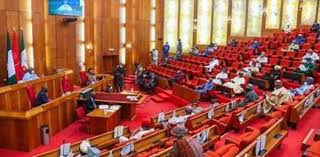
As outrage mounted over the Kwara massacre, the Senate also raised the alarm over escalating violence in Katsina State, where coordinated bandit attacks killed no fewer than 35 people within 24 hours.
Moving the motion, Senator Mohammed Dandutse said the situation in Katsina had become “completely intolerable,” warning that “bandits now operate openly, killing farmers, ambushing security forces and paralysing rural life.”
He disclosed that 24 people were killed in Faskari, eight in Dandume, two in Funtua and one in Kankara, adding that “over 50,000 farmlands have been abandoned because people are too afraid to go to their fields.”
Dandutse recalled that Governor Dikko Radda had earlier met President Bola Tinubu, who promised to establish a new military barracks around Malumfashi.
“The President assured us that a permanent military presence would be created, and we are demanding that this promise be fulfilled immediately,” he said.
Contributing to the debate, the Deputy Senate President, Senator Barau Jibrin, and several other lawmakers acknowledged the efforts of the military and other security agencies, but insisted that the scale of the crisis demanded more robust action, including enhanced surveillance, better equipment and intelligence-driven operations.
Many senators described the affected areas as part of Nigeria’s agricultural heartland, rich in food crops and industrial raw materials such as cotton, warning that prolonged insecurity in the region posed a national economic risk.
In his remarks, Senator Aliyu Wadada cautioned against negotiating with bandits, arguing that such approaches often emboldened criminal elements rather than securing lasting peace.
Following deliberations, the Senate unanimously resolved to urge President Tinubu to immediately fulfil his pledge to establish a military barracks in the affected Katsina zone.
The lawmakers also directed the Inspector-General of Police to equip the newly established police squadron in the area with a minimum of three Armoured Personnel Carriers (APCs) to boost intelligence-led operations, forest combing, cross-border collaboration and community-based intelligence gathering.
In addition, the Senate called on all security agencies to sustain coordinated operations until criminal elements are completely flushed out of Katsina and neighbouring flashpoints.
It further mandated the Federal Ministry of Humanitarian Affairs and the National Emergency Management Agency (NEMA) to provide immediate relief to affected and traumatised families.
In honour of the victims, the Senate observed a one-minute silence. It appealed to residents to remain united, vigilant and supportive of security efforts, while resisting internal collaborators who undermine national security.
*HRW warns of rising civilian deaths
The killings in Kwara and Katsina reflect what Human Rights Watch describes as a deepening collapse of civilian protection across Nigeria.
In its World Report 2026, the organisation warned that “Nigeria is drifting into a system of normalised mass violence where civilians are repeatedly abandoned, and no one is held accountable.”
“Armed groups are attacking farming and rural communities with near-total impunity, while government responses remain slow, fragmented and largely symbolic,” Human Rights Watch said.
The group added that “the consistent failure to investigate previous massacres has created an environment where perpetrators believe they can kill civilians without consequences.”
It also criticised the arrest of journalists and citizens reporting insecurity, stating that “silencing information in the name of security only deepens public distrust and destroys early warning systems.”
“Communities are left exposed while authorities prioritise political control over civilian safety,” the organisation warned.
*US deploys troops to Nigeria
In a parallel development, Reuters reported that the United States has deployed a small military team to Nigeria, marking the first official acknowledgement of American troops operating on Nigerian soil since US airstrikes in December 2025.
Confirming the move, General Dagvin Anderson, head of US Africa Command, said the deployment was aimed at “strengthening intelligence sharing and counterterrorism cooperation with Nigerian forces.”
Reuters also reported that President Donald Trump had earlier ordered missile strikes on what he described as Islamic State camps in North-East Nigeria, but unexploded debris believed to be remnants of those strikes were later discovered in civilian areas of Kwara, Niger and Sokoto states.
“These operations were intended to degrade terrorist networks, not endanger civilians,” Anderson said, adding that “any report of collateral risk is taken seriously and will be reviewed.”
Nigeria’s Defence Minister, Christopher Musa, confirmed the presence of US personnel but declined to provide details, saying only that “the cooperation is strategic and focused on national security.”
Security analysts told Reuters that the deployment reflects growing fears in Washington that Nigeria could become “the next major hub of transnational jihadist activity” following the expulsion of Western forces from Mali, Niger and Burkina Faso.
For many Nigerians, however, the near-simultaneous massacres in Kwara and Katsina underline a grim reality: despite Senate resolutions, foreign military support and repeated warnings from rights groups, rural communities remain dangerously exposed, trapped between heavily armed criminals and a state struggling to protect its own citizens.