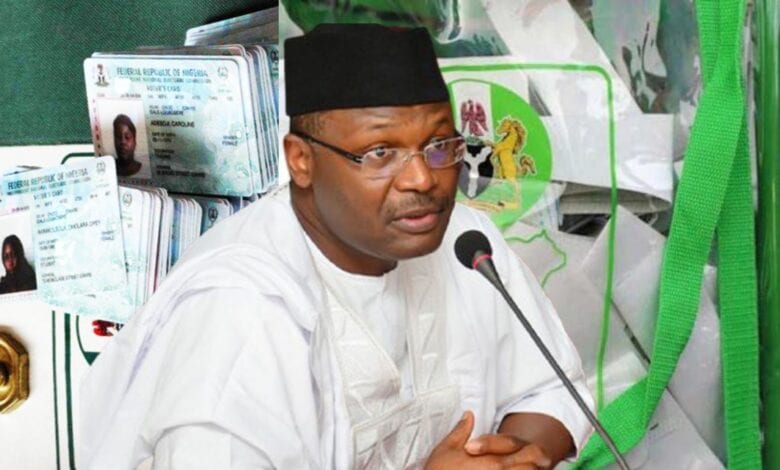
In this piece, DAVID LAWANI writes that the non-appointment of Resident Electoral Commissioners (REC) following the expiration of the tenure 20 may be putting the Independent National Electoral Commission (INEC) in a tight corner as the 2023 general elections draw near.
As preparation for the conduct of general elections in 2023 heightens across the country, there are fears and concerns that President Muhammadu Buhari’s delay in appointing substantive Resident Electoral Commissioners, 20 of whom may finally exit the system by mid-August this year may have opened the flanks for suspicion.
There are insinuations already also blaming the Chairman of the Independent National Electoral Commission (INEC), Prof Mahmood Yakubu, for the delay.
These fears arise from the retirement of about 20 INEC Resident Electoral Commissioners in 20 states. The position of the law on all this is that only the president has the sole power to make recommendations for an appointment before the National Assembly for screening after which such appointee(s) fulfil the requirements of the law he or she is cleared and sworn in by the president.
So far, the tenures of 11 of the RECs came to an end on July 6, nine others are due for retirement next month August, while one quit in April to join partisan politics in Benue State.
Those already out include Orji Nkwachukwu (Anambra); Emeka Ononamadu (Enugu); Obo Effanga (Rivers); Chukwuemeka Ezeonu (Imo); Joseph Iloh (Abia) and Mutiu Agboke (Oyo).
Others are James Apam (Kogi); Ibrahim Abdullahi (Bauchi); Umar Ibrahim (Gombe) Ahmed Makama (Taraba) and Hussaini Pai (Plateau).
However, apart from Pai, who has served out his second and final term, the other 10 of these RECs have only served a term and can be re-appointed for a second term.
On August 17, the tenures of eight other RECs will also come to an end. These are Asmau Maikudi; Riskuwa Shehu; Kassim Geidam (Adamawa); Jibrin Zarewa (Katsina); Abdulganiyu Raji; Samuel Egwu; Mike Igini (Akwa Ibom); and Sadiq Musa (Sokoto).
From this batch, those who are on the second term and ineligible for re-appointment are Geidam of Adamawa; Zarewa (Katsina); Igini (Akwa Ibom), and Musa (Sokoto).
ASUU Strike: NLC announces dates for nationwide protest
The unfortunate thing is that with six months to the general elections, 20 states will be without RECs, with dire implications for the elections.
How the Commission has been dealing with the activities in these states since calls for more scrutiny because rigging in elections according to reports is sometimes not done on the day of the voting. Processes not properly declared and defined can also assist in aiding and abetting electoral malfeasance.
It would be noted that the approvals of certain requests under the continuous voter registration (CVR) exercise, which are exclusive to RECs, may suffer a setback in those states.
These approvals include requests for transfer of polling units and correction of names and other information of registrants.
The Commission has recently extended the Continuous Voter Registration (CVR) exercise across the country till July 31, 2022, after there was a massive surge in PVCs registration ahead of the general elections in February next year.
The RECs also chairs the Inter-agency Consultative Committee on Election Security (ICCES) in the states, co-chaired by the state commissioner of police.
Buhari, whose duty it is to appoint the officials for confirmation by the Senate, is yet to do so, a development that has caused anxieties at INEC as the commission prepares for the general elections.
New RECs are normally appointed before the tenure of the incumbents expires to avoid a vacuum in the system and ensure a seamless transition in the states. Buhari failed to act as expected.
The president may reappoint those available for re-appointment to avoid the challenges of new hands grappling with the new role a few months before the elections.
ThisNigeria got reactions from lawyers and Civil Society Organisations even though only a few were willing to comment on the issue. This, no doubt, has created room for a danger looming because there are sensitive activities that some of these RECs have to undertake and it will be sheer suicidal to place such duties in the hands of people who are willing to compromise the process.
A legal practitioner, Paul Omoluabi, in his reaction, stated that there was no need to exercise fears because the year preceding the elections is usually fraught with fears and many legal conjectures.
NMA commends Osinbajo’s local medical treatment
He said, “The year preceding election is usually a year that throws up so many fear, in all sectors and the legal system is no exception. Anticipation of a legal hitch or a lacuna, cannot be a challenge.
It will amount to an academic exercise for anyone to conjecture what has not happened. The Law cannot act in a vacuum.”
Another lawyer, Vincent Essien, an APC stakeholder in Akwa Ibom State, and a member of the party’s Board of Trustees Professionals Forum, said the President has done well with the Commission for his previous appointments of RECs.
He explained further that under the establishment Act of 1998, the powers to appoint or replace REC lies with the President.
According to him, “One thing we must give to this President is his non-interference and commitment to improvement in the standard of our elections. Indeed there is no doubt that under this President, INEC has improved its capacity and efficiency concerning the electoral processes and this has shown in the marked decline in post-election legal disputes.
“They have equally deployed improved technology like BVAS and of course, he signed the new Electoral Act, so give it to him. With regards to the replacement of retiring REC, I will believe that the process of consideration of suitable replacements is on.
“It is something that requires careful consideration especially when their tenures are simultaneously rounding off just as we are heading into major elections. I know two of them that have performed excellently and the bar must not be lowered.
“It is important to note that the nominees must be submitted and approved by the NASS and the opposition we are looking for any opportunity to exploit to raise issues no matter how genuine. I believe that Mr President will fulfil his obligation so that INEC will be ready for the Election in 2023. There is still some time to do this.
“Finally I think that as a termed barred President, the premium legacy that President Muhammadu Buhari will strive to deliver in 2023 is an election with minimal disputes as to the process and results. Unfortunately, he may have little control over the possible illegalities that may be perpetuated by our political actors, and it might be unfair to blame him for that.
“To date, President Goodluck Jonathan is recognised for his sacrifices for the growth of our electoral processes and journey, I don’t think that President Muhammadu Buhari will want to be remembered for lowering that bar,” he noted.Opening page of Inside Politics.