Where we have options, there shouldn’t be bitterness over a joint Muslim ticket – Otubanjo

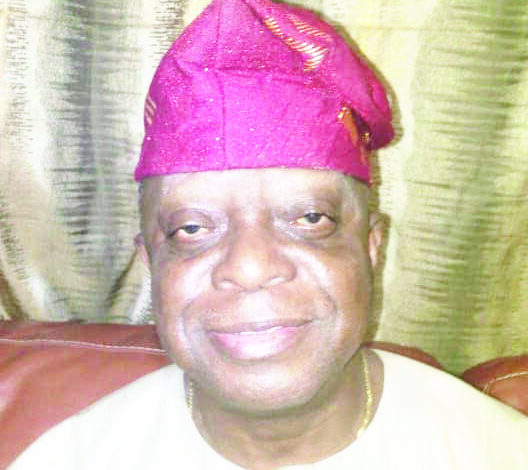
Femi Otubanjo is a retired professor of Political Science at the University of Ibadan. He is currently a professor of International Politics at the Nigerian Institute of International Affairs (NIIA), Victoria Island, Lagos. In this interview with LINUS ALEKE, the articulate analyst says the government in Nigeria is not working for the people, he also talks about other national issues, including joint Muslim ticket, and security issues
Controversy has continued to trail the Muslim-Muslim ticket of the ruling All Progressive Congress (APC), since it was announced, what is your opinion is the implications of the ticket, considering the secular nature of the Nigerian state?
I want us to look at these issues from different perspectives, as an academic, I cannot just express one opinion. One way to look at it is to say that this has happened in a political party. It is not a rational choice, it is not the choice of the government. One political party has decided that their team would be made up of two Muslim candidates; that is their choice. In making that choice, they probably had taken into account all kinds of factors, the most important of which is electoral, that is the need to win the votes of the large Muslim population in the Northern part of the country, which may compensate for the percentage of votes which may be lost among Christians. The APC is only one of several political parties contesting the presidency in 2023. So, if one party decides to field a Muslim-Muslim ticket, people have a choice. We can say it is not good, it is not nice, and it is not appropriate in a multinational society like Nigeria, but the alternatives are there. It has not taken away our choice, our ultimate power to decide whether we like it or not. Therefore, there should be no bitterness or anger, or acrimony over this matter. Yes, we can express ourselves, but not in a way that suggests that the heavens would fall as a result of this combination. We also need to de-emphasize many things, Including religion and ethnicity. It does not matter whether it is a Muslim-Muslim or Christian-Christian ticket. We should keep our powders dry. If we don’t like it, we vote against it; it is as simple as that.
NDLEA intercepts jumbo bags of cannabis, seizes 524,720 opioids in three states
Are you worried about the growing ugly trend in elections in Nigeria where politicians now purchase votes?
The Yoruba say that when we hear that a house is burnt and there was an Alfa there (I am sorry to use the word, Alfa), will it not be ridiculous to ask if the Alfa’s beard was also consumed by the fire? What they are saying is that when something is bad, when we have a bad system, we should expect most, if not all the elements to be dysfunctional as well. We are talking of a country that is in crisis, right now. We have a systemic crisis, we have a leadership that is looting us to a stupor, that is not working for us, that is under developing us, that is putting us in a miserable situation; poverty has increased in Nigeria. People go to their offices and cannot operate because they cannot buy diesel, the banks have reduced their operating hours and offices are closing early. We are looking at a country that is in crisis and we are talking about people buying votes. Why wouldn’t there be vote buying in the country? Why would the crooked leaders that we have not bought votes? Somebody is offering to buy these votes and someone is also willing to sell. The funds used in buying these votes come from the state treasuries. We are looking at candidates who want to contest for the presidency, spending billions, where did the money come from? We have sitting governors who are buying up candidates and these things are still happening. Everything is corrupted in Nigeria, so, let us not narrow it to people getting N3000 and N5000 during elections. It is not good for Nigeria. Neither is the kind of leadership that we have, nor corruption which, is endemic in our system, nothing is good. We lack good administration. The government is not working for the people, there are no local government councils because the governors take their money and just give them something to pay salaries. We are all looking at things degenerating before our very eyes. We have gone from bad to the very-very worse. I don’t know why we think we should isolate the nature of exchanges that go on during elections. It is going to continue because the people themselves want a little bit of relief from poverty. So, if somebody gives them five thousand that will serve them for one week, or so, we should ask them not to collect? I am not saying that because of that any aspect of corruption is acceptable; none is acceptable. But once we allow the system to degenerate, then anything goes. Who has been arrested for buying or selling votes? Who has been punished for buying votes? We have a system that does not punish. Bandits and kidnappers are roaming freely. These bandits may start coming into our homes and nobody is going to stop them. They travel from the north and get to Lagos and nobody stops them. That is where we are now, we are in a situation where there is no enforcement of the law. Where there is no law, there can be no sin. Once we don’t enforce the law, people will continue to take laws into their hands. As we find in traffic, when traffic lights are not working and there are no policemen or traffic wardens in sight, everybody goes in different directions, and confusion is bound to ensue. That is where we are right now. We are in confusion in Nigeria, and we have to begin to think of how to get ourselves out of it.
NDLEA intercepts jumbo bags of cannabis, seizes 524,720 opioids in three states
Some critics had alleged that academics also help politicians to rig elections, when they serve are returning officers and that the prolonged ASUU strike may just be one of the rewards for their actions, do you share in this sentiment?
I don’t understand why they should accuse academics of that. So, because they select a few academics to serve as returning officers, then all academics are now election riggers. That does not make sense. Most of the people that are engaged on an ad-hoc basis during elections are usually senior academics. At the governorship and presidential levels, they use vice-chancellors as returning officers and professors at the other levels. Just as it is possible that some of them were compromised or gratified, I don’t think we can accuse all of them of rigging elections; they don’t. They don’t go to the field to conduct elections, they are returning officers; they stay in INEC offices, see to the collation of the votes and then announce the results; that is all they do. It is possible that in one or two instances, like in every human society, there will be bad eggs; there may be one or two that allow themselves to be compromised but that does not mean that all elections supervised by academics are rigged. It is not all elections that are rigged, some are good, and most elections in Nigeria are passable with a bit of irregularity, here and there. A returning officer does not concoct results and cannot barefacedly sit and change the votes and give A to B or B to A. We should not overstate the role of academics in this matter, I don’t think they should be accused of rigging elections for politicians.
Is there any mechanism put in place to forestall future occurrences, considering the isolated cases that you also alluded to?
The Academic Staff Union of Universities (ASUU) is a trade union, not a church. Churches are the ones that are proselytes of morality, of our conscience, of our relationship with God, and not ASUU. ASUU expects that its professors should be people of integrity and when they are given national assignments, they will do it in a way that will give credit to their names and the names of the institutions they represent. I am not sure that ASUU can do much in terms of ensuring that all professors do as they ought to. There will be one or two that will be attracted to the money available and tend to do what is unacceptable. But I can tell you that most professors will first think about their names and reputation before the money.
ASUU strike: NUBIFIE threatens shutdown of financial institutions
You said that the lack of enforcement of law in Nigeria is fuelling the insecurity we are witnessing today, how did we get to this point where the law enforcement agencies are abdicating in their constitutional duties?
The answer is in the relationship between laws and enforcement. One of the great things about societies in the West, and I want you to follow up on British and American societies, is that almost, invariably, people who commit crimes get apprehended. The people who get away with a crime are less than 10 per cent of the crime committed in these places. In a place like Britain, we can always be sure, that when we hear that someone has been murdered today, give them one week or two, and they will uncover the murderer. Law enforcement is the solution to crime, if we don’t enforce our laws, if we don’t arrest criminals, they will continue to multiply because they know that the environment is free for them to operate. That is what has happened to us, people are killing and no one is arrested or tried. Gangs are attacking communities burning down, killing, and looting, yet no arrests are made. We are for some time now been living in fear of killer herdsmen and kidnappers. How many have been brought to trial? We have incrementally allowed the laws to be unenforced and when a law is not enforced everybody is capable of becoming a criminal That is what it means, it means that people can do whatever they like. I used the traffic to illustrate our situation because that is the only thing that paints a graphic picture of our situation. Take away the traffic police, if there is nobody to enforce the violation, people will beat the traffic, move through a red light and cause confusion. And that is what has happened to us, everybody is capable of joining a crime gang, once there is no enforcement of the laws. We obey the laws because we know that enforcement will bring inconvenience to us. We stay clean and try to follow the rules, but if we look around and discover that the rules are not been enforced, we are likely to join the bad gangs. Nigeria has increased, particularly in the past eight years refused to enforce its laws against banditry, terrorists, kidnappers, and armed robbers. What we have now is that everybody is joining the train, yahoo boys are doing their own, and everybody is setting up shop and nobody is, really, there to arrest and make sure that we see people being punished. Let us see what we can do about law enforcement in Nigeria that is where we should be addressing the problems. Who is responsible for the laxity in law enforcement? Is it the political decision that Nigeria should be subjected to this callousness that we are facing, through banditry and kidnapping? We cannot even go on the roads, who is responsible or what is responsible? Let us do the analysis and see whether we can begin to move forward.
Let me put this question back to you, who is to be blamed for the lack of law enforcement in Nigeria, the political leadership, the military, or the Police Force?
Ultimately, it is the government of the day that is to be blamed. Everybody is capable of anything, and politicians are doing what they like. I was watching a programme today on the television and they said that somebody has thirty policemen attached to him, alone in Abuja. That is part of the problem. We have the wrong deployment of policemen. One person is moving with ten policemen, another one with thirty, and all the leading politicians in Nigeria have policemen attached to them and their wives. In that kind of situation, where are the policemen to enforce the laws? In most of the places that are being attacked, there are often no policemen there. Everywhere in Nigeria has become a soft target for terrorists and bandits. A Soft target in areas where crime takes place without law enforcement agents available to prevent such crime from taking place; nothing to deter the criminals from going ahead with their nefarious activities. Something is wrong somewhere and that is why the military and the police are not enthusiastic about these things. Our military is very sophisticated, with very well-trained officers and soldiers, and regular training. We have a Police Force that is amongst the best in the world, despite what we may think about them; very well-trained policemen. We have intelligence agencies, we have the DSS, the NIA, and so on. These are the people that are supposed to tell us where the criminals are and how to get them. But it seems that everybody has gone to sleep and the criminals are having a field day. I always think that it is an insult to the professional pride of an average soldier or policeman that bandits are taking over his country and there is nothing much he can do about it. But again, I understand that they are people under command. We know that a soldier does not go out to fight unless he is told to do so, and if he is not told to do so, no matter how eager he is, he will just remain a spectator. So, we need to get our government to do what is right. If our government has put in the resources and the incentive and the will to fight these criminalities and the military and others are not fighting it, then the government will make sure that things are corrected. But if the government itself is not doing what it is supposed to do, then that is the problem and that is what we should address.
What can be done to halt our further descent into the woods and then begin to reverse all these ugly trends of bloodletting, kidnapping for ransom widening unemployment, ASUU strike, and many more?
What can we do again but pray? People always have recourse to a peaceful demonstration over resentment of government policies. We have seen that Sri Lanka is the latest that is happening in the world now. The president has had to flee to another country. People can show their resentment about what the government is doing but we are not so organised. We are so scattered with ethnic and religious sentiments. But we are likely going to come to that point where we would say enough is enough. We have gotten to a point where our people need to stop those governing us and ask them questions about what they have for us. But since we are not doing that, we are hoping that may be next time that we have other elections, we have hope that maybe in 2023, we might be able to elect someone who will be more concerned about our welfare, our safety, and our comfort to the point of taking action and making sure that everybody is doing his work. So, the election is the only thing left for us right now, instead of getting out to the streets to reject our leaders and protest we will wait for the elections and pray that 2023 will bring in leaders who see things more different from what we have now.
Do you foresee the Labour Party candidate, Peter Obi, winning the election in 2023?
I don’t. If you understand our country very well, all you need to do is to go around Nigeria and sample the opinions of people on this. The Labour Party Presidential Candidate, Peter Obi, conveys policy ideas that are in sync with the leadership of enlightened Nigerians. This is the kind of leader who understands our problems and will solve them. He does not seem to have been tainted by the baggage of the past, but the truth of the matter is that it takes more than sentiments, rhetoric, and optimism to be elected in Nigeria. The work is enormous, the cost is enormous, and I am not sure that Peter Obi will, in the next few months, be able to muster that cost and the work required. Don’t forget that he is dealing with established political parties; he is contending against PDP and APC, parties that had been on the ground for so many years, in the case of APC as several parties before coming together eight years ago. He is dealing with parties that have governors, and local government chairmen that have established types of machinery for mobilising voters. The Labour Party has none of that. It is not a mayoral election, one town; it is not an election of a local government; it is a national election where the governors are the ones to determine where the party goes, and where the election pendulum will swing. They have governors who have the resources to put into the election. Obi does not have that advantage, Labour Party does not have that advantage. Labour Party has enthusiastic supporters, it has the expectations of the young people, particularly, those who do not have the resources to match the established parties. So, we have to look beyond that, it is not theory, it is not social media, it is not optimism, it is about reality, and the people. We are talking about people buying votes, those are the voters that Obi has to deal with. People, who want to be bought, so, in a situation where people are buying votes what will Labour Party do? Only last month, in June in Ekiti, people were buying votes and we are talking about national elections in February.
So you think people will, suddenly, realize that what they need is an Obi, but it is not going to work. I don’t believe in it. I think Obi is ok, he will help us to raise the stake, to tell people this is the kind of leader they need, so long as that is his role in the coming elections, it is a worthwhile role. It is a laudable thing to see that Nigerians want a leader who can work for them, who will say the right things and is capable of doing the right thing. Not these older people who had been in the system and are going to be crawling within that corrupt system. That is what we are going to get but unfortunately, penetrating that system requires more effort than Obi is putting into his campaign. The time is too short; he needs to build the party over time, build a network, and have his representatives at various levels of government. In local government areas, even as ministers and commissioners, have one or two governors, he has to build the party first. It is not about coming out as a lone ranger and campaigning and hoping that he can win the election by popular acclamation, it does not work that way.
In making that choice, they probably had taken into account all kinds of factors, the most important of which is electoral, that is the need to win the votes of the large Muslim population in the Northern part of the country, which may compensate for the percentage of votes which may be lost among Christians. The APC is only one of several political parties contesting the presidency in 2023. So, if one party decides to field a Muslim-Muslim ticket, people have a choice.