In this piece, SEYI ODEWALE tries to highlight the trajectory of the Fourth Republic by examining every successive regime that has spanned the period, and with the benefit of hindsight takes a cursory look at the periods before the republic
By May 29, 2024, the nation will be celebrating the 25th anniversary of an enduring fourth republic, which ushered in civilian rule through democratic means. The Fourth Republic has unarguably been the most enduring and longest democratic dispensation in the country’s history, having experienced three failed republics that almost tore the fabric of the nation.
Since Nigeria got her Independence from the British colonial master on October 1, 1960, the last 25 years (1999-2024) have been the most sustained period of civilian self-rule. The First Republic, which began in 1960, with Alhaji Tafawa Balewa as the Prime Minister and the late Dr Nnamdi Azikiwe as a ceremonial president, only lasted for six years as it was truncated by the first military coup on January 15, 1966, and the counter-coup of July 27 of the same year.
The military regime was later eased out of power on October 1, 1979, when it handed over power to a democratically elected civilian regime led by the late Alhaji Shehu Shagari as the first executive president.
The Second Republic, however, lasted four years and three months when it was aborted via a military coup led by Gen. Muhammadu Buhari, who along with his co-travellers, ruled with an iron hand for 13 years.
Buhari’s regime was ousted on August 27, 1985, by his compatriot, Gen. Ibrahim Babangida, who was then the Chief of Army Staff. After eight years, Babangida was later replaced by the maximum ruler, the late Gen. Sanni Abacha, who stayed for another five years after he (Babangida) had conducted a botched transition to civilian rule that gulped time and money.
The third republic, which Babangida midwife, would have ushered in the late Chief Moshood Kashimawo Olanbiwonninu (MKO) Abiola as president. It was truncated after the presidential election of June 12, 1993, when it was unfortunately annulled by Babangida. This necessitated the seizing of power by Abacha, who took advantage of a weak Interim National Government (ING) hurriedly put in place by Babangida to avoid a vacuum the annulment would have created. It was headed by the late Ernest Shonekan.
Taking a cursory look at the 64-year checkered history of the nation after Independence, the military has had power for 29 years, while civilian regimes have variously tasted power for 35 years, with six years in the First Republic, four years, three months in the Second Republic, a few months in the aborted Third Republic and an unbroken 25 years in the present Fourth Republic.
*Fourth Republic
During these 25 years, Nigeria’s Fourth Republic, heralded by ex-President Olusegun Obasanjo in 1999, has been a flip-flop with varying degrees of triumphs and challenges. It has, however, remained steady with civilians in control and the military being completely put in its place to perform its constitutional role of protecting the territorial integrity of the nation.
*Ex-President Obasanjo (1999-2007)

Opening the stage in 1999 as the first president of the Fourth Republic, was former President Obasanjo, who contested on the platform of the People’s Democratic Party (PDP) and was in the saddle for eight years. This was after a keenly contested election had been held with two candidates, Obasanjo, who represented the PDP, and Olu Falae of the joint ticket of the Alliance for Democracy (AD) and the All People’s Party (APP), dominating the contest.
Obasanjo’s tenure, as it were, had the sole aim of winning back international confidence which the country had lost, owing to being run by the military junta that turned the country into a pariah state.
Although he was able to get a sizable level of goodwill, particularly from the West, which had tagged Nigeria as a pariah country. He was able to get debt forgiveness from the prestigious Paris Club creditors, which Nigeria was deeply indebted to. The nation’s foreign reserves equally quadrupled, making the country the newest bride with a swarm of suitors.
Obasanjo, however, could not heal the wounds inflicted by the junta as a result of its long spell in power and utmost misrule. Worse still, the former president was accused of marginalising certain sections of the country and was adjudged to have conducted the worst election in his bid to hand over to his preferred successor, the late Umaru Musa Yar’Adua, whose tenure did not last.
*Umaru Yar’Adua (2007-2010)

When he came to power, the first thing the late President Umaru Yar’Adua did to win the hearts of teeming Nigerians, was to admit that the election that brought him to power was not fair. This endeared him to many, and that boosted the goodwill Nigerians had for him.
He then set in motion ways of redressing the injustice done through the 2007 election. He also undid some of the policies of his predecessor, which he saw as inimical to Nigerians and the country’s corporate existence.
One of them was the sale of the petroleum refinery at Port Harcourt, which he felt was improper. His tenure was later cut short by his death on May 5, 2010, dying at 58 years. This gave the room for his Vice President, Goodluck Ebele Jonathan, to be in the saddle and complete the four-year tenure. Jonathan was later re-elected for another four years as president.
READ ALSO: Tinubu’s economic policies painful but promising –Nigerians
*Goodluck Jonathan (2011-2015)

Perhaps the most dramatic period in the history of the Fourth Republic was Jonathan’s tenure which was allegedly filled with fritting away the supposed goodwill Obasanjo gathered from the West. There were reported cases of maleficence, which later resulted in the arrest and prosecution of many politically exposed personalities and political office holders, including governors. Not only that, the dreaded Boko Haram, which later became the country’s Achilles heel had just begun to fester.
Boko Haram’s threat to the country’s corporate existence became so pronounced that a series of bombings were recorded across the northern part of the country, even up to the Federal Capital Territory (FCT), the nation’s seat of power.
Not only that, no fewer than 276 secondary school girls were abducted on April 14, 2014, about a year before the end of Jonathan’s first term as elected president.
Out of the seized 276 girls abducted from their dormitories at the Government Girls Secondary School, Chibok Local Government Area of Borno State, only 128 had regained their freedom in batches over nine years, leaving the whereabouts of 91 others unknown.
Jonathan, however, was adjudged as the best sportsman, a candidate, who refused to rock the boat when he was defeated in his re-election bid by ex-President Muhammadu Buhari.
*Muhammadu Buhari (2015-2023)

With the resentment that accompanied Jonathan’s tenure, which many saw as being abysmal, Nigerians were ready to usher in Muhammadu Buhari, who had previously attempted the highest office in the land three times. He vied for president on the platform of the All Nigeria Peoples Party (ANPP) in 2003 and 2007, on the Congress for Progressive Change (CPC) platform in 2011, and in December 2014, he emerged as the presidential candidate of the All Progressives Congress (APC) for the 2015 general election, which he eventually won.
Buhari’s first term of four years was particularly not exciting as he was almost incapacitated for about 10 months by ill health. He, however, survived to later contest the second term as the goodwill he had, had not completely waned.
The ex-president’s second term, according to many, took the country backward, aligning Nigerians along the fault lines. Ethnic and religious sentiments became more pronounced in the choice of candidates interested in succeeding him.
Ex-president Buhari’s Spartan life and avowed integrity, which according to many, would have put him in good stead, however, did not fly as his regime was alleged to have been the most corrupt in recent times. Most of his political appointees have been alleged to have helped themselves with the sleaze and some of them are now answering questions on how they fared in office.
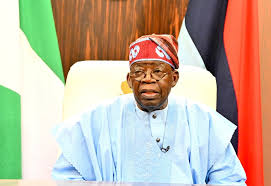
*President Bola Ahmed Tinubu (2023-…)

President Bola Tinubu’s emergence last year as Nigeria’s president proved bookmakers wrong as many, going by his predecessor’s performance, never gave him a chance. He came out at a time when Nigerians had become disenchanted with Buhari’s abysmal economic performance and the ravaging insecurity that almost tore the nation apart.
Buhari’s ineffectiveness in properly securing the country and the choking monetary policy that almost dehumanised many made some to be hostile to President Tinubu, who emerged as the ruling party’s standard bearer.
Tinubu’s appearance on the stage made the campaigns very rancorous, igniting primordial sentiments. He was the most vilified among the candidates, prompting many youths to pitch their tents with an emerging party, the Labour Party, massively supported by the ‘Obidient’ Movement, a creation of the supporters of the ex-Anambra governor, Peter Obi, who emerged as the LP’s presidential flag bearer.
However, Tinubu, a former governor of Lagos State, won the 2023 presidential election with 8,794,726 votes, or about 35 per cent, defeating his three main rivals: Atiku Abubakar of the main opposition Peoples Democratic Party (PDP), who secured 6,984,520 votes, or about 29 per cent; and Peter Obi of the Labour Party, who received 6,101,533 votes, or about 25 per cent. A total of 24,966,218 votes were cast, of which 24,025,940 were valid and 939,278 rejected.
Tinubu was inaugurated as the nation’s 16th president on May 29, 2023. However, at his inauguration, he made the most poignant decision of removing the petroleum subsidies, whose effect Nigerians are still battling.
Desirable as it were, petroleum subsidy removal, according to Tinubu, was the best decision taken to save the nation from going bankrupt. He has, however, put up a series of palliatives to cushion the agonising effect of the removal of subsidies from petroleum.
His economic measures, though harsh as some Nigerians have said, are believed to be headed in the direction of stemming the tide threatening to tear the nation apart.