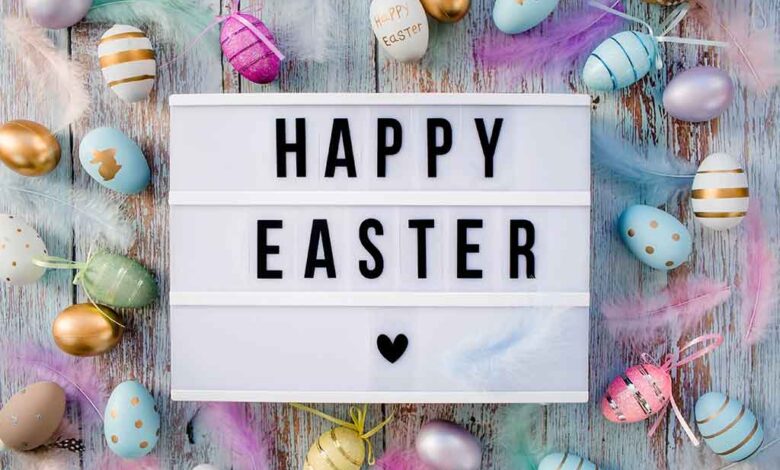
Easter is a happy holiday that is observed all around the world. It’s a time when friends and family get together to spend time with one another, has meals together, and exchange gifts. Whether you practice religion or not, Easter is a wonderful time to show kindness, thanks, and love.
So this Easter, ThisNigeria wants you to take a moment to appreciate the simple pleasures in life – the warmth of the sun on your face, the sound of birds singing in the trees, and the laughter of children playing.
And whether you celebrate with a big feast, a quiet reflection, or a colorful egg hunt, may your Easter be filled with happiness, peace, and love.
Happy Easter Messages 2023 to Family and Friends

- Wishing you a blessed and joyful Easter season!
- May the hope and promise of Easter fill your heart with peace and happiness.
- May this Easter bring you renewed faith, hope, and love.
- Happy Easter to you and your family, may your day be filled with joy and laughter.
- May the spirit of Easter bring you hope and joy in all your days.
- Sending you warm Easter wishes and blessings from afar.
- Wishing you a peaceful and beautiful Easter celebration.
- May the light of Easter shine bright in your heart and bring you happiness.
- Happy Easter to someone who makes every day brighter with their love and kindness.
- May the Easter bunny bring you lots of chocolate and joy this year!
- Wishing you a wonderful Easter weekend filled with love and laughter.
- May the joy of Easter fill your heart and bring you peace and happiness.
- Happy Easter to someone who always brings a smile to my face.
- May your Easter be as sweet and lovely as you are!
- Sending you Easter blessings and warm wishes for a beautiful day.
- May your Easter be filled with happiness, love, and lots of chocolate!
- Wishing you a blessed Easter and a joyous spring season.
- May the love and blessings of Easter bring you peace and happiness.
- Happy Easter to someone who always brightens my day with their presence.
- May your Easter be filled with all the things that make you happy!
- Wishing you a blessed and beautiful Easter celebration with your loved ones.
- May the joy and peace of Easter fill your heart and soul.
- Happy Easter to someone who brings sunshine and happiness into my life.
- May your Easter be as bright and colorful as the spring season itself.
- Sending you Easter greetings and warm wishes for a wonderful day.
- May the miracle of Easter fill your heart with hope and happiness.
- Happy Easter to someone who makes every day worth celebrating.
- May your Easter be filled with love, laughter, and all your favorite things.
- Wishing you a joyful Easter and a happy spring season.
- May the hope and promise of Easter bring you renewed faith and optimism.
- Happy Easter to someone who always puts a smile on my face.
- Wishing you a blessed and peaceful Easter celebration.
- May the love and blessings of Easter bring you joy and happiness today and always.
- Happy Easter to someone who is always there for me, through thick and thin.
- Wishing you a wonderful Easter weekend filled with love and laughter.
- May your Easter be as bright and beautiful as the blossoming flowers of spring.
- Sending you warm Easter wishes and blessings for a joyful day.
- May the joy of Easter fill your heart and soul with happiness and peace.
- Happy Easter to someone who brings warmth and kindness into my life.
- Wishing you a blessed and happy Easter with your loved ones.
- May the spirit of Easter bring you hope, love, and joy today and always.
- Happy Easter to someone who always makes me feel loved and appreciated.
- May your Easter be filled with lots of chocolate, laughter, and fun!
- Wishing you a peaceful and beautiful Easter celebration with your family and friends.
- May the love and blessings of Easter fill your heart with warmth and happiness.
- Happy Easter to someone who inspires me to be my best self.
- Wishing you a joyful Easter season filled with love and laughter.
Sweet Easter messages to make kids smile
- Hop, hop, hooray! Wishing you a very happy Easter, little bunny.
- May your Easter basket be filled with lots of yummy treats and colorful eggs!
- Hurray for Easter! May your day be as sweet as chocolate and as colorful as Easter eggs.
- Wishing you a fun-filled Easter egg hunt with lots of surprises and giggles!
- Happy Easter, sweetie! May the Easter bunny bring you lots of love and happiness.
- Hop, hop, hop! Here comes the Easter bunny with lots of treats and goodies for you!
- May your Easter be filled with lots of joy, love, and blessings from above.
- Wishing you a hoppy Easter filled with lots of cute bunnies and colorful eggs!
- Happy Easter, little chickadee! May your day be as bright and cheery as the spring sunshine.
- May the spirit of Easter bring you happiness, hope, and lots of chocolate bunnies!
- Hoping you have a basket full of smiles and a heart full of joy this Easter.
- May your Easter be as sweet and wonderful as you are, my little one.
- Wishing you a blessed Easter surrounded by your loved ones and lots of Easter fun!
- Happy Easter, cutie pie! May your day be filled with lots of hugs, kisses, and Easter treats.
- Hop, hop, hop! It’s Easter time! May your day be full of surprises and lots of fun.
- May the joy and love of Easter fill your heart with happiness and peace, my little bunny.
- Wishing you a wonderful Easter celebration with lots of family, friends, and Easter eggs!
- Happy Easter, honey bun! May your day be as sweet and adorable as you are.
- Hoping you have a cracking good Easter filled with lots of Easter eggs and bunny hugs.
- May the Easter bunny bring you lots of happiness and joy this Easter season, my little angel.
- Wishing you a colorful and cheerful Easter celebration with lots of love and blessings.
- Happy Easter, little lamb! May your day be as fluffy and cute as a baby sheep.
- May the beauty of Easter fill your heart with peace, love, and hope this holiday season.
- Hoping you have an egg-citing Easter filled with lots of fun and laughter with your family.
- Wishing you a happy and blessed Easter, my little sunshine! May your day be full of joy and happiness.
- Happy Easter, little duckling! May your day be as cute and quacky as you are.
- Hoping you have a hopping good Easter with lots of Easter eggs and sweet surprises.
- May the blessings of Easter be with you always, my little one. Happy Easter!
- Wishing you a joyous and wonderful Easter celebration with lots of love and happiness.
- Happy Easter, my little bunny! May your day be filled with lots of Easter treats and fun.
Playful and witty Easter wishes to share with friends and family

- “Easter is a time to celebrate new beginnings, and for me, that means a new wardrobe full of pastel colors and bunny ears.”
- “Easter eggs are proof that good things come in small packages, but that doesn’t mean I won’t be looking for the jumbo chocolate egg!”
- “I hope the Easter bunny brings you more chocolate than you can handle. If not, I’ll gladly help you eat it.”
- “Wishing you a happy Easter filled with love, joy, and lots of wine. Because let’s face it, adulting is hard.”
- “Easter is the only time it’s acceptable to put all your eggs in one basket. Just make sure that basket is filled with chocolate.”
- “May your Easter be as sweet as a Peeps marshmallow and as colorful as an egg dyeing party.”
- “I heard the Easter bunny is bringing everyone face masks and hand sanitizer in their baskets this year. Who says rabbits aren’t smart?”
- “Easter is the perfect time to reflect on what really matters: Cadbury eggs and jelly beans.”
- “Why did the Easter bunny cross the road? To get to the chocolate factory, of course!”
- “I’m so egg-cited for Easter that I’ve been practicing my egg-hunting skills all year long. Don’t mess with me.”
- “Wishing you an egg-cellent Easter filled with family, friends, and lots of cheesy Easter puns like this one.”
- “May your Easter be as joyful as a group of kids on a sugar high hunting for eggs in the backyard.”
- “I’m not saying I’m the Easter bunny, but have you ever seen me and a rabbit in the same room? I didn’t think so.”
- “Easter is a time to believe in miracles, like how I manage to eat my weight in chocolate every year and still fit nto my pants.”
- “Easter is a time to remember the true meaning of the holiday: getting a day off work to eat chocolate and wear bunny ears.”
- “I hope the Easter bunny brings you everything on your wish list this year, especially the ones that involve chocolate.”
- “Easter is a time to embrace your inner child and hunt for eggs like you’re on a secret mission for the CIA.”
- “Wishing you a hippity-hoppity Easter filled with joy, laughter, and lots of Reese’s peanut butter eggs.”
- “Easter is a time to celebrate the resurrection of Jesus and the resurrection of our diets after months of holiday indulgence.”
- “May your Easter be as bright and colorful as a box of Crayola crayons, and as delicious as a chocolate bunny.”
Happy Easter Bible verses to bring comfort and peace to your heart

- “He is not here; he has risen, just as he said. Come and see the place where he lay.” – Matthew 28:6
- “For God so loved the world that he gave his one and only Son, that whoever believes in him shall not perish but have eternal life.” – John 3:16
- “And if Christ has not been raised, your faith is futile; you are still in your sins. But Christ has indeed been raised from the dead, the firstfruits of those who have fallen asleep.” – 1 Corinthians 15:17-18
- “Praise be to the God and Father of our Lord Jesus Christ! In his great mercy he has given us new birth into a living hope through the resurrection of Jesus Christ from the dead.” – 1 Peter 1:3
- “Jesus said to her, ‘I am the resurrection and the life. The one who believes in me will live, even though they die; and whoever lives by believing in me will never die. Do you believe this?'” – John 11:25-26
- “But God demonstrates his own love for us in this: While we were still sinners, Christ died for us.” – Romans 5:8
- “Therefore, if anyone is in Christ, the new creation has come: The old has gone, the new is here!” – 2 Corinthians 5:17
- “I have told you these things, so that in me you may have peace. In this world you will have trouble. But take heart! I have overcome the world.” – John 16:33
- “He was delivered over to death for our sins and was raised to life for our justification.” – Romans 4:25
- “Do not be afraid, for I know that you are looking for Jesus, who was crucified. He is not here; he has risen, just as he said. Come and see the place where he lay.” – Matthew 28:5-6
Inspirational Easter Quotes to brighten your day

- “Easter is a time when God turned the inevitability of death into the invincibility of life.” – Craig D. Lounsbrough
- “The resurrection gives my life meaning and direction and the opportunity to start over no matter what my circumstances.” – Robert Flatt
- “Easter spells out beauty, the rare beauty of new life.” – S.D. Gordon
- “The resurrection gives us hope that our deepest pains will one day be met with relief.” – Albert Mohler
- “Let every man and woman count himself immortal. Let him catch the revelation of Jesus in his resurrection. Let him say not merely, ‘Christ is risen,’ but ‘I shall rise.'” – Phillips Brooks
- “Easter is a time to rejoice, be thankful, be assured that all is forgiven, so life extends beyond the soil of earth.” – Byron Pulsifer
- “Easter is a time when we’re reminded that hopeless situations are never hopeless because Jesus is our living hope.” – Joyce Meyer
- “We are told to let our light shine, and if it does, we won’t need to tell anybody it does. Lighthouses don’t fire cannons to call attention to their shining- they just shine.” – Dwight L. Moody
- “The cross is the victory, the resurrection is the triumph…The resurrection is the public display of the victory, the triumph of the crucified one.” – Leon Morris
- “Easter is the demonstration of God that life is essentially spiritual and timeless.” – Charles M. Crowe
- “Easter is very important to me, it’s a second chance.” – Reba McEntire
- “We were old sinners – but when we came to Christ we are not sinners anymore.” – Joel Osteen
- “The great gift of Easter is hope.” – Basil Hume
- “Easter is the only time when it’s perfectly safe to put all your eggs in one basket.” – Evan Esar
- “Easter is a time to rejoice and be thankful for the gift of life, love and joy.” – Anonymous
- “Easter is the time to renew hope, faith, and your connection with God.” – Anonymous
- “Easter is the time to celebrate the victory of light over darkness, hope over despair, and love over hate.” – Anonymous
- “Easter reminds us that nothing can hold us down for long, and that every dark cloud has a silver lining.” – Anonymous
- “Easter is a time of reflection and renewal, a time to celebrate the triumph of life over death.” – Anonymous
- “Easter is a time to forgive, to be forgiven, and to begin anew with a clean slate and a hopeful heart.” – Anonymous