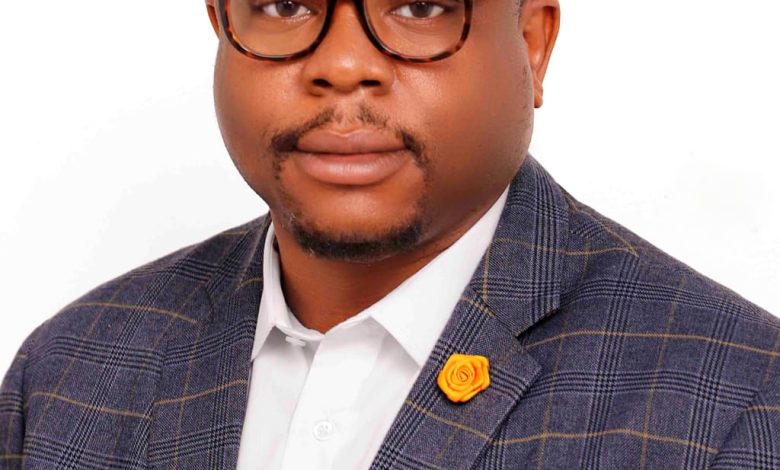
By Lemmy Ughegbe, Ph.D
Nigeria was the country to watch, the Giant of Africa, blessed with abundant resources, a young and dynamic population, and a strategic position in the global order.
The story of Nigeria since independence has largely been one of great promise undermined by missed opportunities. In the first few years, the country seemed destined to take off.
Our agricultural produce fed West Africa, our universities attracted scholars from far and near, and our economy was considered one of the most promising in the developing world.
But the military coups of the 1960s, the tragic civil war, and decades of authoritarian rule gradually eroded that promise. The return to civilian rule in 1999 rekindled hope, but governance failures, endemic corruption, insecurity, poor infrastructure, and the politics of ethnic and religious division have repeatedly dimmed that hope.
Nigeria’s reality today is sobering. Despite being Africa’s largest economy by GDP and most populous country, more than 60 per cent of our people live below the poverty line.
Our healthcare system is in disarray, forcing both the wealthy and the ordinary to seek treatment in foreign hospitals if they can afford it.
Public education, once the pride of the continent, now groans under neglect, leaving millions of children out of school. Insecurity, from terrorism in the North-East to banditry in the North-West, separatist agitations in the South-East, and violent crimes across the country, continues to rob citizens of peace and hope.
But history teaches us that nations are not permanently defined by their low moments. Giants, even when asleep, can be awakened if the right conditions are created.
Many countries started with fewer advantages than Nigeria, yet transformed themselves through vision, discipline, and leadership. Take Singapore, for example. At independence in 1965, it was dismissed as a poor, tiny, divided outpost with no natural resources to speak of.
Today, it is a global hub of finance, trade, and innovation. What changed its story was leadership that was disciplined, forward-looking, and determined to invest in its people. South Korea is another lesson.
In the 1950s, it was ravaged by war, poorer than much of Africa, and dependent on aid. Today, it is an industrial and technological powerhouse, home to global brands like Samsung and Hyundai.
The key was massive investment in education, innovation, and national discipline. Even Rwanda, devastated by the genocide of 1994, which left the nation broken and hopeless, has demonstrated the power of political will.
Thirty years later, Rwanda is one of Africa’s most stable and organised countries, with efficient public systems and a reputation for discipline. Closer to home, Ghana has consolidated democracy and demonstrated the stabilising power of credible institutions and peaceful transitions.
These examples remind us that decline is not destiny. Nations can reinvent themselves if they are willing to take painful but necessary decisions.
Nigeria’s awakening depends on a few urgent imperatives that can no longer be postponed. Leadership and accountability must come first because no nation rises above the quality of its leadership.
For too long, Nigeria has suffered from leaders who treat public office as a personal asset and governance as a means to enrich themselves. That must change. Public office holders must be compelled to share the realities of ordinary citizens.
If Nigerian schools are good enough for the children of the poor, then they must also be good enough for the children of governors and presidents. If Nigerian hospitals are where the masses seek treatment, then our leaders must also seek treatment there.
Medical tourism and the hypocrisy of travelling abroad for minor ailments must end. Similarly, the government must lead by example in patronising Nigerian products. Governor Charles Soludo’s decision to adopt Innoson vehicles as official cars is commendable and should be replicated nationwide. A country cannot awaken if its leaders do not believe in what it produces.
The wealth of a nation lies not in its oil wells or mineral deposits, but in its people. South Korea and Singapore understood this decades ago and invested massively in education, skills, and innovation. Nigeria must do the same.
More than half of our population is under the age of 35. They are creative, energetic, and resourceful. If properly harnessed, they can power Nigeria’s transformation. However, that requires fixing our education system, supporting innovation, and ensuring that graduates are not left jobless on the streets. Youth unemployment is a ticking time bomb, but youth empowerment is a potential goldmine.
No divided nation prospers, and Rwanda’s recovery proves that unity is non-negotiable. Nigeria must finally move beyond the politics of tribe and religion that have hindered our progress for decades. Justice, fairness, and equity must guide our public policies.
Every Nigerian, regardless of their origin, must feel that they belong and can aspire to the highest office without facing discrimination. A Nigeria that continues to marginalise sections of its population cannot hope to awaken fully.
Strong nations are built on strong institutions. Nigeria must strengthen its judiciary, legislature, and civil service to operate independently and effectively. Corruption thrives when institutions are weak.
Discipline flourishes when institutions are strong. Our anti-corruption fight must be real, not selective. Beyond institutions, Nigeria must also diversify its economy. Our overdependence on oil is a recipe for perpetual crisis.
We must invest in agriculture, technology, manufacturing, and the creative industries. The global energy transition means oil cannot be our mainstay forever. A diversified economy will create jobs, reduce poverty, and stabilise the nation.
While leadership is central, citizens also have a role. We must begin to demand accountability at every level. We must vote not based on ethnicity or religion but on competence, vision, and integrity.
We must reject the politics of stomach infrastructure and insist on leaders who will invest in our future. Civil society, the media, and young people must continue to raise their voices, hold leaders to account, and push for reforms.
At 65, Nigeria is not a failed state, but it is faltering. Yet it is not too late to chart a new path. The world has shown us examples of nations that reinvented themselves despite daunting odds. Nigeria can do the same.
To awaken, Nigeria must redefine its vision, strengthen its institutions, invest in its people, and inspire its citizens with a new sense of purpose. It must embrace innovation, build infrastructure that works, and ensure justice and fairness for all.
Most importantly, it must believe in itself again. Nigeria at sixty-five is like a giant that has slept too long. But sleeping giants can awaken. The question is whether we have the courage, the vision, and the discipline to rouse ourselves from slumber.
The answer lies not in rhetoric but in action. If leaders govern with integrity, if institutions are strengthened, if citizens rise to their civic duty, and if the youth are empowered, then Nigeria can indeed awaken to fulfil its destiny.
In the words of Chinua Achebe, “The trouble with Nigeria is simply and squarely a failure of leadership.” Those words, written over forty years ago, still ring true today. But if leadership is our greatest failure, it can also be our redemption. The difference between a sleeping giant and a rising one is simply the decision to wake up. Nigeria still has a chance to rise, but time is running out.
Lemmy Ughegbe, ANIPR, writes from Abuja
Email: lemmyughegbeofficial@gmail.com
WhatsApp ONLY: +2348069716645