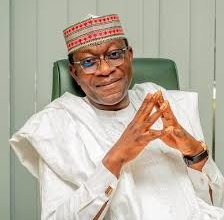
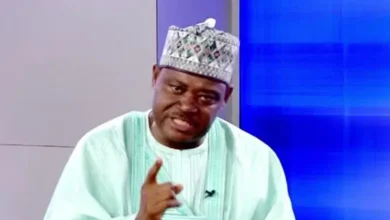
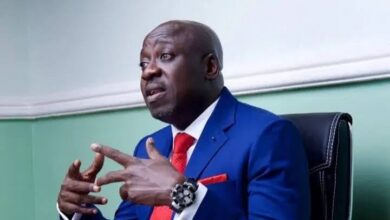
Presidential candidate of the People’s Redemption Party (PRP) in the 2027 election, Donald Duke, has called for urgent reforms to Nigeria’s economy, governance and security architecture, warning that the country is drifting towards a deeper crisis. Duke, a former Cross River State governor who supports state police, argues that security must be localised while government must prioritise productivity, discipline and accountability. In this interview on Arise Television’s Prime Time, he reflects on his record in Cross River and offers his prescription for Nigeria’s economic and political challenges. David Lawani monitored the interview
As governor of Cross River State, you created a development model that attracted national attention. What do you remember most about that period?
It was a period of hope. We tried to build a state that was not merely a political unit of Nigeria but also an economic unit. I believe every state has the potential to do the same. We conducted a SWOT analysis to identify our strengths and weaknesses and then invested in our strengths. Our major platforms were agriculture and tourism. Agriculture is a long-gestation sector, but tourism was a low-hanging fruit, so we pursued it aggressively. The results were evident. Take the Carnival, for instance. It attracted about a million people. During December alone, about a million visitors came into Calabar, generating enormous economic activity. Then there was travelling across the state to the ranch and TINAPA in the middle of the state, which is probably one of the most forested parts of Nigeria. It was exciting. Children left with memorable experiences. I remember meeting two young men who had visited the ranch when they were about 10. They spent several days there, and when their mother said it was time to return, they said they did not want to return to Nigeria because they thought they had travelled out of the country. Those are memories children treasure. They also created a sense of pride and hope in the state.
You have been away from frontline politics for several years. Why are you returning now, and what makes this moment different?
It is the urgency and the clear danger of where we are today. You can remain a spectator and make all sorts of analyses, or you can become involved. The people running the country today are generally from my generation. The President and I were classmates in 1999. But the direction in which the country is moving requires urgent intervention. We used to ask where Nigeria would be in 10, 20 or 30 years. If we do not change the trajectory, I believe we are already looking at disasters that could deepen within another four years. I am not a member of the ruling party, so automatically I am in the opposition. Ideally, the opposition should come together. The reason stable democracies in the Western world work largely around two major parties is that they provide a clear alternative. There are other parties, but there are usually two major political blocs.
The opposition is currently fragmented despite having a common objective. How do you think that can change?
It does not work that way. I want to be a voice of reason because, eventually, we all have to come together and decide where this country should go. The egos at play have to be managed. We need someone who can speak to those egos because we are in a bad place.
What do you consider fundamentally broken in Nigeria today? Is the problem the economy, governance, leadership or something deeper?
It is a combination of all of them. The economy is broken. It is not growing. Let me give you an example. Forty-six years ago, Nigeria’s population was about 75 or 76 million, and the national budget was around N25 billion during the Shehu Shagari years. Today, our population is in excess of 230 million, while the national budget is still hovering around the same range in real terms. The value of the dollar was different then, but the comparison demonstrates the stark consequences. Whether you call it Boko Haram, banditry or kidnapping, these are fallouts and symptoms of economic inadequacy. We have not grown the economy. The governance is also poor. For close to 20 years, there has been very little governance and much more politics. The recent controversy involving someone establishing an office at the Federal Secretariat that was allegedly not an institution of government is an example of poor governance. Nothing speaks louder than that. Then you have leadership, which is a derivative of governance. How can you grow an economy with interest rates in the upper 30s? If you borrow N100 million and have to pay more than N30 million in interest before you even begin operations, you cannot grow the economy. There are so many things wrong. That is why I describe it as a totality. The focal point of governance is to ensure that citizens are optimally productive within a safe and orderly environment. Our citizens are not productive. The environment is not safe, and there is no order. That is chaos. If we do not stem it now, I would not want to be around in the next 20 or 30 years. We all pray for long life and prosperity, but endangered long life is not what I would wish for anyone.
You governed Cross River State for eight years. Why should Nigerians believe that your record there can be replicated nationally?
Two things. First, your record demonstrates your intention. I intended to leave the place better than I met it. That is my record, rather than TINAPA and all the other projects. Second, governing a country as diverse as Nigeria is a huge challenge. It is multi-ethnic, multi-religious and multi-cultural. You must therefore look for the best hands. The politics is over; now you govern. Every appointee should have one credo: leave the place better than you met it. It should not be about those who rally around you politically. You cannot satisfy everyone, but you must ensure that you do not short-change the country in the process of governance.
Can politics and government be effectively combined?
No. They are two different things. Politics is a necessary step because through politics you get to understand the country better. But once you aspire to leadership, you have to put together a great team capable of taking the country forward. It cannot be a team of mediocre people simply because they supported you or chanted your name.
Your administration became known for tourism and cultural development, but Nigerians today are struggling with food prices and living costs. How would your development model address those concerns?
It is all about productivity. Whatever you can do, whether singing or dancing, that people are willing to pay for makes you productive. Once you provide something people are prepared to pay for, you are productive. In Cross River, we identified a low-hanging fruit. Everyone wants to industrialise, but that takes time. We did a lot of industrial development, including several large factories, but those alone could not engage the mass of the people. In December alone, about one million visitors came into Calabar. Tinapa had the potential to attract three million people annually. If three million people spent N100,000 each, that would amount to N300 billion. With the multiplier effect, it could rise significantly. The primary purpose of government is to ensure optimal productivity. You identify what people can do easily, invest in it and then develop other sectors that require more time.
How did you use infrastructure and tourism to stimulate Cross River’s economy?
Cross River was, at the time, the only state with internal flights. The state is large. Travelling from Calabar to Obudu, where the ranch is located, takes five or six hours by road. So we built an airstrip and had flights between Calabar and the northern part of the state. Those flights created traffic. Dubai survives on traffic. If you stop traffic into Dubai, its economy suffers. Las Vegas was also built around traffic. London thrives on traffic. Major cities are built around movement. We created that traffic. Calabar Airport became the fourth busiest airport in Nigeria after Lagos, Abuja and Port Harcourt. At one point, we had nine flights in and out of Calabar daily. Those numbers spoke volumes.
What did you do to ensure that local communities benefited from the tourism projects?
About 90 per cent of the tourists we attracted were Nigerians. That was important because local people are the ones who ultimately market a destination to outsiders. Take the ranch, for instance. Before we came in, it was an abandoned but naturally beautiful place. The people were extremely poor. By the time we left, an average resident had perhaps three jobs. We gave each family 50 beehives and encouraged bee farming. We also promoted poultry, goat herding and piggery. Whatever the ranch required was first sourced from the residents. Beyond that, people worked in the hotel, provided services and served as tour guides. Literally, everyone had a job. We also upgraded the environment. You cannot have people living in shanties beside a beautiful tourism facility. The Japanese government provided the electricity required at the ranch. The Japanese ambassador was impressed by the development. Foreign investors also came. International agencies such as USAID and DFID used the ranch as a base. Donor agencies held conferences there, and OPEC held a retreat there. We even hosted a foreign president who was visiting Nigeria on holiday. It became a source of pride for us, but more importantly, it demonstrated what leadership could achieve. I believe every state in Nigeria has something to sell.
If you became President tomorrow, what would your priorities be?
First, I would establish the agenda and make sure the people working within the system understand it. There would be consequences for failure to meet targets. It would not be business as usual. If you cannot meet your target, you leave. We would design a financial system that enables productivity. That does not currently exist. With interest rates around 35 to 38 per cent, you are undermining the economy. Affordable loans promote growth. In our circumstance, inflation is also driven by the high cost of governance and the absurd cost of petroleum products. We do not understand the concept of energy properly, and we are not investing sufficiently in ourselves. We must also fix the judiciary. Nigeria will not move forward until we address the judicial process.
At what point does borrowing stop being investment and become a burden on future generations?
We are long past that point. So much so that even the World Bank is cautioning us. Our revenue collection system is poor. We rely heavily on taxing profits, but if you tax profit, businesses will naturally try to minimise their taxable profit. There are other ways of generating revenue, including transactional taxes, which could significantly increase what the government currently collects. But we must also prioritise spending. Some expenditures do not make sense under our circumstances. Take the Lagos-Calabar coastal highway. I do not think the country can afford to build a road along the coast from Lagos to Calabar under the current circumstances. Bayelsa is largely swampy outside the capital. You could need hundreds of bridges to cross some of those areas. There is already a road to Calabar. If it is bad, fix it. The money being spent on such projects could be better deployed to electricity and healthcare. The capital allocation released for health last year was barely N36 million, according to the minister. That is pathetic for a country of more than 230 million people. The education system is also poorly funded. We need to prioritise, recalibrate our revenue system and address the high cost of energy. Everything is energy. Nature has given us abundant forms of energy, from human energy to hydro, solar, gas, petroleum and lithium. That should tell us that essential resources are abundantly available. I am not saying give them away for free. Make them available and affordable because affordable energy will be a major stimulus for productivity.
Are you saying government is wasting public resources and needs to impose greater discipline before pursuing tax reforms?
You are spot-on. We still live as if we are in the glory days. Those days were not necessarily glorious, but compared with where we are today, they seem so. We have not accepted that the party is over. We now need austerity, focus and discipline. There must be consequences. Too many things have gone wrong, and people get away with them because the system does not encourage accountability. The governance structure must change. Why do we need a bicameral legislature? We do not need both a Senate and House of Representatives. One chamber can perform the legislative function. Political reform is imperative. We need restructuring and must come to terms with our circumstances. Government must shrink. The legislature is bloated, and politicians want to live like princes. That must be curtailed. The judiciary also needs strengthening and expansion. If I go to court, I should get judgment within 90 days. Politicians have created a system where election disputes move from tribunals to the Supreme Court within six months. That efficiency should benefit everyone. It is a major disincentive to foreign direct investment when investors know they cannot obtain justice locally. That is why commercial agreements often provide for arbitration in London or Switzerland. They want to make money here but do not trust our system to resolve disputes. That is an insult to the country. There is so much work to be done. That is why you need a cabinet of expert doers, not simply political appointees.
Security is a major concern. What would you do differently?
Anything that is essential has to be local. Healthcare has to be local to be effective. Schools have to be local. Water has to be sourced locally. The same principle applies to security. We have to localise security. Even the military structure should be further decentralised. If we have 12 divisions, I would go further. The United States has National Guards in virtually every state because security challenges must be addressed within the states. You cannot have a division in Kaduna handling a security problem in Borno when they are so far apart.
You support state police, but how would you prevent governors from turning them into political militias?
That is the big fear. But that is precisely why we need a judicial system that works. I agree with state police. We should have introduced it a long time ago. During the colonial period, we had local policing structures. You cannot say a state governor is the chief security officer and then make him powerless. However, state police should work alongside the federal police, with a strong focus on intelligence gathering. About 80 per cent of policing is intelligence gathering and only 20 per cent is enforcement. The Federal Government cannot provide all the policing needed across the country. State governments need their own police structures. I would prefer them to focus strongly on intelligence gathering and work alongside the federal police. They should be armed, but we do not want those carrying weapons that create the appearance of a military state. Intelligence officers can carry concealed firearms. The primary objective should be intelligence. In advanced countries, when a crime occurs, the police can identify suspects quickly because they know the communities and have information networks. If there is a crime in a community, the local police officer should be among the first people asked what happened and why it happened. If the divisional police officer cannot explain what is happening in his area, which is a serious dereliction of duty. There must be consequences. When armed groups enter communities, kill, kidnap or destroy property repeatedly, and nobody is held accountable, something is wrong. It could be negligence or connivance. Either way, it must be dealt with. If you are a DPO and something repeatedly goes wrong in your area, you should know that your job is at risk. That is how accountability works. If security officers know they will lose their jobs when they fail to protect their communities, they will sit up and do the job properly.