Tinubu will secure UN Security Council seat for Nigeria- Ibrahim, UN Permanent Rep

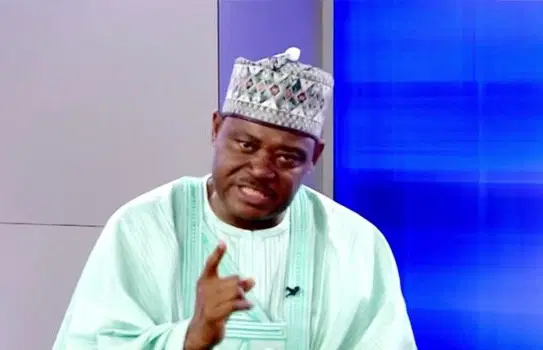
Nigeria’s Permanent Representative to the United Nations, Senator Jimoh Ibrahim, says President Bola Tinubu is preparing sweeping initiatives to strengthen border security, deepen Nigeria’s engagement at the United Nations and position the country for a permanent seat on the UN Security Council. In this interview on Channels Television’s Politics Today, Ibrahim also responds to criticisms of Tinubu’s foreign engagements, security record, economic reforms and governance, while outlining the administration’s diplomatic agenda. David Lawani monitored the interview
Critics argue that President Bola Tinubu’s absence from recent UN General Assembly sessions sends the wrong signal, especially as Nigeria seeks a permanent seat on the UN Security Council. Does this affect the country’s image?
There is absolutely nothing wrong with the President not personally attending the UN General Assembly. The Vice President represented Nigeria and delivered what I consider an excellent address. The President’s concern has always gone beyond merely attending the annual gathering. His major concern is the continued exclusion of Africa from the permanent membership of the United Nations Security Council. He has consistently argued that it is unfair for a continent that accounts for a significant share of the world’s population to remain without permanent representation. The reason Africa is not represented dates back to the founding of the United Nations in 1945, when most African countries had not attained independence and therefore had no voice in shaping the organisation’s structure. Nigeria itself only became independent in 1960. Today, however, circumstances have changed. The world has evolved, and there is a compelling case for revisiting the composition of the Security Council. I am optimistic that President Bola Tinubu will successfully position Nigeria to secure a seat on the Security Council in the near future.
Political opponents insist the President has no reason to avoid attending the UN General Assembly. How do you respond?
I don’t understand that argument. Nigeria has already been allocated one of the front-row seats at the General Assembly. The seating arrangement has already been determined. No political opponent can change that reality.
So, what exactly is the issue?
There is really no issue. Are people suggesting that someone should alter the UN seating arrangement? The President has attended before, and there is nothing unusual about his participation.
Some people speculate that President Tinubu risks arrest if he travels to the United States. Is there any basis for such claims?
None whatsoever. That suggestion has no basis.
Is that why some of his opponents continue to challenge him to travel to the United States?
Once the President attends the UN General Assembly and returns safely to Nigeria, people will appreciate that these allegations are unfounded. Beyond attending the Assembly, he is expected to contribute meaningfully to discussions on global security and ongoing UN reforms. The United Nations is currently implementing the UN-80 reform agenda, which focuses on improving efficiency and effectiveness across the organisation. President Tinubu has considerable experience in institutional reforms, while President Donald Trump is also advocating reforms within the United Nations. I believe both leaders have valuable perspectives to contribute at this critical stage. Expectations are high, and significantly, Nigeria has been accorded a front-row seat at the Assembly for the first time.
Why is the front-row seating significant?
Think of it this way. If there are 193 member states and your country is seated among the first few delegations instead of near the end, it reflects the recognition accorded to that country. People often underestimate Nigeria’s standing internationally. When I was appointed, some people even claimed I would not be allowed into the United States. Yet I studied at Harvard University and served as President of the Inter-Parliamentary Union at the United Nations while I was in the Senate. Today, I chair the UN Fifth Committee on Budget and Administration, overseeing an annual budget of about $18.5 billion, including funding for peacekeeping operations. That demonstrates the level of confidence reposed in Nigeria and in Nigerians. Rather than constantly doubting ourselves, we should recognise that Nigerians are capable of excelling on the global stage
The United States Congress recently expressed concerns over insecurity and religious violence in Nigeria. Some lawmakers even questioned continued assistance to the country. Doesn’t that damage Nigeria’s image?
First, we need to distinguish between an individual lawmaker’s opinion and the official position of the United States Congress. A congressman is entitled to express his views, especially during an election season when politicians often seek greater visibility. The important question is whether Congress adopted a binding resolution reflecting those comments. Every political system allows legislators to make statements that may or may not become official government policy. In international politics, countries ultimately act in their national interest. I engage regularly with the United States Ambassador to the United Nations, and America understands the realities of its relationship with Nigeria.
But Congress appeared to endorse that position. Doesn’t that validate the concerns?
Nigeria recently signed a new trade framework with the United States. The document was brought directly to my office for execution. America has made it clear that its policy direction is gradually shifting from aid to trade. Rather than depending on assistance, countries are increasingly encouraged to build stronger commercial partnerships. Nigeria remains committed to that relationship, and we signed the agreement as a responsible member of the international community.
The criticism, however, goes beyond aid. The congressman accused the Tinubu administration of corruption and of failing to protect Nigerians from terrorists. Isn’t that damaging?
Those were his opinions. He alleged that the government is corrupt and incapable of protecting its citizens. Naturally, such remarks create negative perceptions. But this is international politics. Leaders and governments are criticised every day. Listen to debates at the United Nations, and you will hear world leaders criticised in the strongest possible terms, including the President of the United States. As the presiding officer, I move to the next item on the agenda because every delegate has the right to express an opinion.
So, do you believe the congressman was wrong?
Anyone can make allegations, but allegations should be backed by verifiable evidence.
Is the Tinubu administration corrupt?
How can I describe the government I represent as corrupt? That is his personal opinion, not a fact. He also alleged that the government has failed to protect citizens from terrorism and religious violence. Again, those are his views.
Is Nigeria more secure today?
If Nigerians knew what President Tinubu is currently working on, many would be surprised. I recently met with him, and his work closely aligns with the security priorities of the United Nations Security Council. I cannot disclose everything we discussed because some of those matters are sensitive. The President is pursuing initiatives that go beyond the public conversation. There are engagements taking place with regional leaders, and significant security discussions are ongoing.
Can you be more specific about what he is doing?
Criticism is part of democracy. Every administration faces it. What matters is allowing leaders to implement their programmes before passing judgment. As for me, I have been entrusted with enormous responsibilities at the United Nations, including oversight of more than $18 billion in annual expenditure. Throughout my service, I have remained accountable. I have access to privileges, including diplomatic immunity, tax exemptions and official facilities, but I have never abused any of them. That is how public service should be conducted. Nigerians continue to distinguish themselves globally, and we should celebrate those achievements instead of constantly undermining one another.
Critics argue that attending the UN General Assembly and visiting the United States are two different matters. Can President Tinubu visit America outside the UN programme?
Certainly, I remember a former Nigerian military Head of State whose visa restricted him to a 10-kilometre radius around the UN headquarters during the General Assembly. President Tinubu is in an entirely different situation. Even before he became President, people claimed he could not enter the United States. He travelled there, attended the UN General Assembly and returned without any difficulty. He will visit America again, and I can confirm that his itinerary extends beyond New York, although I cannot disclose further details publicly. The question remains: what offence has President Tinubu committed?
You have argued that the United Nations cannot intervene in Nigeria’s domestic affairs. Yet many legal experts disagree. Are you prepared to reconsider that position?
No, because the UN operates strictly within the provisions of its Charter. The organisation functions through six principal committees, and each has clearly defined responsibilities. I chair the Fifth Committee, which oversees budget and administration, while legal matters fall under the Sixth Committee. Under which Committee would the United Nations pass a resolution authorising it to investigate internal matters in Nigeria? The UN Charter is clear. Article 2(4) deals with the use of force, while Article 2(7) prohibits interference in the domestic affairs of sovereign states. Nigeria cannot interfere in Ghana’s internal affairs, just as Ghana cannot interfere in Nigeria’s. The same principle applies to the United Nations. So, when people argue that the UN can decide to investigate events within Nigeria, I ask them to point to the legal basis and the specific UN organ that has such authority.
But the United Nations examined the abduction of the Chibok schoolgirls in 2014. Doesn’t that contradict your position?
There is an important distinction. The United Nations itself did not pass a Security Council resolution specifically investigating the Chibok incident. What happened was that the Committee on the Elimination of Discrimination Against Women (CEDAW) conducted an inquiry relating to Nigeria’s handling of repeated abductions of women and girls. CEDAW is a treaty body; it is not one of the principal organs of the United Nations. People often confuse the activities of treaty bodies with decisions of the United Nations itself. Recently, for instance, a report on poverty in Nigeria emerged. I immediately contacted the UN Secretary-General and requested the data supporting the report because any assessment affecting Nigeria must be evidence-based. As Nigeria’s Permanent Representative, it is my responsibility to challenge reports that are not backed by verifiable facts. Similarly, when someone falsely claimed to represent Nigerian youth at the United Nations, I formally requested clarification from the Secretary-General on when and how such a person was appointed. These are matters that require official verification, not assumptions.
You recently met with President Tinubu. What was the focus of your discussions?
It is normal for a country’s Permanent Representative to brief the President periodically on developments at the United Nations. President Tinubu gave me ample time to explain current issues before asking a simple but important question:
What is the United Nations’ current thinking on security?
I told him that, from the UN’s perspective, Nigeria’s security challenges are not primarily about ethnicity or religion. The real challenge is our porous borders. Under the ECOWAS Protocol on Free Movement, people can move across several West African countries with relative ease. While regional integration has its benefits, it also creates vulnerabilities when neighbouring countries struggle to secure their borders. That means individuals can move across the region and enter Nigeria with little difficulty, making border management one of our biggest security challenges. The President listened carefully and made it clear that if neighbouring countries cannot adequately secure their borders, Nigeria must strengthen its own. That discussion led to what he described as a Border Stability Strategy.
What exactly does the President mean by ‘Border Stability Strategy’?
He proposes strengthening border management through specialised peace-support structures. He is considering establishing a special corps dedicated to securing Nigeria’s borders as part of a broader border-stability initiative.
Does that include building physical border fences?
No. The President is not talking about building fences. He has developed a strategy, and work on it is already at an advanced stage. I believe formal announcements could be made at any time. He deliberately uses the phrase “border stability” rather than simply “border security.” The United Nations has programmes that support regional border stability across West Africa, particularly through peace-support initiatives. The President gave me specific mandates on how Nigeria should engage with the United Nations on that issue, and I intend to implement them when I return to New York.
Can your office mobilise United Nations support for Nigeria’s border initiative?
Absolutely. The United Nations has every reason to support border management initiatives across West Africa because insecurity in one country often affects the entire sub-region. This is not about assisting in Nigeria alone; it is about strengthening regional security. Nigeria also contributes significantly to UN peacekeeping operations, so the relationship is mutually beneficial. During my meeting with the President, we also discussed Nigeria’s campaign for election to the UN Security Council. He made it clear that Nigeria will contest the next election, and I informed him that discussions are progressing on expanding permanent African representation on the Council.
You seem optimistic that Nigeria will secure a permanent seat on the UN Security Council. Isn’t that a bold prediction?